 Economy


NA must embody spirit of action, innovation, development: top legislator
1.
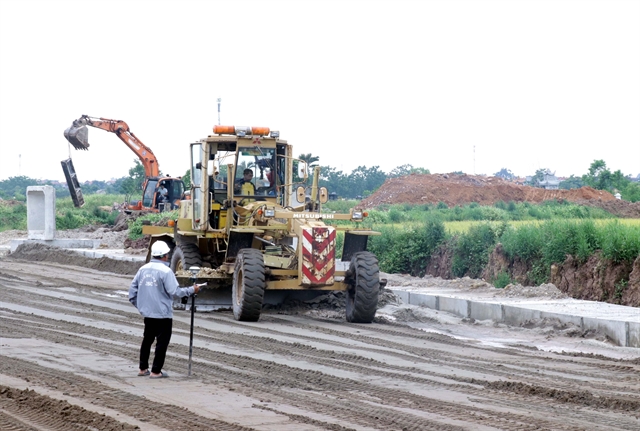 |
| A road under construction in Hưng Yên Province. Minister of Finance Ngô Văn Tuấn has called for faster reforms and closer monitoring of economic challenges as the Government seeks to sustain strong growth. — VNA/VNS Photo Đinh Văn Nhiều |
HÀ NỘI — Minister of Finance Ngô Văn Tuấn has called for faster reforms and closer monitoring of economic challenges as the Government seeks to sustain strong growth, citing concerns over a widening trade deficit, slow public investment disbursement and rising inflationary pressures in the first five months of this year.
Speaking at a ministry meeting on Tuesday, Tuấn said it is necessary to identify bottlenecks holding back growth and prepare realistic economic scenarios for the remainder of 2026.
"The priority is to identify precisely where the bottlenecks are and propose solutions," he said.
As the finance ministry is preparing a review of economic performance in the first half of the year and developing growth scenarios for the months ahead, Tuấn asked for detailed reports on growth targets, progress and obstacles facing investment and production activities.
Emerging challenges in the first five months of the year required more proactive macroeconomic management and stronger policy coordination, he noted.
The finance minister highlighted a trade deficit that has persisted for several consecutive months, liquidity constraints in financial markets, difficulties facing private sector businesses, slow public investment disbursement and growing inflation risks.
With regard to public investment, Tuấn said resource allocation must be based on clear criteria and rigorous assessments of the socio-economic impact of projects, with priority given to initiatives that can generate spillover effects, create new growth drivers and maximise the efficiency of State capital.
He also urged ministries and agencies to strengthen coordination, accelerate administrative reforms, support businesses, improve accountability and digital transformation, and ensure that policy implementation and resource mobilisation are aligned with the country's growth objectives.
Deputy Finance Minister Nguyễn Đức Chi said delays in public investment spending are now mainly due to implementation bottlenecks rather than legal constraints, citing weak execution and the lack of accountability.
Meanwhile, Deputy Finance Minister Trần Quốc Phương said the ministry will closely monitor the impact of the trade deficit on economic growth and the balance of payments.
He also called for stronger coordination among tax, customs and trade agencies to combat transfer pricing and other violations.
Tax Department chief Mai Xuân Thành said budget revenue remains on track, but warned that growth in collections is showing signs of slowing as the property market remains weak, borrowing costs high and investment activity softened in some sectors.
In the securities sector, Chairwoman of the State Securities Commission Vũ Thị Chân Phương said the draft revised Securities Law is expected to be submitted for consideration in October.
She added that the Ministry of Finance has issued a fund industry development plan as part of efforts to upgrade Việt Nam’s stock market, while the country’s carbon credit trading platform is ready and scheduled to begin operations on June 22.
The ministry’s statistics show that State budget revenue in the first five months of 2026 was estimated at VNĐ1.34 quadrillion (US$51.3 billion), equivalent to 53 per cent of the annual target and up 15.3 per cent from a year earlier.
Public investment disbursement reached nearly VNĐ219.4 trillion by the end of May, or 21.6 per cent of the annual plan, while total trade turnover rose 25 per cent year-on-year to a record $445.1 billion. — VNS
Economy
 Economy
 Economy
 Economy
 Economy
 Economy
 Economy
 Economy
 Economy
 Economy
 Economy
 Economy
 Economy
 Economy
 Economy