 Economy


Ambassador pledges every effort to promote Việt Nam–Sweden ties
1.
|
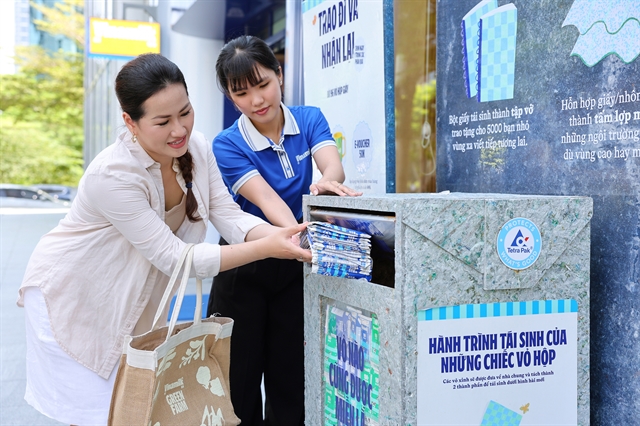
| Starting in 2025, Vinamilk will partner with licensed organisations to collect and recycle packaging in compliance with regulatory requirements. Photo courtesy of Vinamilk |
HÀ NỘI — The implementation of Extended Producer Responsibility (EPR) regulations marks a significant step in Việt Nam's transition towards a circular economy.
For businesses, compliance is no longer simply an environmental obligation but increasingly a strategic consideration. Among the companies that moved early to adapt, Vinamilk offers a notable example of how investment in sustainable packaging and recycling systems can generate benefits beyond regulatory compliance.
On May 25, 2026, Decree No 110/2026/NĐ-CP officially took effect, providing detailed guidance on EPR. Under the regulation, manufacturers and importers of products and packaging included in the regulated categories are required to ensure that packaging placed on the Vietnamese market is recycled in accordance with mandatory recycling rates and specifications.
Businesses subject to the regulation can choose between two compliance options: organising their own collection and recycling activities or making financial contributions to the Việt Nam Environmental Protection Fund to support recycling efforts.
While the contribution mechanism offers a straightforward compliance pathway, it essentially transfers responsibility to external parties. By contrast, self-managed recycling requires long-term investment, from packaging design and collection networks to partnerships with recycling companies and oversight of the entire recycling process.
Rather than opting for the contribution mechanism, Vinamilk began collaborating with licensed recycling partners in 2025 to collect and recycle most packaging categories covered by the EPR framework. Building on these efforts, the company plans to recycle more than 13,200 tonnes of packaging materials in 2026.
According to calculations by Lagom Việt Nam, a company operating in the environmental sector, recycling approximately 1,000 tonnes of used beverage cartons can reduce greenhouse gas emissions by around 7,500 tonnes of CO₂ equivalent compared with conventional disposal methods. Such reductions can help businesses lower their carbon footprint and support their transition towards carbon neutrality and net-zero emissions targets by 2050.
Vinamilk has partnered with licensed recycling companies since 2025 to collect and recycle packaging in accordance with EPR requirements.
Taking a lifecycle approach to packaging
|
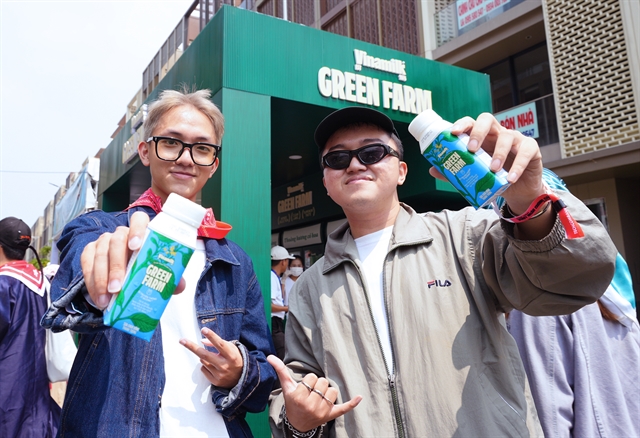
| Vinamilk continuously optimises its product packaging to make it more environmentally friendly. |
Rather than viewing EPR solely as a waste management requirement, Vinamilk has adopted a broader approach focused on managing the entire lifecycle of packaging, from design and consumption to post-use collection and recycling.
One example is the company's introduction of an attached-cap design that enables consumers to open and drink directly from beverage cartons without using separate plastic straws. In 2025 alone, the initiative helped eliminate more than 4.5 million plastic straws, equivalent to approximately 1.7 tonnes of plastic.
At the same time, packaging optimisation projects for Probi drinking yoghurt bottles and plastic straws in the domestic market reduced the use of virgin plastic by an additional 48 tonnes. Together with other packaging initiatives, these efforts contributed to a reduction of approximately 135 tonnes of CO₂ equivalent emissions during the year.
The company has also continued to improve the environmental profile of its packaging materials. Today, 99 per cent of Vinamilk's cardboard cartons use water-based inks instead of conventional oil-based inks, which are more difficult to recycle and decompose. For flagship products such as Green Farm drinking yoghurt, packaging now contains nearly 40 per cent renewable materials, helping reduce dependence on virgin plastic and fossil-based resources.
Vinamilk continues to optimise packaging designs to improve environmental performance throughout the product lifecycle.
Promoting sustainable consumption
Beyond packaging design and recycling, Vinamilk has also invested in initiatives aimed at encouraging more sustainable consumption habits among consumers.
Throughout 2025, communication campaigns such as Find Your R and Vỏ Xinh Được Tái Sinh (Beautiful Packages Reborn) helped collect and recycle more than 26 tonnes of used beverage cartons while attracting more than 500,000 engagements across media platforms.
Industry observers note that large consumer goods manufacturers can play an important role in accelerating the development of circular economy practices. Their scale enables them to influence supply chains, support recycling infrastructure and contribute to broader changes in consumer behaviour.
"Companies such as Vinamilk do more than comply with regulations. They can serve as catalysts for the wider circular economy ecosystem," said Huỳnh Thanh Trung, Chairman of Leanwares JSC, a consultancy specialising in green and sustainable manufacturing transformation.
"With its scale and market presence, Vinamilk has the capacity to drive change throughout the supply chain, contribute to policy implementation and encourage more environmentally responsible consumption practices."
As EPR requirements become an integral part of doing business in Việt Nam, experiences such as Vinamilk's suggest that early preparation and long-term investment may offer advantages that extend well beyond compliance, helping businesses strengthen both their environmental performance and their competitiveness in an increasingly sustainability-focused marketplace. VNS
Economy
 Economy
 Economy
 Economy
 Economy
 Economy
 Economy
 Economy
 Economy
 Economy
 Economy
 Economy
 Economy
 Economy
 Economy