 Economy



Việt Nam-EU, Belgium ties poised for new heights
1.
|
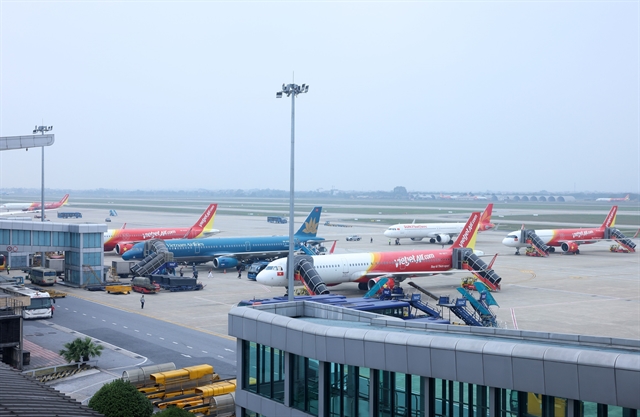
| Airlines at Nội Bài International Airport in Hà Nội. — VNA/VNS Photos |
HÀ NỘI — Việt Nam has overtaken Thailand to become Southeast Asia's second-largest commercial aviation market by available seats in August, according to OAG, a global provider of aviation data and analytics.
Việt Nam moved into second place with 7.3 million seats, up 10 per cent from a year earlier, the fastest growth rate among the Southeast Asian aviation markets analysed by OAG.
The increase reflected rising travel demand in Việt Nam, as well as the advantage of a market with several major airports serving passengers across different parts of the country, OAG said.
Another factor highlighted by OAG was cooperation between Vietnamese tourism businesses and airlines. Tour operators often booked large blocks of seats and ran joint promotional and marketing campaigns, helping airlines fill flights more quickly.
The development of new destinations was also creating more room for Việt Nam's international air network to expand.
Thailand ranked third with 7.2 million seats, down 1.7 per cent year on year.
In its August Southeast Asia Aviation Market Briefing, OAG said Indonesia remained the region's largest aviation market, with 11 million seats, up 4.3 per cent year on year.
Capacity also declined in Malaysia and the Philippines, with 5.4 million and 4.8 million seats, down 6.4 per cent and 5.7 per cent, respectively.
Total airline capacity in Southeast Asia increased by 0.8 per cent year on year to 51 million seats in August, OAG said. Domestic capacity rose by 1.4 per cent and accounted for 45 per cent of the region's commercial aviation market, while international capacity was almost unchanged, increasing by 0.4 per cent to 28.2 million seats and accounting for 55 per cent of the market.
|
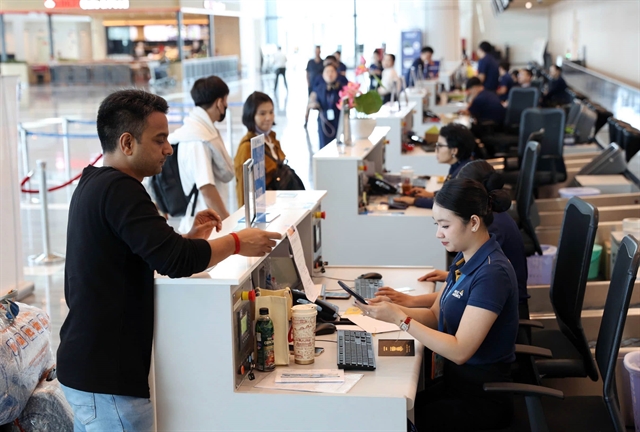
| Passengers check in at Tân Sơn Nhất International Airport in HCM City. |
The growth in capacity comes as passenger traffic through Việt Nam's airports continues to rise. More than 76 million passengers passed through the country's airports between January and July, up 7 per cent from the same period last year, according to the Civil Aviation Authority of Vietnam (CAAV).
International travel was the strongest growth driver, with nearly 30 million passengers, an increase of more than 11 per cent year on year, almost three times the growth rate of domestic travel. Domestic passenger traffic exceeded 46 million, up more than 4 per cent.
Vietnamese airlines carried nearly 35 million passengers during the seven-month period, up more than 3 per cent year on year. International passengers accounted for more than 11 million, up 1 per cent, while domestic passengers exceeded 23 million, rising more than 4 per cent.
The CAAV expects Việt Nam's aviation sector to serve about 94 million passengers and handle 1.6 million tonnes of cargo in 2026, representing year-on-year increases of 13 per cent and 9.3 per cent, respectively.
To support these targets, aviation authorities plan to optimise runway scheduling, improve airport operational efficiency and strengthen oversight of airline operations to maintain aviation safety.
The regulator will also support airlines in expanding their fleets and increasing capacity, particularly during peak travel periods.
The CAAV will continue working with foreign aviation authorities to facilitate additional international routes while monitoring global economic conditions, geopolitical developments and fuel price fluctuations that could affect the aviation market.
Infrastructure development is another priority. Authorities are accelerating major airport planning and construction projects and preparing to reopen Liên Khương Airport and Cà Mau Airport following upgrades.
They are also advancing preparations for the future operation of Long Thành International Airport and Quảng Trị Airport, which are expected to expand Việt Nam's long-term aviation capacity and support continued market growth. — VNS
Economy
 Economy
.jpg) Economy
Economy
 Economy
 Economy
 Economy
 Economy
 Economy
 Economy
 Economy
 Economy
 Economy
 Economy
 Economy
 Economy