 Society
Data centre market faces energy challenges
1.
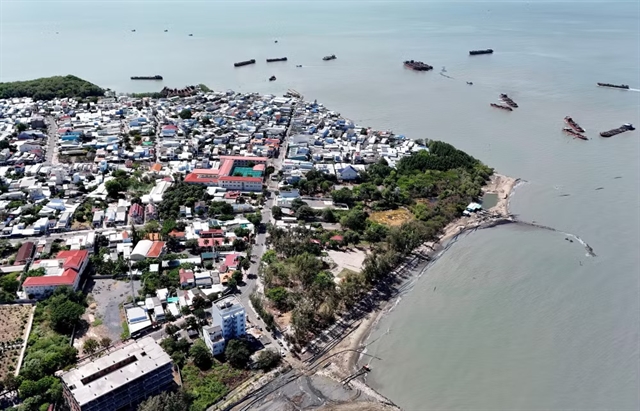 |
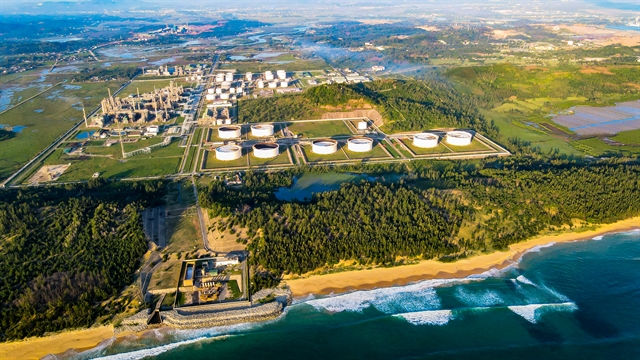
| An aerial view of Cần Giờ Commune, the southern coastal gateway of HCM City. — VNA/VNS Photos Hồng Đạt |
HCM CITY — HCM City’s Cần Giờ Commune is transforming from a disadvantaged coastal suburb into a green-economy and clean-energy hub, anchoring the city's transition to a modern global metropolis.
This transformation aligns with the Political Bureau's Resolution 09-NQ/TW on the development of the city in the new era.
It also coincides with the 50th anniversary of the city officially bearing the name of President Hồ Chí Minh (July 2, 1976 – July 2, 2026).
On this path, Cần Giờ Commune is pioneering climate actions to support the national Net-Zero carbon emissions target by 2050.
Fostering green lifestyles
According to the "For a Green Cần Giờ" action plan issued by the municipal People’s Committee, the area aims to become a smart, eco-friendly growth zone by 2030.
To achieve this, the local government has set specific targets for the end of the decade.
Rooftop solar power systems will be installed at 100 per cent of eligible public offices.
In addition, 100 per cent of public transport vehicles must run on clean energy.
The plan also focuses on building "Green Village" models and entering the carbon credit market using its massive mangrove forests.
To realise these goals, local authorities are expanding green transport, controlling plastic waste, and upgrading waste treatment systems.
Hồ Văn Bình, deputy chairman of the Cần Giờ Commune People’s Committee, said Cần Giờ is designated to become a coastal eco-city and a hub for the marine green economy, eco-tourism, and regional logistics.
“Blessed with a UNESCO-recognised Mangrove Biosphere Reserve, the area plays a vital role in the city's green growth strategy."
The city is currently studying the deployment of a "low-emission zone" model here.
This initiative will gradually eliminate fossil-fuel vehicles while promoting electric cars and green public transit.
Environmental awareness is also being nurtured at the grassroots level.
At Cần Thạnh 2 Primary School, eco-education is integrated into regular classes and extracurricular activities.
The school principal Lê Hữu Bình said forming green habits in students early on is the foundation for a sustainable community.
Meanwhile, in Bình Khánh Commune, the gateway to the locality, local authorities are intensifying campaigns to promote source-sorted waste, reduce single-use plastics, and clean up local canals.
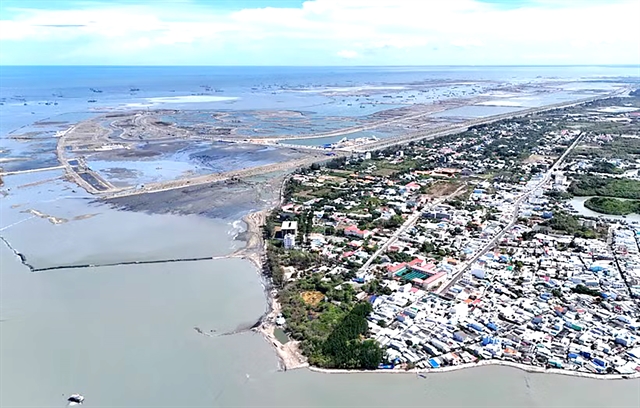 |
| Construction underway at the Vinhomes Green Paradise project in HCM City’s Cần Giờ Commune, which is designed to operate on 100 per cent clean energy from offshore wind and solar power. |
Harnessing coastal renewable energy
Beyond its ecosystem, Cần Giờ possesses immense natural potential in wind and sunlight, making it ideal for a low-carbon economy.
According to the city’s master plan, the offshore waters of the district are being surveyed for mega-scale wind power projects to supply the national grid and fuel green hydrogen production.
The proposed offshore wind power project will have a total capacity of approximately 6,000 MW.
Investment phases for this massive clean energy hub will span from now until 2040.
Over its entire lifecycle, the project is expected to cut hundreds of millions of tonnes of carbon emissions.
In tandem, rooftop solar power installations are being rolled out for households, aquaculture facilities, and public buildings.
Local authorities are also collaborating with relevant departments to establish a carbon credit mechanism for the Cần Giờ mangroves by building a comprehensive carbon absorption database.
According to experts, the commune's greatest asset remains its world-renowned mangrove forest.
Dr. Huỳnh Đức Hoàn, head of the city Protection Forest Management Board, said these mangrove forests can store up to three times more carbon than many terrestrial forest ecosystems.
“Most of this carbon is locked long-term in the sediment.”
Professor Dr. Lê Thanh Hải, director of the Institute for Environment and Resources at Việt Nam National University-HCM City, said Cần Giờ has all the attributes to serve as a "green laboratory" for the country's coastal renewable energy models.
"The key is to harmoniously balance clean energy development with ecological conservation and local livelihoods. If executed successfully, Cần Giờ can serve as a prime blueprint for other coastal cities across Vietnam," he said.
As the city strives to pioneer green growth, Cần Giờ is expected to emerge as a new economic engine facing the sea—preserving the vital "green lungs" of the southern metropolis while pioneering a sustainable energy future. — VNS
Society
 Society
 Society
 Society
 Society
 Society
 Society
 Society
 Society
 Society
 Society
 Society
 Society
 Society
 Society