 Society

LANDMARK Launches ‘Destination CENTRAL’: A District-Wide Invitation to Explore the Dynamism, Luxury, and Soul of Central
1.
|
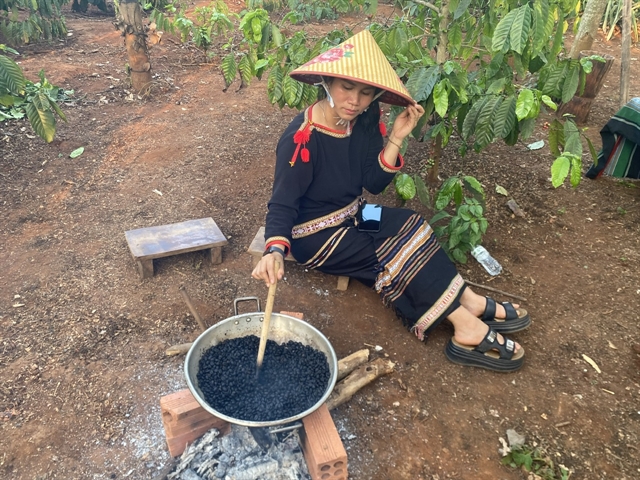
| A Đắk Lắk Province local practises the traditional method of roasting and grinding coffee handed down over generations. — VNS Photo Hồng Linh |
ĐẮK LẮK — Đắk Lắk Province’s coffee culture has enormous potential to be developed into a UNESCO intangible cultural heritage, representing as it does a living knowledge system rooted in community identity.
The central localitiy is known as the capital of Vietnamese coffee, with 210,000ha under cultivation and output of more than 520,000 tonnes a year, accounting for 30 per cent of the country’s total.
In March 2025, “The knowledge of coffee cultivation and processing in Đắk Lắk” was recognised as a National Intangible Cultural Heritage, acknowledging the role of individuals, families and communities in preserving and transmitting this knowledge down generations.
These include indigenous ethnic people such as the Ede and M’nông, alongside migrants who have farmed coffee in the area since the 1950s.
Jonathan Baker, UNESCO Representative in Việt Nam, said coffee practices reflect identity and social values while also serving as a space for interaction and exchange.
From UNESCO’s perspective, such practices illustrate how living cultural traditions are formed, maintained and transformed over time.
Under the 2003 Convention for the Safeguarding of the Intangible Cultural Heritage, heritage is defined not as an object or product but as knowledge, skills, social practices and meanings recognised by communities and passed down through generations.
International experience shows that practices linked to food, agriculture and everyday life often sit at the intersection of culture, livelihoods and the economy, he said.
Coffee traditions are a clear example, recognised by UNESCO in different forms across regions.
They are embedded in global trade networks but remain deeply rooted in local histories and social relations, making the link between global circulation and local meaning central to any heritage discussion.
Trịnh Đức Minh, Chairman of the Buôn Ma Thuột Coffee Association, said the value of Đắk Lắk coffee lies not just in the bean but in the knowledge system behind it.
This system has developed through generations of farmers and positions Đắk Lắk not only as the largest producing region but also as a living repository of knowledge on ecosystems, cultivation, harvesting, and processing.
He said these qualities define Đắk Lắk coffee as a living heritage, inseparable from the communities that sustain it and requiring continued preservation and promotion.
He also highlighted the Robusta XXI initiative launched by the association in partnership with businesses, experts and farmers to create an internationally comparable “quality language” for robusta coffee and move beyond its perception as a volume-driven commodity.
Building on this, experts said developing Buôn Ma Thuột Ward into a global coffee city would have both national and international significance.
Associate Professor Trần Đình Thiên, former director of the Việt Nam Institute of Economics, said Đắk Lắk should move beyond being just a coffee-producing region to become a world-class centre where coffee and culture converge, shifting from raw production to a creative and cultural hub.
UNESCO heritage status for Đắk Lắk
|
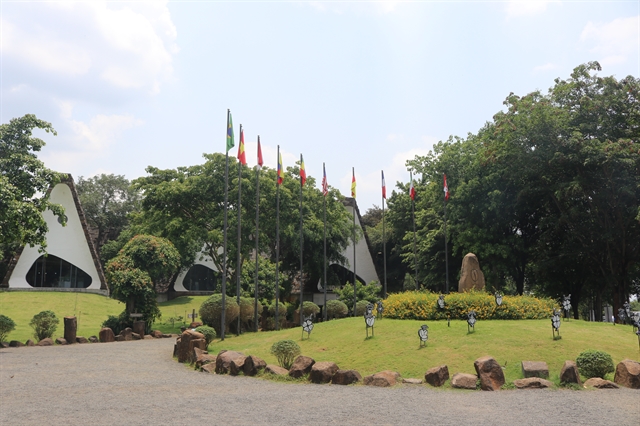
| Đắk Lắk's coffee culture reflects generations of cultivation knowledge and practice in Việt Nam's largest coffee-producing region, holding immense potential for recognition as a global living heritage. — VNS Photo Hồng Linh |
The World Coffee Heritage Forum, held in Đắk Lắk Province from April 17 to 19 at the World Coffee Museum, brought together Vietnamese and foreign experts to discuss pathways to UNESCO recognition.
Nguyễn Viết Cường, deputy director of the Department of Cultural Heritage under the Ministry of Culture, Sports and Tourism (MCST), said countries that have secured UNESCO recognition for coffee have done so under the 2003 Convention.
For Đắk Lắk coffee, experts proposed three directions: nominating the Central Highlands or Đắk Lắk coffee cultural landscape, submitting a dossier on “The knowledge of coffee cultivation and processing in Đắk Lắk” for inscription on the Representative List of the Intangible Cultural Heritage of Humanity, or applying for the Register of Good Safeguarding Practices.
An example is the Doi Tung Development Project in Chiang Rai, northern Thailand, which over the past 30 years has created jobs, reduced poverty and restored forests through social enterprises spanning coffee, handicrafts and tourism.
Coffee there has served as a vehicle for livelihood transformation and sustainable community development.
Urawadee Sriphiromya, ambassador of the Kingdom of Thailand to Việt Nam, said the project success rests on keeping people at the centre, building a complete value chain and maintaining close cooperation between government and local communities.
Vinod Ahuja, Food and Agriculture Organisation of the United Nations Representative to Việt Nam, said the future of the coffee industry lies not in expanding growing areas but in improving quality, value and sustainability across the entire ecosystem, with farmers at the core and technology, finance and policy as key drivers.
With its natural advantages, established knowledge base and strong communities, Đắk Lắk is steadily positioning itself as a global centre of living coffee heritage. — VNS
Society
 Society
 Society
 Society
 Society
 Society
 Society
 Society
 Society
 Society
 Society
 Society
 Society
 Society
 Society