 Society
SBV to curb property price inflation, enforce lending rate rules
1.
|
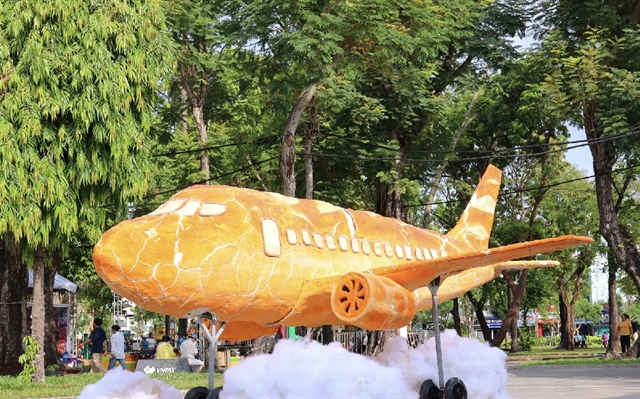
| The giant aeroplane model crafted from bánh mì has drawn considerable attention from visitors at the 2026 bánh mì festival. The event will run until April 26 at Lê Văn Tám Park in Tân Định Ward, HCM City. — Photo: muctim.tuoitre.vn |
HCM CITY — The fourth Bánh mì Festival officially opened on April 23 at Lê Văn Tám Park and will run through April 26, offering visitors a vibrant showcase of one of Việt Nam’s most iconic street foods.
Held at its now familiar venue at Lê Văn Tám Park, Tân Định Ward, this year’s festival underscores efforts to elevate bánh mì as both a cultural heritage and an internationally recognised culinary symbol.
With around 150 booths, the event presents what organisers describe as a “world of bánh mì”, ranging from traditional recipes to creative reinterpretations.
Visitors can explore a diverse culinary journey that blends familiarity with innovation, reflecting the evolution of the beloved Vietnamese sandwich.
A key highlight is the exhibition space dedicated to the history of bánh mì, offering insights into its development from a simple staple influenced by French cuisine into a globally celebrated dish. Through curated displays, the area illustrates how bánh mì has adapted over time while retaining its distinctive Vietnamese identity.
Interactive experiences also play a central role in the festival. At designated zones, visitors can observe and take part in the preparation of traditional bánh mì, gaining a deeper appreciation of the craftsmanship behind each loaf.
These activities not only provide entertainment but also highlight the labour and skill of artisans who have preserved and refined the craft over generations.
Adding to the visual appeal, organisers have created intricate bread-based sculptures inspired by cultural symbols such as the lotus and the Eiffel Tower. These installations reflect the historical and culinary connections between Việt Nam and France, reinforcing the theme of cultural exchange.
The festival programme features a range of notable activities, including a presentation of 50 vegetarian dishes served with bánh mì, as well as the announcement and award ceremony for competitions recognising the best bánh mì and croissant. In addition, start-up support initiatives – such as gifting bánh mì carts – aim to encourage entrepreneurship and promote small-scale food businesses.
Visitors can also enjoy on-site tastings across the various stalls, alongside themed discussions focusing on bánh mì’s cultural and economic potential. These forums bring together industry experts, chefs and entrepreneurs to explore strategies for positioning bánh mì as part of Việt Nam’s national brand.
Throughout the four-day event, evening performances and game shows are scheduled daily, contributing to a lively festival atmosphere. The event is open to the public from 8am to 10pm, with free admission expected to attract large crowds of residents and tourists alike.
Since its debut in 2023 at the Youth Cultural House in HCM City, the Bánh mì Festival has grown steadily in both scale and ambition. The inaugural edition featured 120 booths and generated strong public interest, laying the foundation for its development into a major culinary event.
In its second year, the festival expanded in size and diversity, with increased participation from food brands and greater emphasis on experiential activities and live demonstrations. By the third edition in 2025, the event had drawn more than 200,000 visitors, while also introducing business networking and exchange programmes, gradually shaping its role as a tourism-linked culinary platform.
Now in its fourth year, the festival has been further enhanced with deeper content, international elements and structured discussions, alongside initiatives supporting start-ups. These developments signal a broader vision of positioning bánh mì not only as a popular street food but also as a representative of Việt Nam’s culinary identity on the global stage.
As the festival continues to evolve, it reflects a growing recognition of food as both a cultural asset and an economic driver, with bánh mì standing at the forefront of efforts to promote Vietnamese cuisine worldwide. — VNS
Society
 Society
 Society
 Society
 Society
 Society
 Society
 Society
 Society
 Society
 Society
 Society
 Society
 Society
 Society