 Society

LANDMARK Launches ‘Destination CENTRAL’: A District-Wide Invitation to Explore the Dynamism, Luxury, and Soul of Central
1.
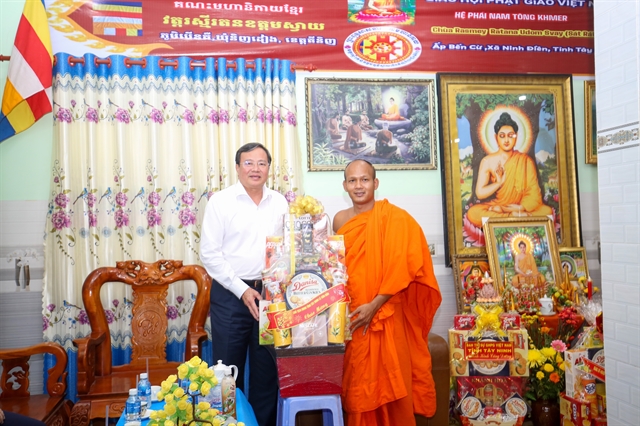 |
| Chairman of the Tây Ninh Province People’s Committee Lê Văn Hẳn presents gifts and extends greetings to the abbot of Svay Pagoda in Ninh Điền Commune on the occasion of the 2026 Chol Chnam Thmay, the Khmer New Year festival, which takes place from April 14–16. — VNA/VNS Photo |
TÂY NINH — Tây Ninh Province is stepping up efforts to improve the livelihoods of Khmer people while preserving their cultural identity through targeted policies, infrastructure investment and community-based initiatives.
Lê Văn Hẳn, chairman of the provincial People’s Committee, said: “The provincial Party Committee and authorities have effectively implemented ethnic policies, helping improve both the material and spiritual life of local people in recent years.”
Infrastructure in ethnic minority areas has been upgraded, while livelihood support has helped many households stabilise their lives, he said.
Khmer people are the largest ethnic minority group in the southern province.
Tân Hòa Commune, a border locality with a large ethnic minority population, is home to nearly 200 Khmer households, most of whom live in Con Trăn Hamlet.
Lâm Muốt, born in 1960 and a respected figure in the hamlet, said local livelihoods are now largely stable, mainly based on agriculture.
Each household typically has at least one hectare of rice field, ensuring sufficient food supplies, he said.
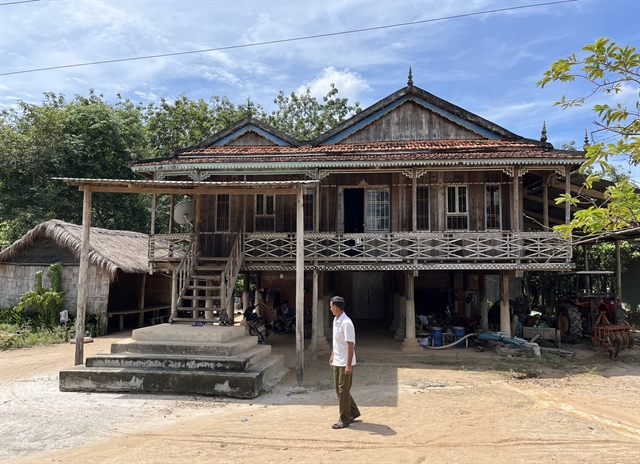 |
| A Khmer house in Tân Hòa Commune’s Con Trăn Hamlet still retains the cultural identity of the Khmer people. — VNA/VNS Photo |
Alongside farming, Khmer people in the commune benefit from national target programmes and support policies, including access to soft loans, vocational training and social welfare policies.
Support from authorities and efforts by local residents have brought clear improvements in Khmer communities.
Đào Thái Sơn, a Khmer culture researcher, said the most visible change is that homes are gradually being built in a more modern style while still retaining traditional features.
“Most households now have essential facilities for daily life,” he said.
Preserving Khmer identiy
In Tây Ninh, improving the lives of Khmer people goes hand in hand with preserving their cultural identity.
Ethnic policies, economic programmes and cultural activities are implemented together to support sustainable growth.
In spiritual life, traditional festivals continue to be held and attract wide participation.
Chol Chnam Thmay, the traditional Khmer New Year festival, best reflects their cultural identity.
Held in mid-April each year, it sees people gather at pagodas to offer food, bathe Buddha statues, build sand mounds and pray for peace and good harvests.
On the occasion of the 2026 Chol Chnam Thmay festival, held from April 14 to 16, Lê Văn Hẳn, chairman of the Tây Ninh People’s Committee, visited and extended New Year greetings at Hiệp Phước Khmer Theravada Buddhist Pagoda in Hòa Hội Commune, Svay Pagoda in Ninh Điền Commune, and the Tây Ninh Cao Đài Holy See, where many Khmer residents gather for religious activities.
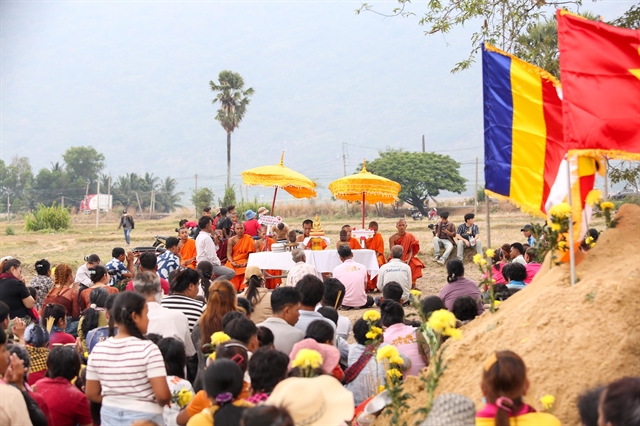 |
| Monks of Botum Kirirangsay Pagoda in Bình Minh Ward perform rituals during the 2026 Chol Chnam Thmay, the Khmer New Year festival, in a solemn ceremony reflecting traditional beliefs and hopes for a good harvest among the Khmer community. — VNA/VNS Photo |
Danh Phước, a Khmer resident in Hòa Hội Commune, said: “For us, Chol Chnam Thmay is not only a time to rest but also a moment for family reunion, when we go to the pagoda together to perform rituals and pray for peace. These traditional practices help younger generations better understand their roots and cultural identity.”
Thạch Sô Phia, from Ninh Điền Commune, said: “Every year during the festival, we wear traditional costumes, take part in singing and dancing, and join folk games.
“I always remind my children to preserve the Khmer language and customs, as they are a unique identity to be proud of,” she said.
Kiên Sô Phát, abbot of Botum Kirirangsay Pagoda, also called Khedol Pagoda, in Bình Minh Ward, said: “Chol Chnam Thmay is the most important New Year festival. It is a time to pray for favourable weather, good harvests and a peaceful life, and to begin the year with hope and aspiration.”
Khmer pagodas serve not only as religious centres but also as cultural hubs where Khmer script, the Pali language and traditional moral values are preserved and taught to younger generations.
Traditional arts such as the Chhay-dăm drum dance, Khmer coconut-shell dance and five-tone music continue to be maintained and promoted.
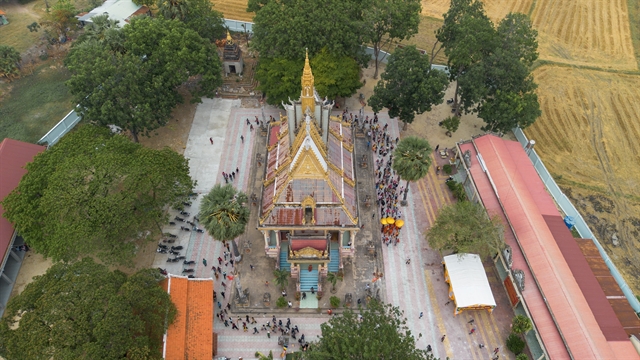 |
| Botum Kirirangsay Pagoda in Bình Minh Ward is one of Tây Ninh Province’s typical Khmer pagodas that still preserves the strong traditional cultural values of the Khmer community. — VNA/VNS Photo |
The Tây Ninh Ethnic Boarding School’s Chhay-dăm drum dance club has become a highlight in preserving ethnic culture.
The club was formed years ago but was only officially reorganised in 2023, with structured activities supported by the school and the Bình Minh Ward Youth Union.
A notable feature is its inter-generational teaching model, in which senior students guide younger ones, creating a continuous cycle of cultural preservation.
Each week, members practise together one evening and continue training in their spare time.
Some students already have a foundation from their families or communities and are able to further develop their skills at school.
Cao Quốc Duy, an 11th-grade student at the school, said he had become familiar with Chhay-dăm drums from a young age and continues to practise at weekends.
Lê Minh Trung, deputy principal of the school, said: “The school considers preserving ethnic culture an important task. Cultural and artistic activities linked to traditional festivals help students appreciate their identity and practise preserving valuable traditions.”
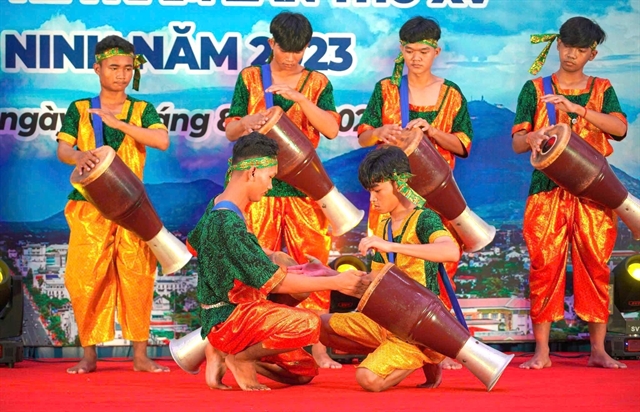 |
| The Chhay-dăm drum dance club at Tây Ninh Ethnic Boarding School performs at a local cultural event. — VNA/VNS Photo |
Promoting traditional culture
The province has prioritised preserving and promoting the traditional cultural values of ethnic minority communities, including the Khmer community, in recent years.
Bình Minh Ward has more than 200 Khmer households, and local authorities have paid close attention to improving their living conditions and cultural and religious life.
Khâm Yên, head of the Khmer Cultural House in Bình Minh Ward, said: “Traditional Khmer festivals are maintained, while traditional dances continue to be passed down and developed within the community.”
“The ward has recently invested in eight Chhay-dăm drums for use during festivals. Khmer children here are also supported to learn the Khmer language and script at school and at Khedol Pagoda,” he said.
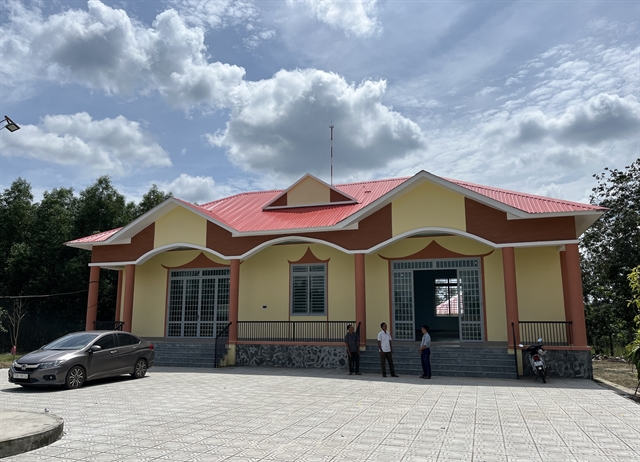 |
| The community house in Tân Hòa Commune’s Con Trăn Hamlet serves as a cultural space for ethnic communities in the area, including the Khmer. — VNA/VNS Photo |
The province has 12 ethnic minority cultural houses, creating favourable conditions for preserving and promoting traditional values.
It has invested in traditional costumes and musical instruments and established folk culture clubs.
Training courses, research activities and cultural preservation initiatives have been implemented and achieved positive results.
Lê Thị Hồng Kết, deputy director of the provincial Department of Culture, Sports and Tourism, said the training programmes have helped local people better understand and take pride in their cultural heritage, while encouraging them to share it more widely with the community.
Communication projects have also helped promote traditional cultural values, creating a foundation for introducing local tourist destinations, she said.
The province has two intangible cultural heritages of ethnic minority communities inscribed on the National Intangible Cultural Heritage List. They are the Chol Chnam Thmay festival and the Chhay-dăm drum dance of the Khmer people. — VNS
Society
 Society
 Society
 Society
 Society
 Society
 Society
 Society
 Society
 Society
 Society
 Society
 Society
 Society
 Society