 Society

OPPO Find X10 Pro Max to Debut Globally with MediaTek’s 2nm Flagship Dimensity 9600 Pro
1.
|
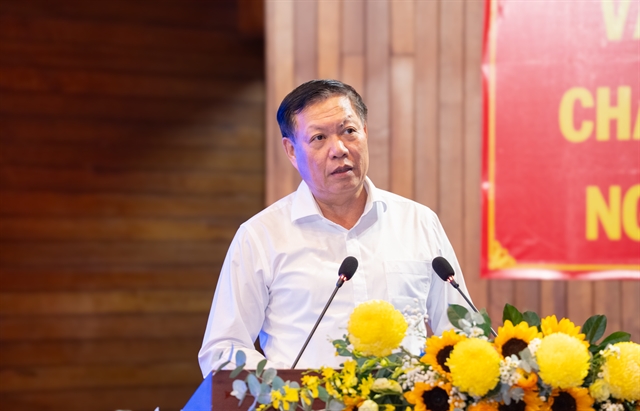
| Deputy Minister of Health Đỗ Xuân Tuyên speaks at Chợ Rẫy Hospital’s annual scientific conference held in HCM City on April 16. —VNA/VNS Photo |
HCM CITY — Science, technology and digital transformation are key drivers for the development of the healthcare sector, especially the application of artificial intelligence (AI) and high technology in diagnosis, treatment, specialised interventions, and hospital management, health experts said.
Speaking at Chợ Rẫy Hospital’s annual scientific conference held in HCM City on Thursday, Dr. Phạm Thanh Việt, Deputy Director of Chợ Rẫy Hospital, said that the development of digital technology and AI had created profound changes in modern medicine, especially in diagnosis, treatment, and healthcare management.
Chợ Rẫy Hospital prioritised the application of science and technology, innovation, digital transformation and strengthening the application of AI in medical examination and treatment, aiming to improve the quality of services, Việt said.
The hospital’s annual scientific conference created an opportunity to update scientific progress, and improve treatment effectiveness, he said.
It was a prestigious forum where scientists, doctors, pharmacists, and healthcare professionals could exchange expertise, update on new advances in diagnosis and treatment, present research projects with practical value, and expand domestic and international cooperation, he added.
Deputy Minister of Health Đỗ Xuân Tuyên, said that the Ministry of Health highly appreciated the role of Chợ Rẫy Hospital, not only as a tertiary hospital but also as a leading training, research, and technology transfer centre in the country.
He said that Chợ Rẫy Hospital continued to improve the quality of scientific research, linking it to clinical practice and prioritising research with potential for application and transfer.
The healthcare sector would focus on improving healthcare access and reducing the burden on higher-level facilities, he said.
To achieve these goals, health stations would be developed into fully integrated service units, with synchronised infrastructure, modern equipment, and a robust workforce, he said
Human resources would be key to developing grassroots healthcare and there should be specific solutions to ensure sufficient personnel for grassroots healthcare, he said.
The scientific conference brought together 1,000 domestic and international medical experts.
It featured more than 400 scientific reports covering almost all fields from clinical, paraclinical, pharmaceutical, nursing to social work.—VNS
Society
 Society
 Society
 Society
 Society
 Society
 Society
 Society
 Society
 Society
 Society
 Society
 Society
 Society
 Society