 Society

Sơn La holds second coffee festival, targeting stronger businesses in future
1.
|
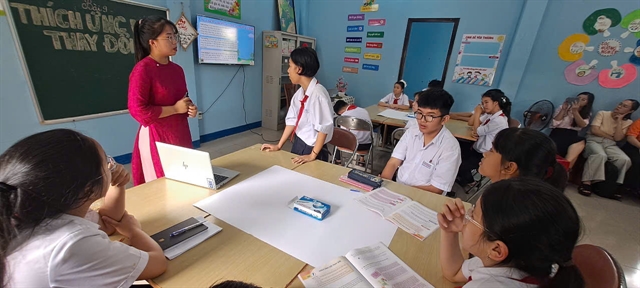
| A teacher speaks to students with disabilities at the Đà Nẵng Inclusive Education Resource Centre. Đà Nẵng has completed four pilot models of inclusive education and care services for children with disabilities. VNS Photo Công Thành |
ĐÀ NẴNG – Four pilot models on inclusive education and care services for children with disabilities in Đà Nẵng have demonstrated clear results in improving learning outcomes, increasing students’ confidence and strengthening teacher capacity, while showing strong potential for replication nationwide.
The closing ceremony of the models' implementation took place on April 17, marking positive progress in supporting people with disabilities.
Four models were implemented under the United Nations Joint Programme on Disability Inclusion (UNJP) from 2024 to 2026, delivered by UNDP, UNICEF and UNFPA, with funding from the Global Disability Fund.
|
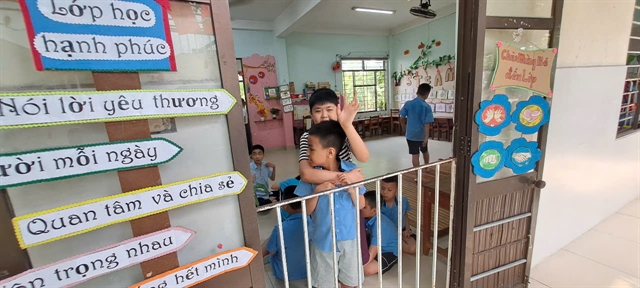
| Two boys greet visitors during a day care session at the Đà Nẵng Inclusive Education Resource Centre. More than 300 children with disabilities are educated at the centre. VNS Photo Công Thành |
During implementation of the models, the UNJP translated disability inclusion policy reforms into practical and scalable service models in education and care services, including accessible learning materials, capacity building for Inclusive Education Resource Centres (IERCs), a day care model and inclusive Comprehensive Sexuality Education (CSE).
Local school students with visual impairments can now learn independently and participate meaningfully in their classrooms thanks to the conversion of 147 textbooks into accessible digital formats. These e-books are now uploaded to an open-access digital library, alongside a user-friendly Vietnamese reading application, to allow free access for all students who need them, according to project organisers.
This means that students with disabilities learn in a more enabling environment and achieve better learning results, as teachers and staff are trained to apply flexible teaching methods for any learner regardless of their ability. Methods include Universal Design for Learning (UDL) and Individualised Education Plans, which capture every student’s learning need for better tailored support.
Meanwhile, children with severe disabilities can now be supported in their development through day care services that integrate life skills, specialised care and safeguarding standards.
Director of the Đà Nẵng Inclusive Education Resource Centre Đặng Thanh Tùng said that these enhanced day care services are essential to parents’ economic participation, allowing them to engage in income‑generating activities with the assurance that their children are in a safe and nurturing environment.
|
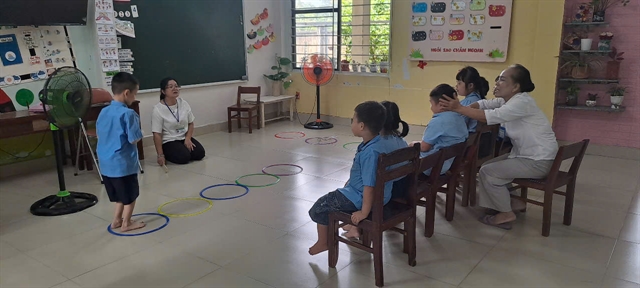
| Children with disabilities participate in an exercise game at the Đà Nẵng Inclusive Education Resource Centre. VNS Photo Công Thành |
Students with disabilities have gained better access to age-appropriate knowledge on sexual education, thanks to the integration of disability-inclusive CSE into school curricula, supported by trained teachers. CSE is essential for the students to effectively take care of and protect themselves as they grow up, Tùng said.
About 260 teachers, students and parents were involved in 14 training sessions, with 80 per cent of the participants reporting they have acquired new knowledge that will translate into stronger abilities.
The models have led to concrete and measurable improvements for students and teachers. Students have become more proactive in learning, with improved academic performance and greater confidence in discussing essential and sensitive topics such as gender, sex and consent.
Teachers have strengthened their capacity to deliver inclusive instruction using flexible approaches and practical tools, which will make the educational process more engaging and accessible for current and future student cohorts.
Tùng noted: “The UDL frameworks, individualised teaching approaches and teacher support tools, including lesson plans and assessment guidelines, can be widely applied across IERCs nationwide.
"At the same time, integrating disability-inclusive CSE is an important innovation that can be standardised for inclusive schools.”
The models have also helped position the centre as a regional technical hub, with strengthened capacity to support inclusive schools through counselling, intervention support and assessment guidance.
Government officials, educational institutions and organisations working to support persons with disabilities have identified key priorities for sustaining and scaling up the models. The replication of this experience is in full alignment with Việt Nam’s shift toward a social inclusion approach, which integrates inclusion principles into routine public services.
The results of the Đà Nẵng pilots demonstrate that inclusive education and support services can be successfully and affordably integrated into public systems.
The four components – accessible learning materials, strengthened IERC capacity, day care services and CSE -- have shown strong potential for nationwide replication.
Equally important, the integrated execution of the models has brought partners together and built momentum for scaling up from this year onward, reinforcing Việt Nam’s commitment to inclusion. VNS
Society
 Society
 Society
 Society
 Society
 Society
 Society
 Society
 Society
 Society
 Society
 Society
 Society
 Society
 Society