 Society
Việt Nam, China seek stronger substantive parliamentary cooperation
1.
|
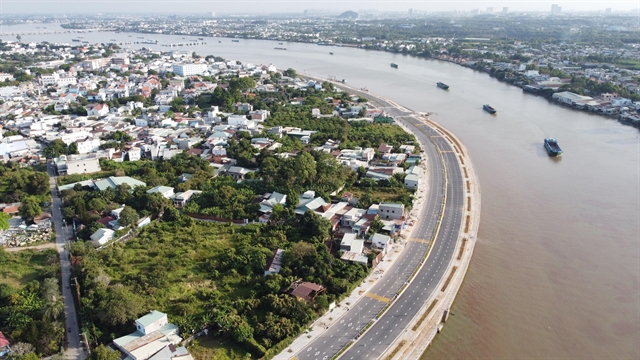
| The Đồng Nai River economic corridor axis, together with the free trade zone and airport, is expected to become Đồng Nai Province’s new growth hub. — VNA/VNS Photo |
ĐỒNG NAI — The southeastern province of Đồng Nai is poised for a major transformation as plans to establish it as a centrally governed city are expected to unlock new growth and elevate its regional role.
At the second plenum of the 14th Party Central Committee held March 23–25, delegates agreed in principle to the transformation of Đồng Nai Province, and tasked relevant authorities with finalising the proposal for submission to the National Assembly.
Nguyễn Văn Út, Chairman of the provincial People’s Committee, said Đồng Nai has strong grounds for confidence in its future, thanks to its solid industrial base, strategic location in the southeastern region and infrastructure, particularly key national projects.
The province also benefits from a tradition of unity, dynamism and a willingness to innovate among its Party organisation and people, he said.
“To realise the aspiration of becoming a centrally governed city, we cannot follow old paths but must strongly innovate our development thinking, approaches and governance methods.”
|
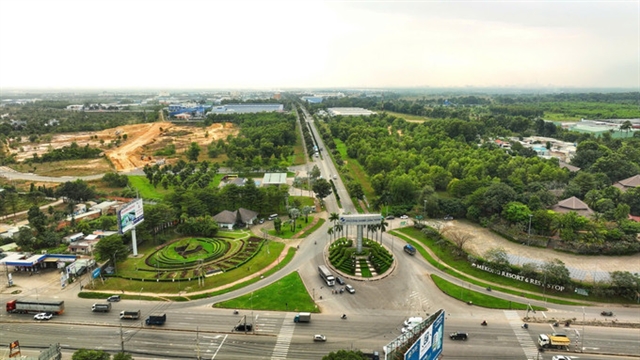
| Đồng Nai Province has a national transport network and inter-provincial and -commune roads that enable the easy development of industrial parks. — VNA/VNS Photo |
The province will focus on building a new development model, shifting from an “industrial province” to a “modern industrial–urban–service city”, with growth driven by technology, innovation and the digital economy.
It will continue to make breakthroughs in strategic infrastructure, using transport, urban development and logistics as key drivers to create new development space and enhance its role in regional and national connectivity.
It will build a modern, effective administration, shifting from management to services, placing people and businesses at the centre, and creating a transparent, competitive and attractive investment environment.
It will prioritise human development and improve quality of life, ensuring harmony between economic growth and cultural and social development, with the aim of becoming a desirable place to live, work, and contribute.
|
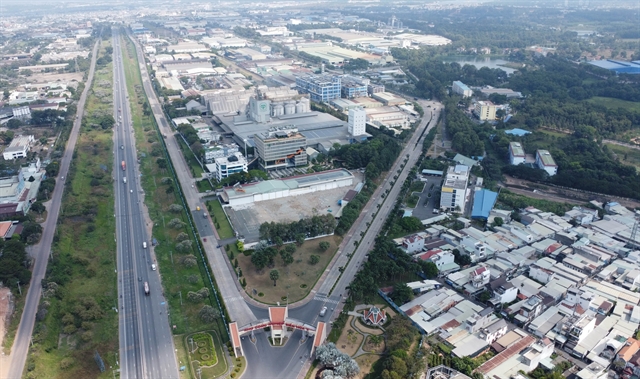
| A view of Biên Hòa 2 Industrial Park in Đồng Nai province. — VNA/VNS Photo |
Đồng Nai, with more than 325 years of development, holds a particularly important geopolitical position as one of the key growth poles in the southern region.
In the country’s overall development structure, the province is identified as one of the most dynamic localities, making a significant contribution to the southern key economic zone.
Located at the centre of the southeastern region, it not only has direct links with HCM City – the nation’s largest economic centre – but also serves as a vital bridge connecting the southeast with the south-central coastal and Central Highlands regions, with impacts extending to the Cửu Long (Mekong) Delta.
It functions as an international trade gateway and a hub coordinating flows of goods, services, finance, and investment across the south.
It has synchronised and modern transport infrastructure.
One of its key advantages lies in the strong development of transport infrastructure with high regional connectivity.
The province is identified as a strategic gateway to the southern key economic zone, where major transport modes converge, including road, air, rail and inland waterways.
|
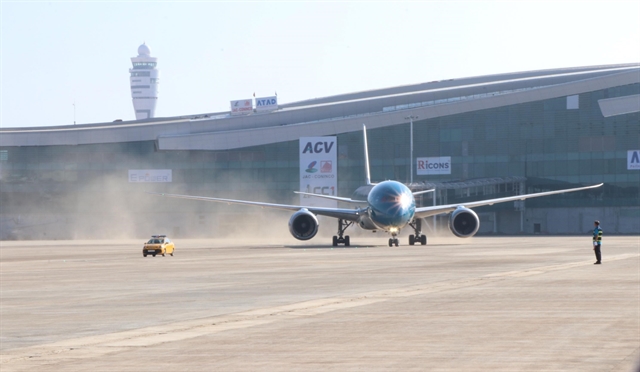
| The first flight landed at Long Thành International Airport in Đồng Nai Province on December 19 last year, marking a historic moment for Việt Nam’s aviation industry. — VNA/VNS Photo |
The ambitious Long Thành International Airport, with the capacity to handle up to 100 million passengers and five million tonnes of cargo in its final phase, is a key national project and is nearing commercial operation. It is seen as a major turning point for the province’s development.
When the airport is fully connected with deep-water seaports, inter-regional expressways, ring roads and modern railway links, the province will form a complete multimodal transport ecosystem.
This will be a major competitive advantage, helping the province become a key node in global supply chains and attract high-quality investment and multinational corporations.
Growth momentum
According to the provincial People’s Committee, upgrading to a centrally governed city is expected to enhance Đồng Nai’s position. The province will have greater autonomy in deciding major projects and can become a national growth pole.
It will strengthen links with HCM City to form a major regional growth centre, improving competitiveness at regional and international levels.
It will become more attractive to both domestic and foreign investors, including high-quality foreign direct investment (FDI). It will focus on green and sustainable industry, logistics and the Long Thành International Airport urban area.
It will promote smart urban development. Urban space will be restructured under a multi-centre model, linking Biên Hòa, Long Thành, Nhơn Trạch, Long Khánh, Đồng Xoài, and surrounding areas.
Economic experts said upgrading to city status will accelerate economic restructuring. The province will reduce reliance on processing industries and move towards high-value industries and internationally standardised services.
Sectors such as logistics, finance, technology and innovation are expected to increase their share, raising added value in production chains.
|
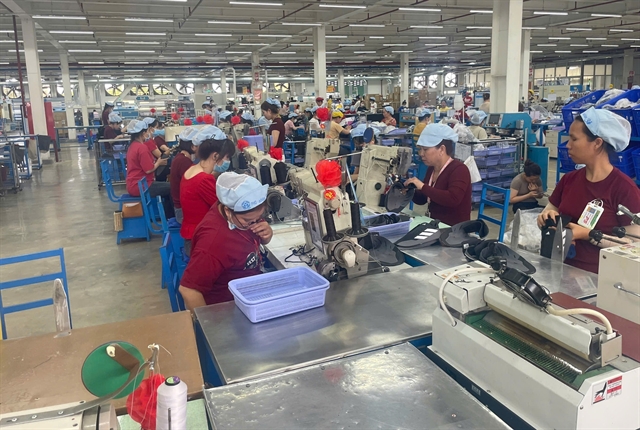
| Production activities at Pou Phong Vietnam Company Ltd. in Bàu Xéo Industrial Park, Đồng Nai Province. — VNA/VNS Photo |
The province has a population of nearly 4.5 million and a natural area of 12,737sq.km. It has an abundant and skilled workforce with significant room for development.
The province’s gross regional domestic product (GRDP) reached VNĐ677.9 trillion (US$25.7 billion) and budget revenue exceeded VNĐ103 trillion ($3.9 billion) last year.
GRDP per capita reached VNĐ152.8 million ($5,800) last year.
Đồng Nai contributes 5 per cent of the national gross domestic product (GDP) and ranks fourth in economic contribution after the centrally governed cities of Hà Nội, Hải Phòng, and HCM City.
“As the country enters new opportunities for development, along with the aspirations of local people, establishing Đồng Nai as a centrally governed city will help boost economic growth and create momentum for it to become a new growth pole in the southern region and the country. This will be a new driving force for strong development in the coming period,” said Tôn Ngọc Hạnh, standing deputy secretary of the provincial Party Committee and Chairwoman of the provincial People’s Council. — VNS
Society
 Society
 Society
 Society
 Society
 Society
 Society
 Society
 Society
 Society
 Society
 Society
 Society
 Society
 Society