 Society

Việt Nam, China seek stronger substantive parliamentary cooperation
1.
|
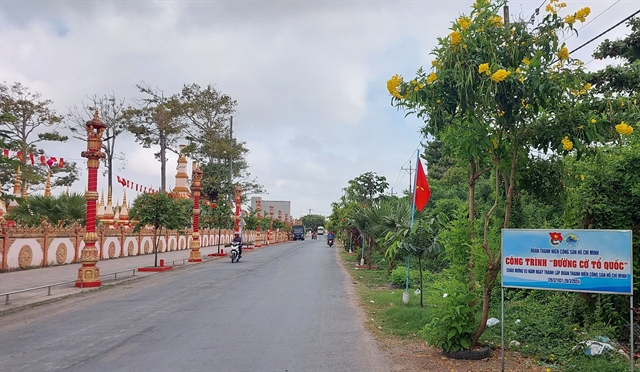
| Transport infrastructure in many ethnic minority areas in Cà Mau Province has been upgraded, making travel and goods transport more convenient for locals. — VNA/VNS Photo Tuấn Kiệt |
CÀ MAU — The lives of ethnic Khmer people in the southernmost province of Cà Mau have improved greatly in recent years as the local government’s effective policies and timely support help many of them escape poverty.
The Khmer, nearly 140,000 strong and accounting for around 6.5 per cent of the province’s population, have gradually developed the household economy.
In Hưng Hội Commune’s Sóc Đồn Hamlet, where more than 70 per cent of over 700 households are Khmer, the rural landscape has changed markedly thanks to tailored support policies.
Infrastructure has been upgraded, creating a foundation for economic growth.
Thách Son’s family in the hamlet is a typical example. He said his family had access to soft loans from the Vietnam Bank for Social Policies and the Vietnam Bank for Agriculture and Rural Development to invest in agriculture.
With an integrated farming model livestock with two rice crops a year, his family earns more than VNĐ300 million (US$11,400) annually, he said.
“I hope the authorities will introduce more preferential policies for ethnic minority areas so that people can further develop their household economy and improve their living standards.”
|
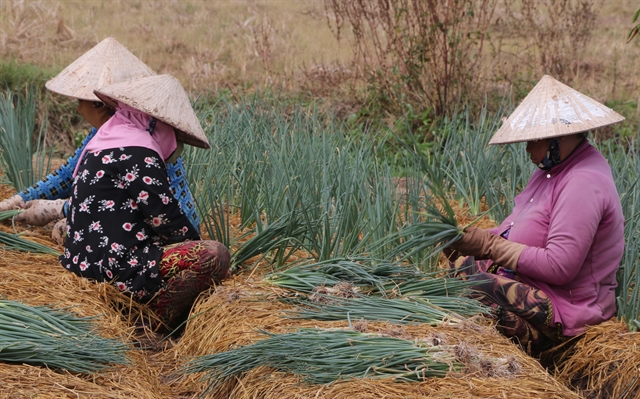
| Khmer farmers in Cà Mau Province’s Hiệp Thành Ward harvest spring onions. — VNA/VNS Photo Tuấn Kiệt |
In Vĩnh Phước Commune, home to more than 600 Khmer households, policies have delivered clear results.
Authorities maintain regular contact with local residents, listen to their concerns and disseminate information to ensure policies are well understood and implemented.
Danh Trường’s family in the commune’s Bình Lễ Hamlet has benefited from timely support. Its once-poor members relied on 0.5ha of rice paddy and casual agricultural work for an unstable income.
After receiving housing support and loans to develop a model raising civet cats and poultry, the family now earns more than VNĐ100 million ($3,800) a year.
“Thanks to timely support from local authorities, our lives have become less difficult and we are gradually improving,” Trường said.
Another effective approach is a model providing breeding pigs to Khmer households in Vĩnh Phước Commune’s Bình Hổ Hamlet.
In 2024–25 six households received the pigs, most of which have been raised successfully.
Trần Út Nhỏ’s family is among the beneficiaries. Starting with eight pigs, they have expanded the herd and kept sows for reproduction, thus stabilising their income.
He said: “When local authorities support us, we try our best to work hard and escape poverty. We must also make extra efforts because support alone is not enough.”
Each year the family sells two to three batches of pigs, which at times fetch VNĐ2 million ($76) per animal, significantly improving their income.
Nguyễn Văn Kiệt, secretary of the Bình Hổ Hamlet Party Cell, said the model has created strong motivation for residents, especially those without farmlands.
“Breeding pigs grow quickly and can be sold after four to five months, making the model suitable for many poor households. We encourage effective households to expand this model to improve livelihoods, especially for landless people.”
Trần Hoàng Lĩnh, chairman of the Vĩnh Phước Commune Fatherland Front Committee, said the number of poor Khmer households has fallen rapidly, while better-off households continue to increase.
The commune now has only 14 poor and 11 near-poor Khmer households.
|
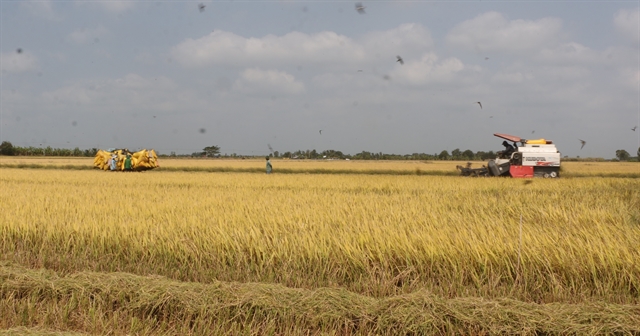
| Khmer farmers in Cà Mau Province’s Hưng Hội Commune use machines to harvest the 2025–26 winter–spring rice crop. — VNA/VNS Photo Tuấn Kiệt |
Alongside improved living conditions, awareness and mindset towards agricultural production have also improved.
Nguyễn Nhân Đức, chairman of the Hồng Dân Commune People’s Committee, said ethnic people are becoming more proactive in adopting new techniques and developing the household economy.
Training and support, through the provision of breeding stock and preferential loans, have helped them.
At the provincial level, support policies are being implemented on a larger scale.
Ngô Vũ Thăng, deputy chairman of the provincial People’s Committee, said the province has approved a livelihood support project for poor and near-poor households, policy beneficiary families in difficult circumstances and ethnic minority households, with funding of more than VNĐ622 billion ($23.6 million).
Under this, more than 1,200 ethnic households will receive support.
Measures include providing breeding stock and animal feed, teaching production techniques, offering vocational training and job placement, assisting with tools and equipment, and ensuring access to production land and capital.
The province aims to ensure that by the end of 2027, at least 70 per cent of supported poor, near-poor and ethnic minority households will permanently climb out of poverty. — VNS
Society
 Society
 Society
 Society
 Society
 Society
 Society
 Society
 Society
 Society
 Society
 Society
 Society
 Society
 Society