 Society
Education gets smarter
1.
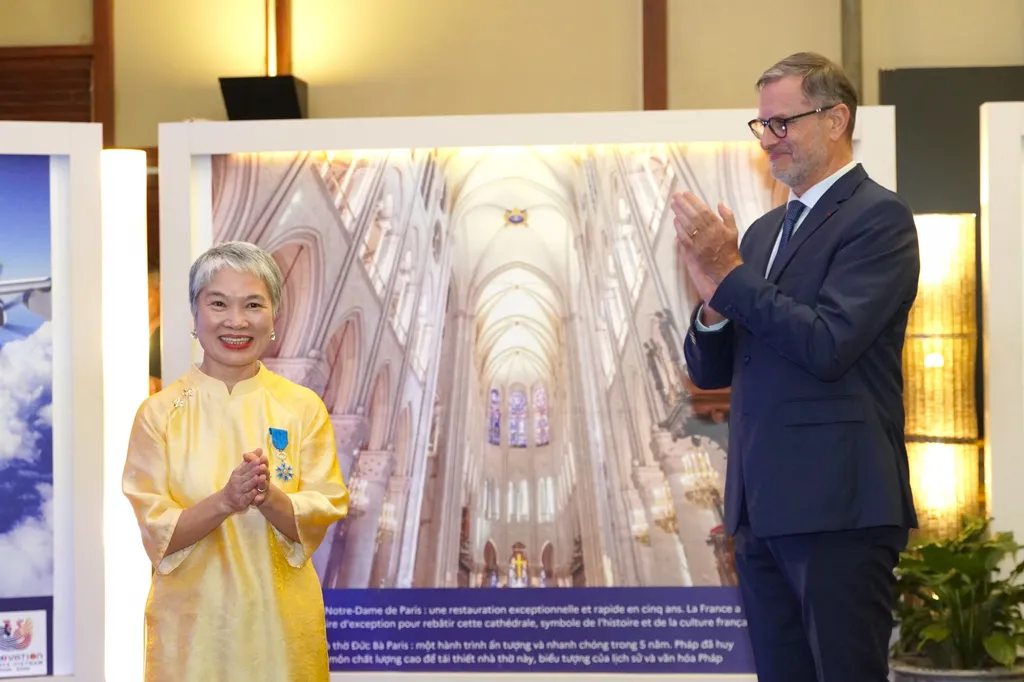 |
| Ambassador Olivier Brochet presents the National Order of Merit to Dr Khuất Thị Hải Oanh. Photos courtesy of Hải Oanh. |
Ambassador Olivier Brochet pinned the National Order of Merit, Knight rank (Chevalier de l’Ordre national du Mérite), onto Dr Khuất Thị Hải Oanh, an honour established in 1963 to recognise those whose careers and dedication serve the collective interest with distinction.
Standing there, Dr Oanh, founder and Executive Director of the Centre for Supporting Community Development Initiatives (SCDI), spoke little about figures or SCDI’s notable achievements, an organisation she has guided for 16 years.
Instead, she spoke of her father, a soldier once imprisoned and tortured during the colonial period, who later taught her about the beauty of French literature and a boundless sense of humanity. He has remained present in nearly every important decision she has made, a quiet but unwavering moral compass.
She also spoke of the companions who have walked alongside her throughout her years of service to the community, people she holds in deep regard for their persistence in shaping a more humane approach to public health challenges in Việt Nam.
Her story reflects the way she has practised public health for more than two decades: a steady journey shaped by compassion, tireless advocacy and a commitment to those whose voices are rarely heard.
From pain to personal responsibility
Dr Oanh’s journey into public health did not begin with statistics, but with real faces and lived stories.
The most painful memory, one that shaped her path, dates back to 2005.
That year, while supporting a group of people living with HIV, she received a scholarship for a three-month course abroad. During that time, she learned that two members of the group had taken their own lives, both young men who had just graduated from university.
“HIV was not the reason they died. It was stigma and isolation that pushed them to the edge," she said.
"It stayed with me for a long time.
“I felt a sense of guilt. If I had been there, perhaps they might have called me in their moment of despair. It felt like a personal responsibility.
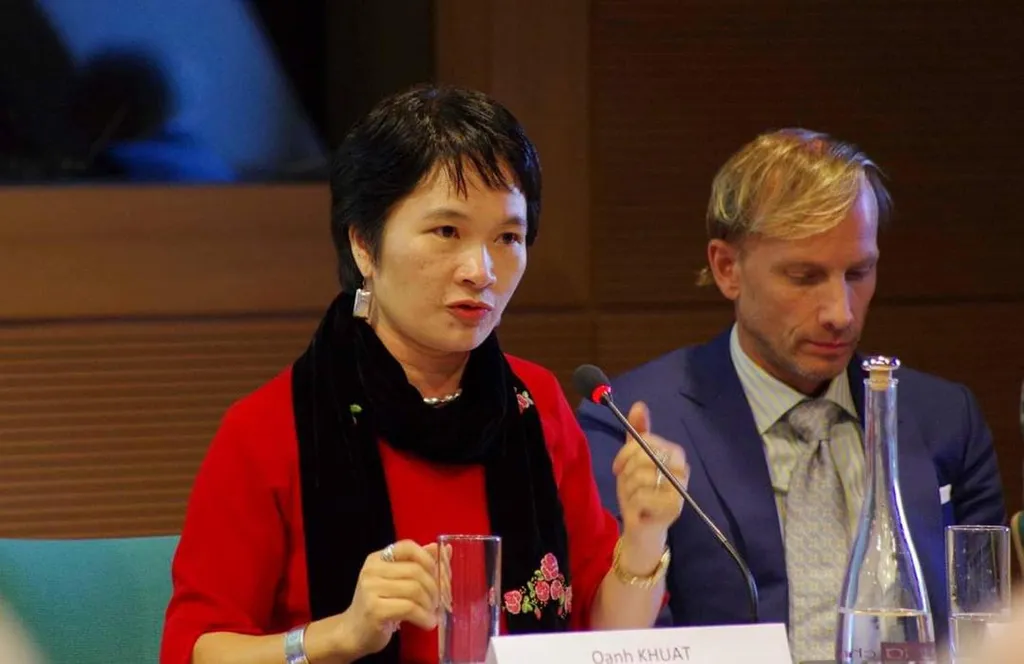 |
| Dr Oanh speaks during an advocacy event for the Global Fund to Fight AIDS, Tuberculosis and Malaria. |
In 2002, she co-founded the Institute for Social Development Studies (ISDS) and eight years later, the Centre for Supporting Community Development Initiatives (SCDI).
She now serves as Executive Director of SCDI, whose mission is to contribute to an inclusive society by improving the lives of marginalised populations. In line with the Sustainable Development Goals, the organisation focuses on community empowerment and creating enabling conditions for the most vulnerable.
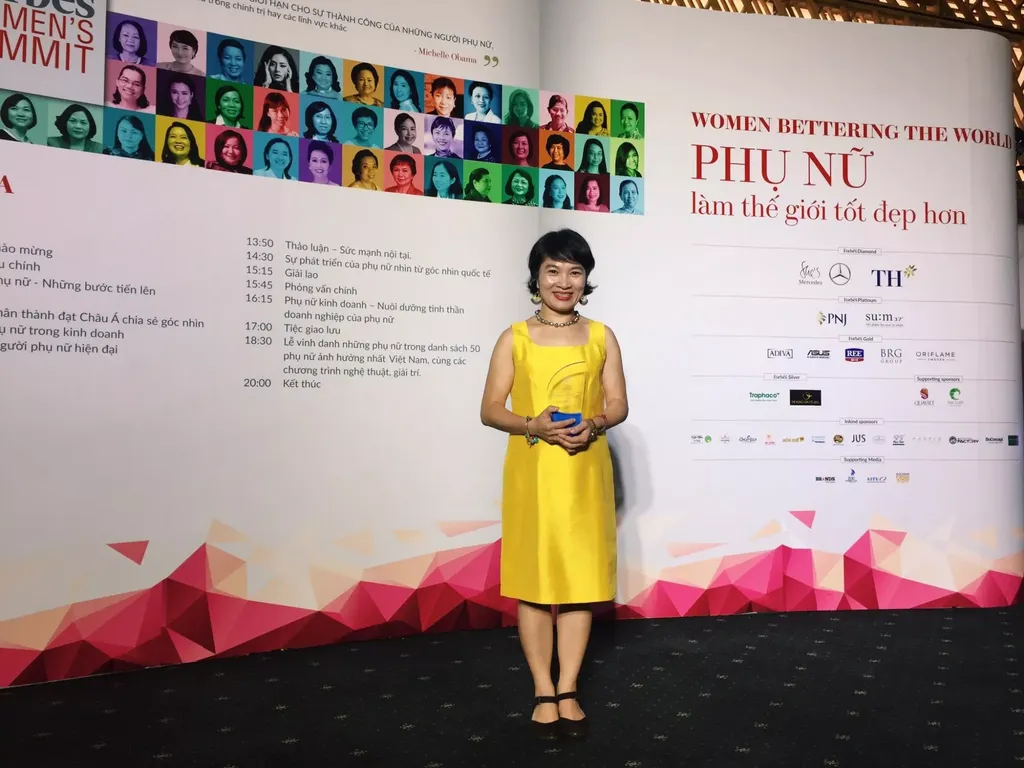 |
| At the 2017 Forbes Women Summit in Hồ Chí Minh City, Dr Khuất Thị Hải Oanh was honoured as one of Việt Nam’s 50 most influential women in social impact, as recognised by Forbes Việt Nam. |
The funding will support efforts to combat HIV, tuberculosis and malaria, diseases that once inspired fear but are now increasingly manageable, she noted.
As a result, Việt Nam has undergone a remarkable transformation in HIV treatment, moving from a time when medication was nearly unavailable to a point where people living with HIV can live healthy lives and safely have children. Hundreds of thousands are now receiving continuous treatment.
Oanh stressed that in a world facing growing uncertainty, from pandemics and unequal access to healthcare to declining funding for community and social organisations, it is more important than ever to recognise that health is not merely a technical issue, but one of equity and justice.
“In the end, a society is not judged by how it treats the most powerful, but by how it treats the most vulnerable,” she said.
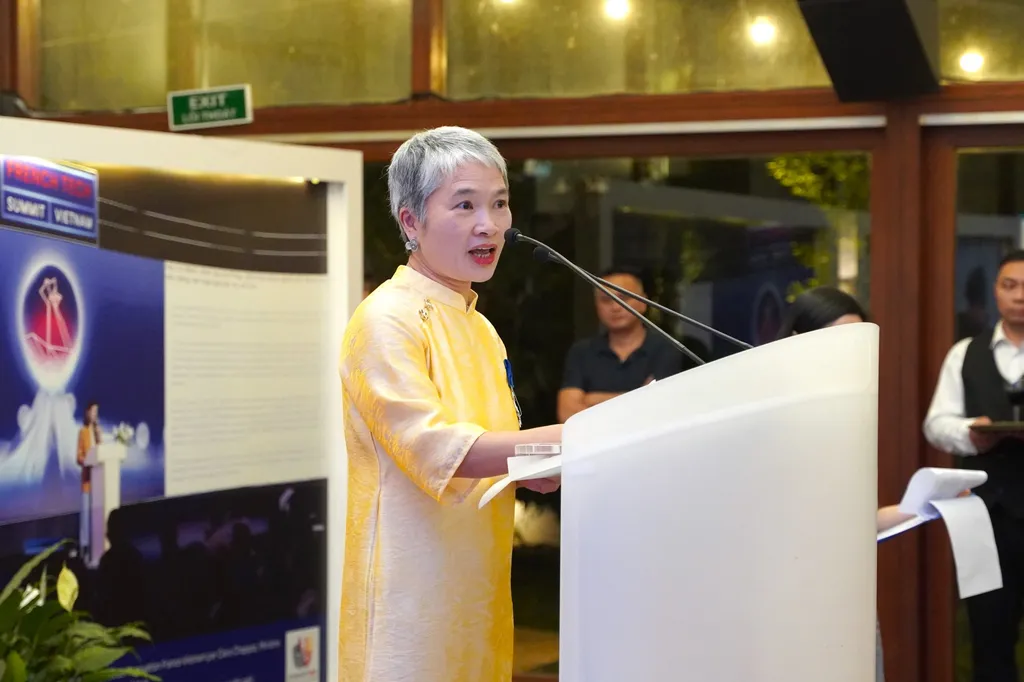 |
| Dr Oanh speaks at the event. |
He said to Oanh: “Your career has led France to wish to bestow upon you this distinguished honour.
"As a highly trained doctor, you have, over decades, dedicated your expertise and energy to the fight against HIV/AIDS, to defending the rights of people living with HIV, and more broadly to promoting a humane, inclusive and rights-based approach to public health.”
A seven-year policy 'mountain climb'
One of the most significant milestones in her career has been the sustained effort to integrate antiretroviral treatment into the national health insurance system.
In 2012, when Việt Nam became a middle-income country and international funding began to decline, the HIV community faced deep uncertainty. Without a sustainable domestic financing mechanism, tens of thousands of lives were at risk.
Together with SCDI, she began a demanding advocacy process to amend the Health Insurance Law.
"We had to advocate for integrating or upgrading these facilities.”
The most difficult challenge, however, lay in identity documentation. Many patients had no personal identification, while regulations required photo ID for medical services. Some policymakers argued that this was unacceptable.
After six years of advocacy, Decree 146 was issued in 2018, allowing people living with HIV without formal identification to use health insurance cards with photographs.
It was a victory of persistence and empathy.
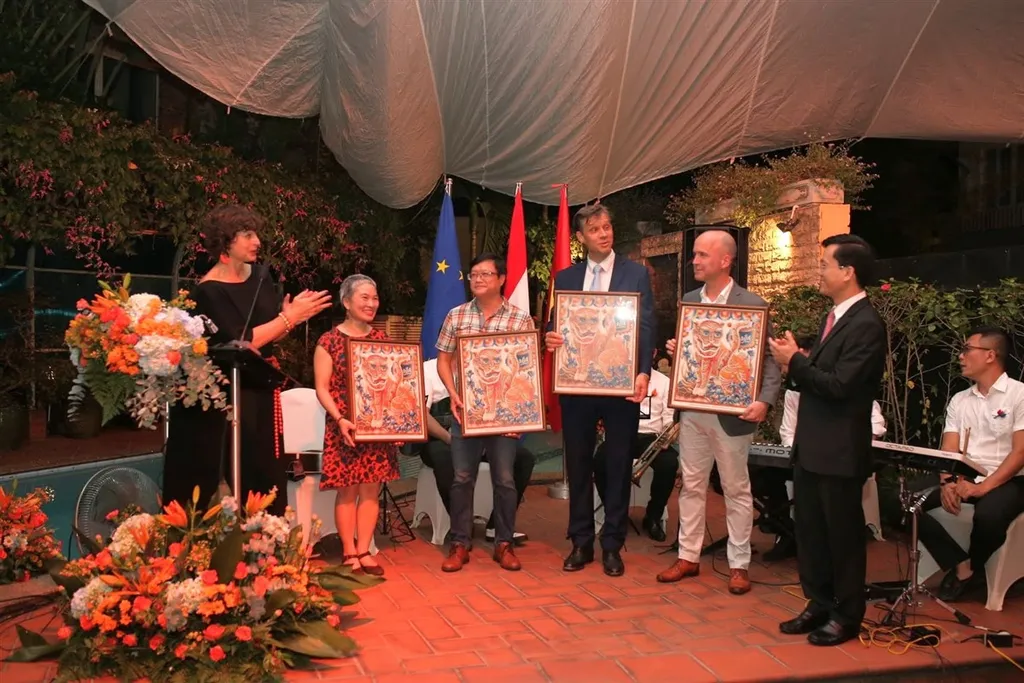 |
| At a reception marking the King’s Birthday, the Embassy of the Netherlands in Việt Nam presented the Tiger Award to five outstanding individuals, including Dr Khuất Thị Hải Oanh, founder of One Egg a Day, a charitable initiative providing nutritional support to vulnerable groups, including poor and homeless people in Sài Gòn during the COVID-19 pandemic. |
In her life, several figures have served as steady anchors.
The first was her father, Lieutenant General, Hero of the People’s Armed Forces Khuất Duy Tiến. When she chose to leave the military medical system to work with international organisations, he was surprised but did not question her decision. He simply said that anything beneficial to the people and the country was worth doing.
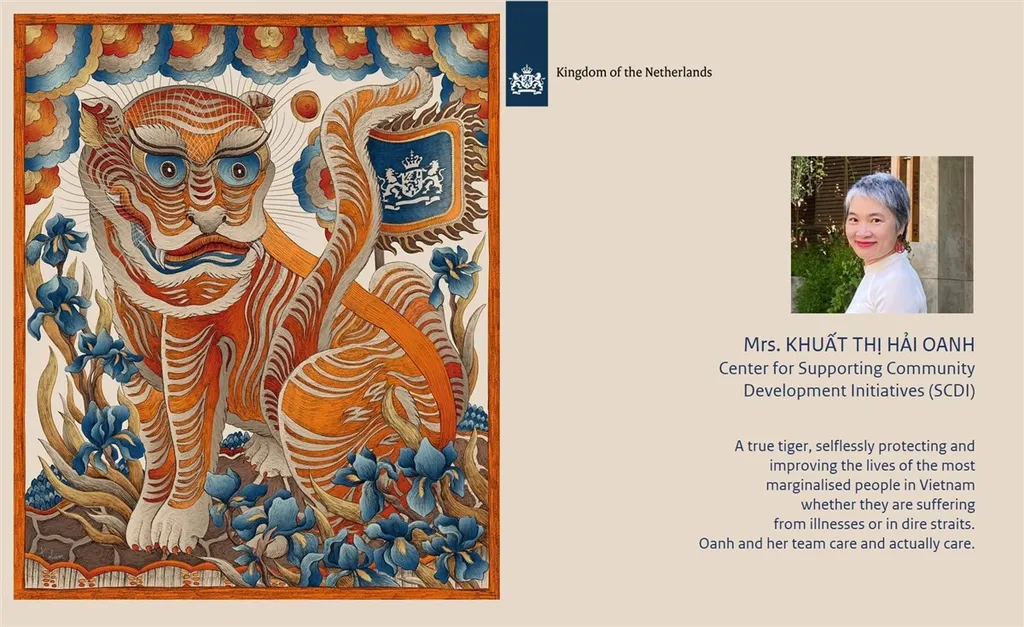 |
| The Five Tigers painting presented to Dr Khuất Thị Hải Oanh by the Embassy of the Netherlands in Việt Nam. |
They met when he was working in Việt Nam for the WHO. He stood beside her from the early days, when harm reduction was still a new and controversial concept, and helped bring to life the values of liberty, equality and fraternity.
Another key figure is Dr Didier Laureillard from ANRS, whom she also regards as a guiding presence in her professional life.
Through these connections, she has built a bridge of science and humanity between France and Việt Nam, enabling vulnerable communities to access advanced research and support from organisations such as Expertise France and AFD.
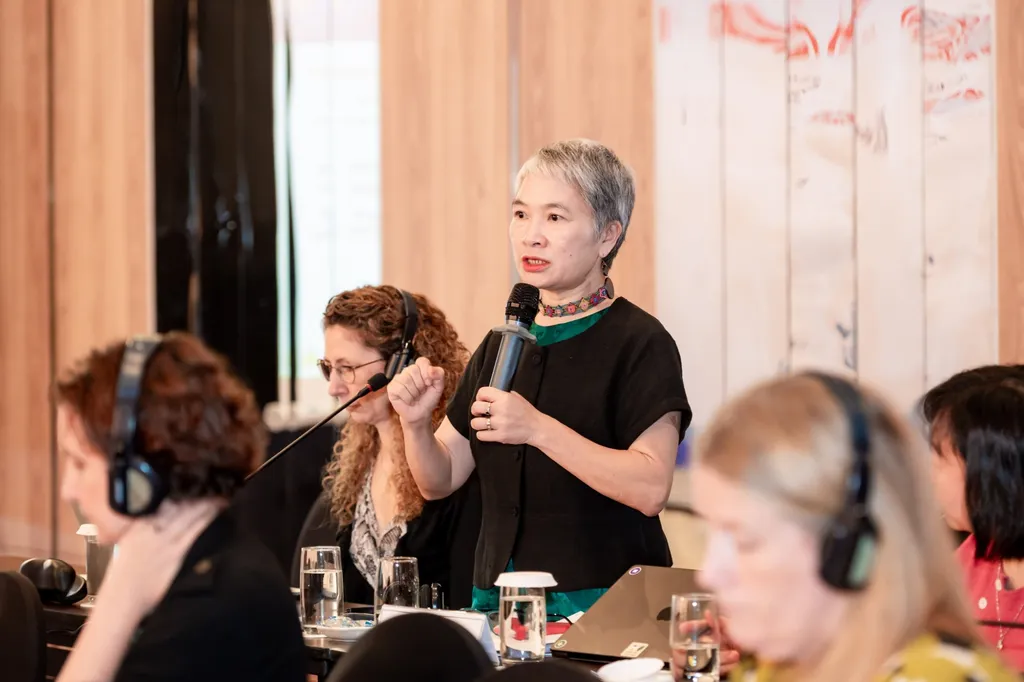 |
| Dr Oanh speaks at the launch of the ASEACA Project in March 2026. Part of the French Government’s PREZODE initiative and funded by the French Development Agency (AFD), the project aims to strengthen research capacity and international cooperation in preventing zoonotic diseases through a One Health approach. |
The true heroes, she says, are the 700 SCDI staff and more than 700 members across community-based organisations in 12 provinces and cities.
“In this work, no achievement belongs to any one individual,” she said.
Now in her fifties, she shows no sign of slowing down. She remains concerned about patients dropping out of treatment, adolescents transitioning from paediatric to adult care, and those still hesitant to use health insurance for fear of stigma.
Society
 Society
 Society
 Society
 Society
 Society
 Society
 Society
 Society
 Society
 Society
 Society
 Society
 Society
 Society