 Society
HCM City detains 21 in environmental data falsification probe
1.
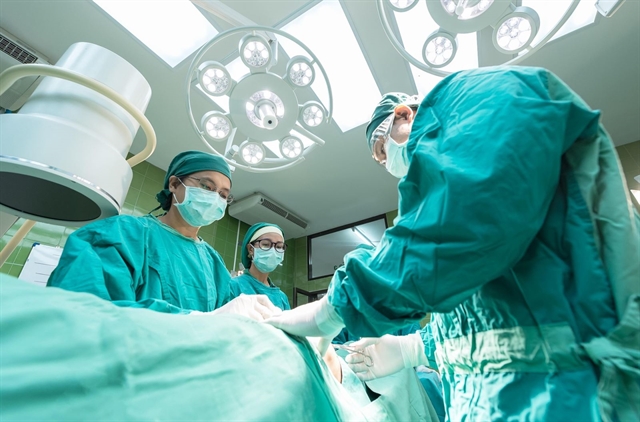 |
| The professional competence of Vietnamese doctors is gaining the trust of many international patients. VNA/VNS Illustrative Photo |
HÀ NỘI — Medical tourism is emerging as a highly promising sector in Việt Nam, attracting an increasing number of international patients thanks to competitive costs and professional expertise steadily approaching international standards.
However, to turn this advantage into a global brand, the health care sector still needs to address challenges in communication and in building sustainable trust.
Foreign patients’ smiles and Việt Nam’s medical progress
In the lobby of an international dental clinic in HCM City, it is easy to hear conversations in English, French or Korean that are even livelier than those in Vietnamese.
In a corner, a 62-year-old former engineer from Sydney, Australia sips lotus tea after undergoing full-arch dental implant surgery, showing no signs of pain or fatigue.
“In Australia, the bill for this smile might be up to US$40,000, let alone a few months on the waiting list,” he said.
“Here, I just paid less than $11,000, and the work was completed in a week, and the rest of the time my wife and I spent strolling around and admiring the city."
The story of the Australian man is not rare.
In recent years, dentistry has become one of the leading spearheads of Việt Nam’s medical tourism sector.
Thanks to the integrated application of 3D scanning technology, CAD/CAM smile design and equipment imported from Europe, many domestic clinics have reached professional standards comparable to those in developed countries.
Meanwhile, the cost of a dental implant in Việt Nam is only about $1,000–1,500 per tooth, significantly lower than the roughly $5,000 charged in the US.
This combination of advanced technology and reasonable costs has gradually positioned Việt Nam as a new regional smile factory.
Beyond fast, minimally invasive services, Việt Nam’s health care sector is also seeing a growing number of international patients seeking specialised treatments that require advanced techniques and longer treatment periods.
One notable field is assisted reproduction.
A 38-year-old woman from Australia had undergone three rounds of in-vitro fertilisation (IVF) in Australia but failed. She decided to go to Việt Nam to look for better luck in a fertility support centre in Hà Nội.
“The embryology lab here is just as modern as in Sydney. But what surprised me most was that the doctors always remembered my name, knew every hormone level, and patiently explained everything during each ultrasound,” she said.
The cost of an IVF cycle in Việt Nam currently ranges from approximately $5,000 to $8,000, two to three times lower than in other countries.
The number of babies of foreign nationality conceived in Việt Nam is increasing, reflecting the success rate of domestic IVF centres, which now reaches approximately 50-60 per cent, on par with many developed countries.
Beyond dentistry and assisted reproductive technology, many other areas of Vietnamese medicine are emerging as attractions for medical tourism, including cosmetic surgery, health screening, cancer treatment, robotic surgery and traditional medicine rehabilitation therapies.
According to experts, Việt Nam’s greatest advantage lies in the combination of increasingly advanced professional capabilities and competitive treatment costs.
Many medical services in Việt Nam are 60-80 per cent cheaper than in developed countries, while the quality of treatment is increasingly approaching international standards.
The shift in the flow of international patients is not the result of luck. It is the fruit of years of modernisation of the healthcare system.
A notable milestone was reached in January 2025, when the HCM City Blood Transfusion and Hematology Hospital became the first public hospital in Việt Nam to achieve Joint Commission International (JCI) accreditation, a standard considered the global gold seal for patient safety and medical governance.
With a score of 9.89 out of 10, the hospital proved that the Vietnamese public healthcare system fully meets strict standards of safety and quality care.
The progress has opened a potential market.
According to statistics from the health sector, turnover from medi-tourism in 2025 reached $850 million and maintained an annual growth of 18 per cent.
If the trend continues, the market is estimated to reach $4 billion in the next decade.
Overcoming media gap to build trust
Despite considerable clinical capacity and cost advantages, Việt Nam appears to lag behind other countries in the region in media coverage.
For many years, Thailand and Malaysia have positioned themselves as international healthcare hubs through large-scale national branding campaigns.
In Thailand, many hospitals are designed as luxury medical resorts where international patients are welcomed by multilingual staff with simplified administrative procedures and professional supporting services.
Meanwhile, Việt Nam lacks a national-level communication strategy to clarify its position on the global medi-tourism map.
Dr Giannina Warren, professor at RMIT University Việt Nam, said the shift in the global healthcare landscape after the pandemic is opening significant opportunities for countries in the region, including Việt Nam.
According to the professor, Việt Nam’s advantage lies in a combination of increasingly advanced medical capabilities, competitive treatment costs and a rapidly modernising health care system.
However, for these advantages to truly translate into a stable flow of international patients, the health care sector needs to invest more seriously in its communication strategy.
One of the biggest challenges is that information on Việt Nam’s healthcare services is scattered. International patients have been looking up information from several sources, such as hospitals’ websites, newspapers, social networks or unofficial forums.
The lack of a centralised and reliable source may make international patients hesitate, even with the expertise of Vietnamese doctors.
Sharing this view, Dr Bùi Quốc Liêm, a lecturer in Professional Communication at RMIT University Việt Nam, said many of Việt Nam’s medical achievements are still being communicated as isolated stories.
Progress in organ transplant, reproductive support, robotic surgery or JCI accreditation by public hospitals in 2025 was a significant milestone. However, without a cohesive storytelling approach, these achievements struggle to create a strong national message to attract international patients, Liêm said.
Experts say it is time for the medi-tourism sector to shift from general promotion to storytelling.
Real-life stories about treatment journeys, recovery experiences and the dedicated care of medical staff have a far more powerful impact than mere advertising messages.
These stories build trust for international patients.
In addition, digital platforms play a vital role in connecting global patients to Việt Nam’s medical system.
Telemedicine tools, online service rating systems or official hospital information platforms can help patients access services even before deciding to book their flight.
The future of medical tourism in Việt Nam depends not only on the professional competence of doctors but also on how clearly, reliably and consistently the health care sector communicates that competence to the world. — VNS
Society
 Society
 Society
 Society
 Society
 Society
 Society
 Society
 Society
 Society
 Society
 Society
 Society
 Society
 Society