 Society

MoIT to build system to flag unusual fuel price movements
1.

|
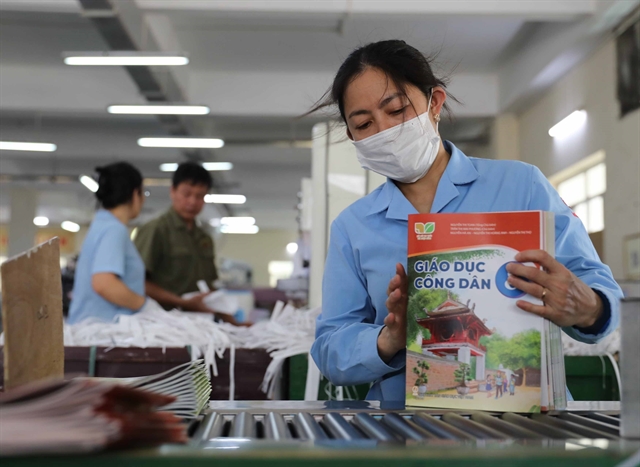
| Workers at a company in the northern province of Ninh Bình. — Illustrative Photo Trần Việt |
HÀ NỘI — Việt Nam has made strides in reducing the share of workers earning below the statutory minimum wage, yet certain groups, including women, older workers and those with lower levels of education, remain particularly exposed, according to a new study.
The report, Impacts of Minimum Wage in Viet Nam, provides a comprehensive assessment of the effects and effectiveness of the national statutory minimum wage since its introduction under a tripartite social dialogue mechanism in 2013.
Led by the International Labour Organisation (ILO) at the request of the National Wage Council, the research comes amid ongoing concerns that low pay continues to affect a substantial portion of the workforce. While average nominal wages have risen in recent years, real wages remain modest once inflation is considered, underscoring the minimum wage’s crucial role in safeguarding living standards.
The study combines quantitative analysis of the Labour Force Survey and the Enterprise Census with qualitative interviews involving workers, their representatives and employers.
Findings show that compliance levels vary across sectors and regions, with workers in household businesses facing the highest vulnerability.
Importantly, the report finds that adjustments to the minimum wage have not significantly affected overall employment or business performance.
However, they do influence labour costs, competitiveness and workers’ access to social insurance, highlighting the need for wage-setting mechanisms that balance employees’ needs with broader economic realities.
The report recommends establishing a transparent and predictable roadmap for wage adjustments, strengthening inflation control to protect real incomes, integrating minimum wage policy with wider socio-economic development measures, and improving the effectiveness of collective bargaining mechanisms.
Reflecting data available up to 2024, the report also takes into account administrative structures, organisational arrangements and tiers of local government prior to reforms implemented in March 2025, followed by subsequent local-level restructuring.
Sinwon Park, director of the ILO Office in Việt Nam, said: “We hope this report will serve as a valuable resource for national stakeholders, especially the National Wage Council, in strengthening wage-setting processes.”
She added that the evidence-based analysis aims to support more transparent, predictable and fair minimum wage adjustments that contribute to decent work, sustainable business development and inclusive economic growth in Việt Nam.
This report has been published under the project “Setting Adequate Wages” project, a technical cooperation initiative with support from the Ministry of Foreign Affairs of the Netherlands.
Under the Government's Decree No. 293/2025/NĐ-CP, from 1 January 2026, the regional minimum wage rates will be set as follows: Region I at VNĐ 5.31 million (US$200) per month; Region II at VNĐ4.73 million ($179); Region III at VNĐ4.14 million ($157); and Region IV at VNĐ3.7 million ($140).
Region I applies to enterprises operating in districts, towns and provincial-level cities with the highest levels of economic development.
Region II covers areas with a moderate level of economic development and urbanisation.
Region III includes outlying districts and communes of major provinces and centrally governed cities, provincial cities, as well as certain industrial zones located in provinces classified under Region II. — VNS
Society
 Society
 Society
 Society
 Society
 Society
 Society
 Society
 Society
 Society
 Society
 Society
 Society
 Society
 Society