 Society

OPPO Find X10 Pro Max to Debut Globally with MediaTek’s 2nm Flagship Dimensity 9600 Pro
1.
|
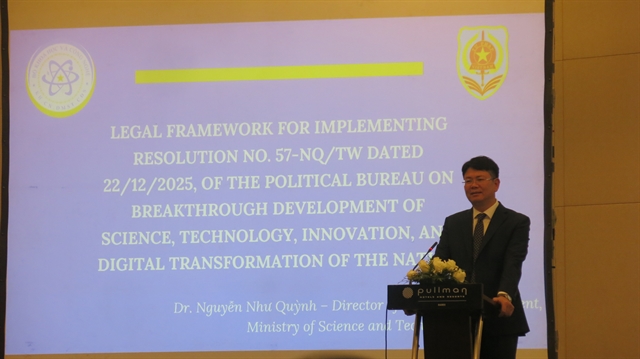
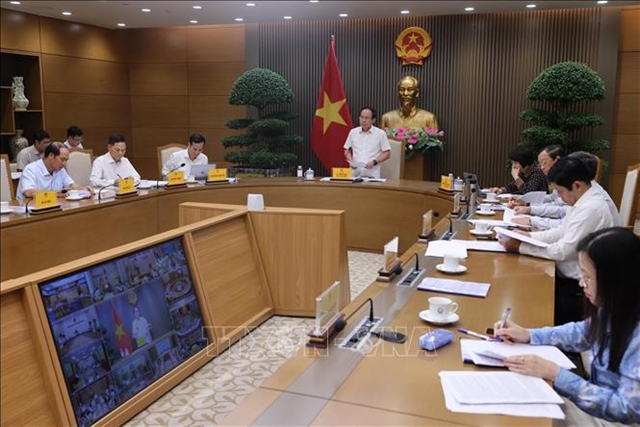
| Deputy Minister of Justice Nguyễn Thanh Tịnh delivers his speech at a discussion session in Hà Nội on Tuesday. — VNS Photo Nguyễn Hằng |
HÀ NỘI — The Ministry of Justice has rolled out a series of ambitious programmes to accelerate digital transformation across its sectors, yielding encouraging early results and signalling a new era for national governance.
These initiatives aim to put Resolution No 57-NQ/TW into practice and include the Ministry of Justice’s Digital Transformation Strategy for 2025-30, with a vision to 2035, a comprehensive data strategy, and version 4.0 of its Digital Architecture Framework.
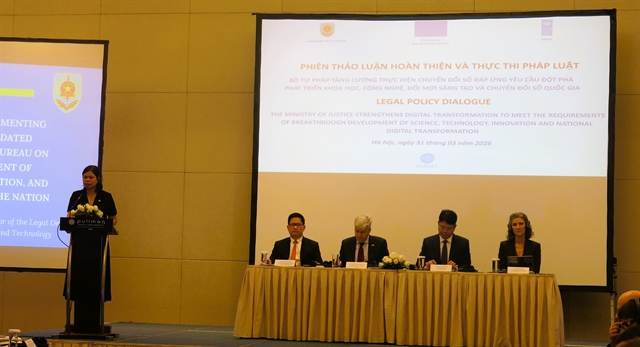
Deputy Minister of Justice Nguyễn Thanh Tịnh made the remarks on Tuesday at a discussion session entitled “The Ministry of Justice strengthens digital transformation to meet the requirements for breakthrough development of science technology, innovation and national digital transformation”, held in Hà Nội.
He highlighted that on December 22, 2024, the Politburo issued Resolution No 57-NQ/TW, designating the development of science and technology, innovation, and digital transformation as a strategic breakthrough to reform national governance, drive socio-economic development and propel Việt Nam towards rapid and sustainable prosperity.
To implement the resolution, the ministry has established a sector-wide shared information system for handling administrative procedures and is progressively developing digital platforms such as the National Legal Portal and artificial intelligence applications to support the drafting, inspection and review of legal documents.
“The initial outcomes have generated positive spillover effects, contributing to improved State governance efficiency and better services for citizens and businesses,” Tịnh said.
|
| Participants at the discussion session. — VNS Photo Nguyễn Hằng |
Speaking at the event, Gonzalo Serrano de la Rosa, Deputy Head of Cooperation at the European Union Delegation to Việt Nam, said the EU warmly welcomed the organisation of the forum, which provides a valuable platform for strategic policy dialogue between the Government, development partners and other key stakeholders, supporting Việt Nam’s legal reform process with a particular focus on digital transformation in the justice sector.
“In recent years, Việt Nam has laid a remarkable policy foundation for judicial reform and digital transformation,” he said.
Several important Party resolutions are driving these reforms, notably Resolution 66 on law-making and law enforcement and Resolution No 57 on science, technology, innovation and digital transformation.
Ramla Khalidi, Resident Representative of the United Nations Development Programme (UNDP) in Việt Nam, said Resolution No 57 places this transformation at the centre of Việt Nam’s development model, while Resolution 66 reminds us that it must strengthen a justice system that protects people and their legitimate interests.
“Today’s dialogue fits squarely within that vision,” she said.
She stressed that in the justice sector, digital transformation is not only about efficiency or modernisation, it is ultimately about people.
“It’s about whether someone seeking justice is heard or ignored, whether they are empowered or left behind. At its core, justice is not abstract. It is the ability of people to understand their rights, to access information, to resolve disputes fairly and to trust the system that serves them,” she said.
Khalidi added that Việt Nam has already made significant progress.
Advances in digital government, including a rise of 15 places in global e-government rankings since 2020, reflect that strong commitment.
“The task now is to extend that momentum into the justice sector with the same ambition and to do so in a way that keeps people at the centre,” she said.
“At UNDP we see our role as supporting that journey, drawing on international experience, strengthening institutional capacity and helping design solutions tailored to Việt Nam’s context. We are very proud of our strong partnership with the Ministry of Justice, with national stakeholders and institutions, and with the EU and international partners.” VNS
Society
 Society
 Society
 Society
 Society
 Society
 Society
 Society
 Society
 Society
 Society
 Society
 Society
 Society
 Society