 Society
Youth-led initiative opens up opportunities for disadvantaged children
1.
|
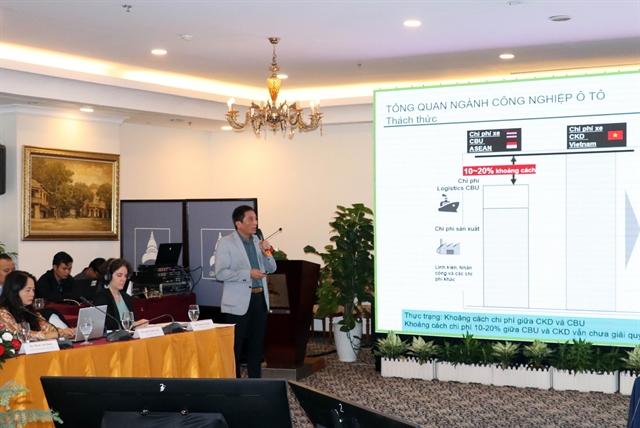
| A conference was held on March 31 in HCM City to discuss the importance of infrastructure in the city's green transition roadmap. — VNA/VNS Photo |
HCM CITY — HCM City's transition towards low-emission vehicles to reduce pollution shall rely heavily on investment in infrastructure, especially a large number of electric vehicle charging stations, experts told a conference on March 31.
Bùi Hòa An, deputy director of the city Department of Construction, said developing green transportation is an important task, and infrastructure plays an important role in it.
The city is focusing on reducing emissions in the transport sector to improve air quality and address climate change. As a major economic hub with over 13 million people and heavy reliance on private vehicles, the city is facing increasing traffic congestion, environmental pollution and greenhouse gas emissions.
Experts at the conference discussed different types of low-emission vehicles, market readiness and consumer behaviour, and reviewed international experience.
They also assessed the city’s supply chains, supporting infrastructure and electric vehicle (EV) production capacity, which revealed limitations in technology, policy, finance, and manpower that may hinder the adoption of low-emission vehicles.
Its emissions reduction roadmap will need to incorporate a wide range of technologies and vehicles suited to the city’s high traffic density and local conditions.
Associate Professor Đàm Hoàng Phúc, a senior expert at UNDP, said the market is ready for the transition to some extent, but not for immediate large-scale implementation.
The main bottleneck lies in the ecosystem, operating models and the lack of a synchronised EV charging network, he said, adding that users would prefer fast, flexible options over long waits at charging stations.
Đào Công Quyết, head of the communications subcommittee at the Vietnam Automobile Manufacturers Association, said most households are unable to install home charging points, and so public charging infrastructure needs to be expanded to cover different EV brands.
A nationwide charging network is needed, initially focusing on major cities and expressways, and supportive policies to attract investment in this infrastructure, he said.
Việt Nam’s electric car market is growing strongly, with 22 per cent growth in 2025, but remains modest compared to regional peers such as Thailand and Indonesia, he said.
It is important to develop a comprehensive automotive industry strategy closely linked to green energy infrastructure, while also improving standards, regulations and certification systems for EVs.
The Department of Construction will continue to study and support the city and relevant agencies in completing the legal framework, creating favourable conditions to attract FDI and green finance, and promoting public-private partnership models in developing charging infrastructure.
The conference is part of the Climate Promise initiative implemented by the United Nations Development Programme with support from the Japanese Government to facilitate Việt Nam’s climate commitments.
It is supporting HCM City in drafting policies and investment directions to transition towards low-emission vehicles. — VNS
Society
 Society
 Society
 Society
 Society
 Society
 Society
 Society
 Society
 Society
 Society
 Society
 Society
 Society
 Society



.jpg)



