 Society
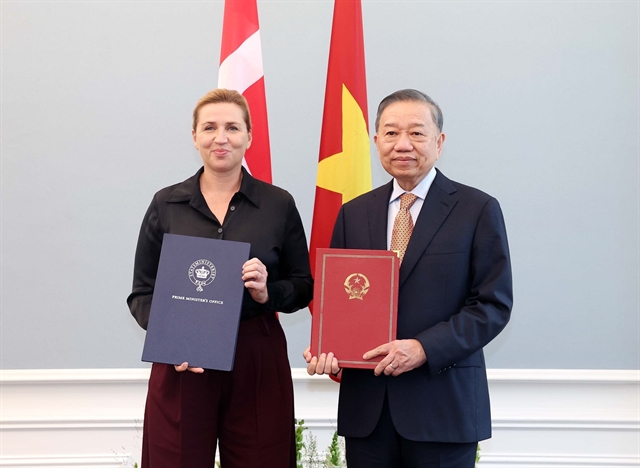
Việt Nam, Denmark issue joint statement on establishment of Comprehensive Strategic Partnership
1.
HÀ NỘI — Representatives of the International Committee and national committees for the Việt Nam Friendship Village signed a memorandum of understanding (MoU) on March 31, agreeing on a range of key areas of cooperation aimed at improving care, rehabilitation and support for victims of Agent Orange/dioxin during the 2026–27 period.
The MoU was signed during the 19th meeting of the International Committee for the Việt Nam Friendship Village. The event was attended by Rosemarie Hohn Miz, President of the International Committee and of the German National Committee for the Việt Nam Friendship Village; Senior Lieutenant General Phạm Hồng Hương, Vice Chairman of the Vietnamese War Veterans' Association and head of the Vietnamese National Committee; along with representatives from the national committees of France, the US and Japan.
Under the agreement, the parties pledged to maintain and enhance care services for around 60 war veterans and former youth volunteers each month, as well as 110–120 children affected by AO/dioxin currently residing at the village. Comprehensive programmes covering rehabilitation, special education, vocational training and community reintegration will continue to be implemented.
In the field of health care, the memorandum emphasises stronger coordination with specialised medical institutions, combining traditional and modern treatment methods, and expanding physiotherapy and rehabilitation services. Disease prevention, community health care and capacity-building for medical personnel are also identified as focal tasks.
In education and vocational training, the parties agreed to sustain specialised classes and training programmes in areas such as tailoring, embroidery, information technology, flower-making and handicrafts. Greater focus will also be placed on life skills training, psychological support and career guidance. Community integration initiatives, including the “George Mizo Scholars” project, will be further expanded.
On the external relations front, international cooperation is set to be strengthened through closer engagement with organisations, embassies, businesses and donors both at home and abroad. The parties also agreed to enhance communications efforts and resource mobilisation to better support the village’s activities.
Notably, the conference confirmed funding commitments for the 2026–2027 period. Expenditure is projected at over VNĐ20.3 billion (nearly US$770,600) in 2026 and nearly VNĐ23.2 billion in 2027, sourced from the state budget, the Ministry of National Defence, domestic organisations and individuals, as well as contributions from the International Committee and its member countries.
The agreement also includes the implementation of a number of specific projects such as community integration support for children, infrastructure upgrades, staff training, the reception of international volunteers, and cooperation with organisations like Outreach Việt Nam in education and health care.
At the ceremony, participants affirmed that sustaining and expanding international cooperation not only improve the effectiveness of activities at the Việt Nam Friendship Village, but also help to spread a humanitarian message of peace, reconciliation and shared responsibility in addressing the consequences of war.
The MoU is expected to provide an important foundation for the coordinated implementation of programmes and projects in the near future, with the goal of delivering better care for war veterans, former youth volunteers and children affected by AO/dioxin while supporting the sustainable development of the Việt Nam Friendship Village.
The village, run by the Vietnamese War Veterans’ Association, covers over 3 hectares in Hà Nội and is intended to support war veterans, former youth volunteers and their children who are AO/dioxin victims. It was built with cooperation of six countries – the US, Germany, France, Japan, Canada, and the UK – following the initiative of George George Mizo, a US veteran who used to join the war in the South of Việt Nam. — VNA/VNS
Society
 Society
 Society
 Society
 Society
 Society
 Society
 Society
 Society
 Society
 Society
 Society
 Society
 Society
 Society