 Society

Việt Nam fosters comprehensive cooperation with Uruguay
1.
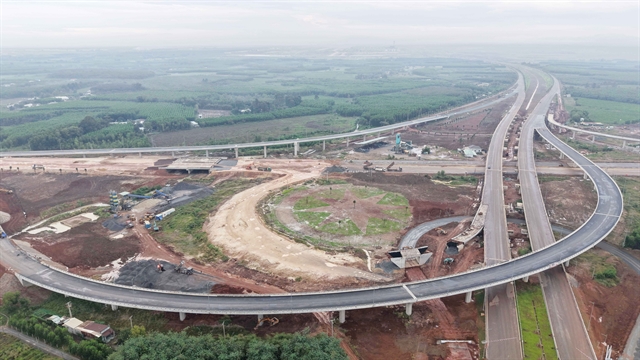 |
| A transport route linking Long Thanh International Airport at its interchange with the Biên Hòa – Vũng Tàu Expressway. — VNA/VNS photo |
HCM CITY— HCM City is stepping up efforts to fast track a series of major transport projects aimed at strengthening connectivity with Long Thành International Airport in a move to reshape the region’s mobility network and support long-term economic growth.
The municipal People’s Committee has recently directed departments, agencies, and project management units to speed up both construction progress and administrative procedures, with particular emphasis on urban railway lines and key road infrastructure that will form an integrated transport corridor between the city centre and the new airport in Đồng Nai Province.
At the heart of this strategy is the development of a multi-layer system combining metro lines, ring roads, expressways, and new bridges. Together, these projects are expected to ease congestion, shorten travel time, and enhance regional connectivity across the southern key economic zone.
Urban rail takes priority
Among the most significant projects is Metro Line No. 2, connecting Bến Thành Market in Bến Thành Ward with Tham Lương Depot in Tân Thới Nhất Ward.
Construction of the line began in early 2026 with a total investment of about VNĐ55 trillion (US$2.2 billion).
Stretching over 11.3 kilometres, the route includes 9.3 kilometres of underground track and two kilometres of elevated sections.
Once completed, it will serve as a critical backbone of the city’s future metro network, linking densely populated urban districts while also contributing to the broader goal of connecting to Long Thành Airport.
Authorities have set a target for the line to be completed and put into operation by 2030.
The city leadership has instructed the Management Authority for Urban Railways to closely monitor construction progress and ensure that all milestones are met.
On the same axis, the Bến Thành to Thủ Thiêm metro section is also being prioritised.
This project, which will connect the current central business district with the rapidly developing Thủ Thiêm urban area, is expected to play a strategic role in forming a continuous rail corridor toward Long Thành.
The 5.58 kilometre line, consisting entirely of underground sections with six stations, is estimated to require about VNĐ33 trillion ($1.3 billion).
The project is planned under a public private partnership model using a build transfer contract.
City officials have acknowledged that several key tasks, including appraisal processes, contractor selection, and feasibility study verification, have not progressed as quickly as expected.
As a result, strict directives have been issued, warning that any further delays will lead to accountability measures for responsible agencies.
Construction of initial components such as retaining walls and station structures is scheduled to begin in April, following approval of land funds used for payment under the BT contract and finalisation of investment decisions.
Extending the network to Long Thành
Beyond the inner city connections, the city is also considering a much larger metro project linking Thủ Thiêm directly with Long Thành International Airport.
This proposed line would span approximately 42 kilometres, with 20 stations and one depot.
The preliminary investment is estimated at VNĐ85 trillion ($3.4 billion).
Authorities aim to commence construction before June 30, and complete the project by 2030, aligning with the expected operational timeline of Long Thành Airport’s first phase.
HCM City has assigned Trường Hải Group, also known as Thaco, to prepare the feasibility study for the Bến Thành to Thủ Thiêm section and is considering further involvement of the group in the Thủ Thiêm to Long Thành line under the same PPP framework.
If implemented as planned, this rail corridor will create a seamless link connecting Tân Sơn Nhất Airport, the city centre, Thủ Thiêm, and Long Thành Airport, significantly enhancing passenger mobility and reducing reliance on road transport.
Road infrastructure keeps pace
While metro projects form the backbone of long term connectivity, road infrastructure remains essential for immediate improvements in transport capacity.
The Ring Road No.3 project is one of the most important components currently under construction.
According to the city’s Transport Infrastructure Construction Investment Project Management Board, more than 73 per cent of the total workload has been completed, broadly meeting the planned schedule.
The city is pushing contractors to mobilise additional manpower, equipment, and financial resources to ensure that the entire route is opened to traffic by the end of June 2026.
Full completion of the project is expected by the end of the year.
Ring Road No.3 is designed to divert traffic away from the city centre, reduce congestion, and improve connectivity between HCM City and neighbouring provinces such as Đồng Nai and Long An.
Another key project is Phú Mỹ No.2 Bridge, which will provide a new crossing over the Đồng Nai River and strengthen links between southern districts of the city and the Nhơn Trạch area in Đồng Nai Province.
The project, which broke ground in January, has a total investment of about VNĐ23 trillion ($920 million).
With a total length of 6.3 kilometres and eight traffic lanes, the bridge is expected to become a major transport axis leading toward Long Thành Airport.
Developed under a PPP model with Masterise Group as the investor, the project is seen as a critical addition to the city’s infrastructure network, helping to distribute traffic more evenly and support urban expansion in the southern area.
Meanwhile, the Biên Hòa – Vũng Tàu Expressway is also being accelerated.
Authorities have instructed relevant units to complete construction, finalise acceptance procedures, and submit the project to the State inspection council for approval, with the goal of putting the main route of component project 3 into operation before March 31.
This expressway will not only improve connectivity between industrial hubs and seaports but also contribute to a more efficient transport network serving Long Thành Airport.
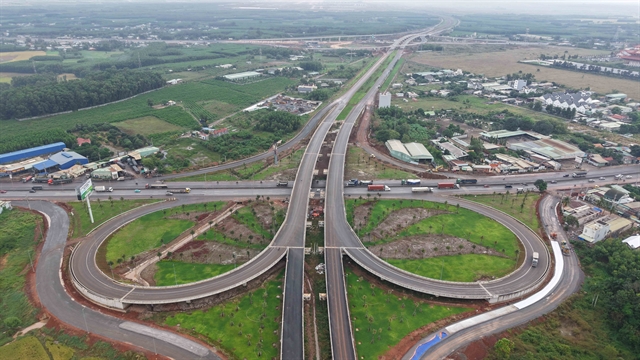 |
| An overpass and interchange linking the Long Thành International Airport access route with National Highway 51. — VNA/VNS photo |
Preparing for the next phase
In addition to ongoing projects, the city is moving forward with preparations for Ring Road No.4, another major infrastructure initiative that will further expand regional connectivity.
The Department of Construction has been tasked with completing appraisal procedures and submitting investment approvals for component projects before March 30, in accordance with legal requirements.
Once completed, Ring Road No.4 is expected to complement Ring Road No.3, creating a comprehensive outer transport network that links key economic zones, industrial parks, and logistics centres across the southern region.
Strategic vision for regional growth
The acceleration of these transport projects reflects a broader strategic vision to position HCM City as a central hub in a highly connected regional economy.
Long Thành International Airport, located about 40 kilometres east of the city, is expected to become the largest airport in Việt Nam and one of the busiest in Southeast Asia.
Ensuring efficient access to the airport is therefore essential not only for passenger travel but also for cargo transport and logistics development.
By integrating metro lines with expressways and ring roads, the city aims to create a modern, multimodal transport system that can support rapid urbanisation, attract investment, and enhance competitiveness.
The formation of a continuous transport corridor linking the city centre, Thủ Thiêm, Tân Sơn Nhất Airport, and Long Thành Airport is expected to redefine travel patterns in the region, reducing travel time and improving overall efficiency.
However, the success of this ambitious plan will depend on effective coordination among agencies, timely resolution of administrative bottlenecks, and strict adherence to project timelines.
City leaders have made it clear that accountability will be enforced, signalling a strong commitment to ensuring that these critical infrastructure projects are delivered as planned. — VNS
Society
 Society
 Society
 Society
 Society
 Society
 Society
 Society
 Society
 Society
 Society
 Society
 Society
 Society
 Society