 Society
Businesses struggle to retain talent in the age of AI
1.
|
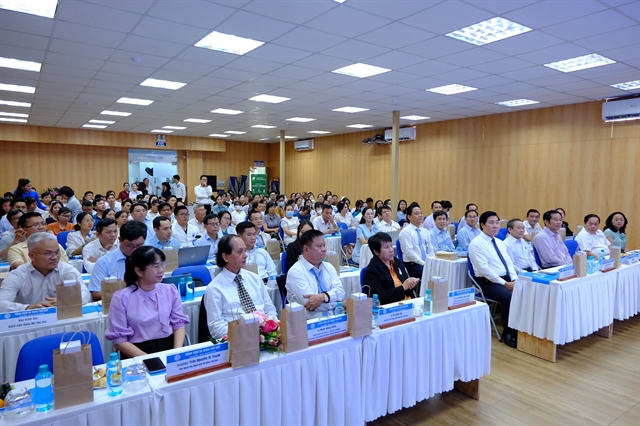
| Delegates attend the scientific conference on applying AI in hospital human resource management at Thủ Đức General Hospital in HCM City on March 27. — Photos Courtesy of the organisers |
HCM CITY — More than 150 healthcare experts, doctors and representatives from medical institutions and training organisations have gathered in HCM City for a scientific conference on applying artificial intelligence (AI) in hospital human resource management, focusing on competency frameworks and KPI evaluation.
Held at Thủ Đức General Hospital on March 27, the conference highlighted the growing role of digital transformation in hospital governance, particularly the shift toward data-driven workforce management to improve operational efficiency and enhance patient care quality.
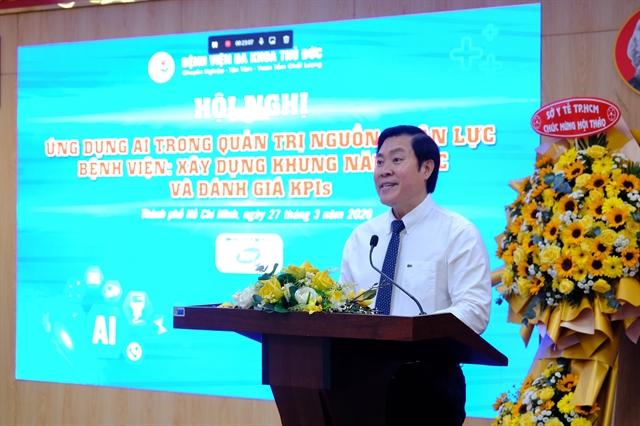
Speaking at the opening ceremony, Dr Vũ Trí Thanh, director of Thủ Đức General Hospital, said that digital transformation is no longer an option but a necessity for modern healthcare systems, with human resource management playing a decisive role.
He said the most valuable asset of any hospital is its medical workforce, not equipment or infrastructure, and that effective governance must ensure fair and transparent evaluation to motivate staff and reduce burnout.
“Hospital management must move from administrative thinking to strategic governance based on job positions and real data,” Thanh said, adding that AI can help standardise competency frameworks, automate KPI evaluation and support accurate decision-making in training and personnel planning.
Experts at the conference noted that many healthcare facilities still rely on seniority or subjective assessments in human resource management, creating challenges in workforce allocation and limiting staff motivation.
The conference introduced a competency framework structured around three core groups: general competencies, professional competencies and management competencies, with five levels ranging from basic to expert.
This approach enables hospitals to shift from degree-based evaluation to competency-based management.
In parallel, KPIs were discussed as a tool to measure performance beyond service volume or revenue, focusing on clinical quality, patient safety, operational efficiency and patient experience.
A key highlight of the event was the introduction of AI-driven models in workforce governance, including the FMFT model, which helps quantify staff competencies based on measurable evidence rather than subjective judgment.
|
| Dr Vũ Trí Thanh, director of Thủ Đức General Hospital, speaks at the March 27 conference, highlighting the importance of digital transformation in improving hospital governance and patient care. |
The concept of “predictive KPIs” was also presented, allowing hospitals to forecast risks, identify operational bottlenecks early and adjust management strategies in a timely manner.
Experts stressed that AI does not replace human decision-making but enhances data analysis and supports faster, more accurate management decisions while enabling personalised training pathways for medical staff.
Dr Trần Văn Khanh, director of Lê Văn Thịnh Hospital, shared practical experience in applying the FMFT model to improve transparency and fairness in staff evaluation and training.
Participants agreed that building an AI-based human resource management system requires a clear roadmap, from standardising job positions and competency frameworks to designing KPIs and digitising personnel data.
They also highlighted challenges such as data security, algorithm transparency and maintaining ethical and human-centred evaluation in healthcare.
The conference is expected to provide a foundation for Thủ Đức General Hospital to further develop a modern, transparent and sustainable workforce management model aligned with Việt Nam’s healthcare digital transformation strategy, ultimately improving patient safety and service quality. — VNS
Society
 Society
 Society
 Society
 Society
 Society
 Society
 Society
 Society
 Society
 Society
 Society
 Society
 Society
 Society