 Society

Hà Nội adorned in red ahead of Liberation Day
1.
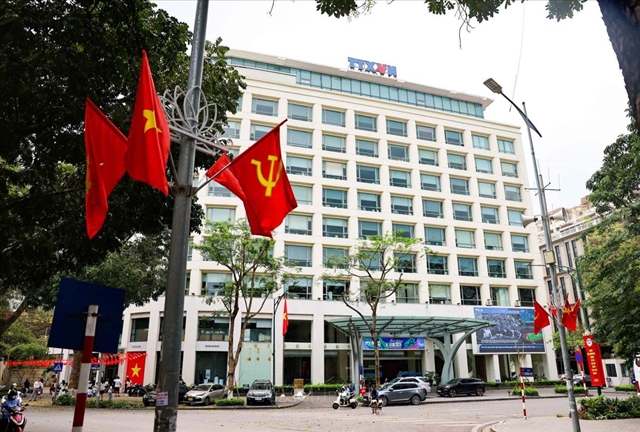 |
| Headquarters of the Vietnam News Agency, the official state-run news agency of the Socialist Republic of Việt Nam, April 2025. — VNA/VNS Photo |
HÀ NỘI — The Communist Party of Việt Nam is embarking on a major transformation of the country’s publishing sector, calling for the creation of national flagship publishing and media groups under a newly issued directive.
Directive 04, signed by Permanent Member of the Party Central Committee's Secretariat Trần Cẩm Tú, lays out how publishing is expected to evolve in the coming years, both as a communication tool and as part of the wider digital economy.
The document describes publishing as a vital channel for conveying Party ideas and state policies. It also positions the sector within a broader cultural role, highlighting its contribution to knowledge building, education and the development of cultural life.
The directive calls for the establishment of large multi-platform publishing and media groups producing content across formats, from political and cultural content to science, technology and education. One group would focus on international outreach, promoting Việt Nam’s image abroad while also facilitating the exchange of global knowledge and cultural content domestically.
Digital transformation is central to the plan. The directive calls for investment in infrastructure and technology alongside a shift towards electronic and digital publishing formats. Artificial intelligence (AI) and big data are expected to be integrated across different stages of publishing, with an emphasis on developing multimedia content.
By 2030, the Party aims for a leaner, more modern and higher-quality publishing system. Targets include full adoption of electronic publishing across all publishers and broader adoption of digital tools throughout the industry, including printing.
Looking further ahead to 2045, the directive envisions a more diverse and advanced publishing and media sector capable of meeting the growing demand for reading, learning and entertainment. It also frames publishing as a digital economic sector, calling for the development of digital publishing companies able to expand beyond Việt Nam and establish a presence in regional and global markets, particularly in Southeast Asia.
To support this shift, the document outlines policy measures including updates to legal frameworks, removal of regulatory bottlenecks, and incentives to attract investment. There is a strong emphasis on copyright protection, particularly in digital environments, with authorities tasked with safeguarding authors’ rights and raising public awareness of intellectual property, including in cases involving artificial intelligence.
Content quality remains a central concern. The directive calls for increased investment in publishing content, encouraging works with scientific, cultural and artistic value, as well as commissioning new academic and literary material. At the same time, it highlights the importance of promoting reading, including developing public spaces that support learning and creating shared digital infrastructure for the sector.
International cooperation is set to expand, with plans to deepen ties with foreign publishers, increase copyright exchanges and promote bilingual publishing. Public–private partnerships are encouraged as a means of bringing Vietnamese publications to a wider audience.
Human resources are another focus, with calls to build a more skilled workforce to support the sector’s transformation. — VNS
Society
 Society
 Society
 Society
 Society
 Society
 Society
 Society
 Society
 Society
 Society
 Society
 Society
 Society
 Society