 Society

Việt Nam has five Halal certification bodies recognised by Malaysia
1.
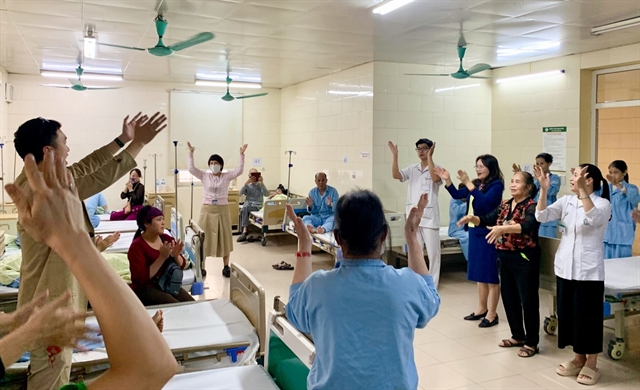 |
| A laughter yoga session at Nuclear Medicine and Oncology Centre of Bạch Mai Hospital in Hà Nội. — VNA/VNS Photo |
Khánh Linh
HÀ NỘI — Every afternoon, hearty, carefree laughter fills the halls of the Nuclear Medicine and Oncology Centre at Bạch Mai Hospital in Hà Nội, where cancer patients join laughter yoga sessions led by a dedicated medical team.
Under the guidance of Phạm Quốc Vinh, a hospital pharmacist, many patients have found a way to ease their minds and renew their strength to persevere with treatment.
Vinh was among the pioneers who introduced laughter yoga to Việt Nam in 2011, motivated by a simple wish to do something meaningful for the community.
“It’s a simple, low-cost method, yet it can connect so many people,” he told Tin tức (News) newspaper.
Many were sceptical about the practice at first, and Vinh chose to respond with quiet persistence.
Gradually, suspicion gave way to trust, and his laughter yoga sessions became a familiar sight in public spaces across Hà Nội, whether on the banks of Hoàn Kiếm Lake or under the walkway next to Tràng Tiền Plaza.
Laughter spread, drawing more participants and eventually leading to the formation of additional clubs.
From Hà Nội, Vinh brought laughter yoga to Quảng Ninh Province, where practice groups formed along Hòn Gai Beach.
 |
| Members of a laughter yoga club practise on Hòn Gai Beach in Quảng Ninh Province. — VNA/VNS Photo |
Today, dozens of clubs are active, serving not only as exercise spaces but also as places for people to connect, share and find positive energy.
The best medicine
Working in a medical environment and witnessing cancer patients’ resilience every day, Vinh often wondered how he could better support their mental well‑being.
Around 2014, he began introducing laughter yoga at Hưng Việt Oncology Hospital in Hà Nội, guiding patients directly at their bedsides.
Vinh recalled a time when a participant approached him after a session. Earlier that day, she had received devastating news about a family member and felt overwhelmed by grief.
But after a laughter yoga session, she said she could finally ‘manage to breathe’ and face the days ahead with greater calm.
For Vinh, it was a powerful affirmation of the benefits of the activity.
In 2025, laughter yoga was officially introduced at the Nuclear Medicine and Oncology Centre of Bạch Mai Hospital. Vinh now organises sessions after working hours to balance his professional duties with supporting patients.
Around 4.45pm, after most daily medical tasks are completed, patients and their families gather by the bedside to take part in short, gentle exercises.
At first, their laughter may appear hesitant or forced, but over time it becomes more natural and relaxed.
The dedication of nurses and the enthusiastic participation of patients have helped sustain the activity.
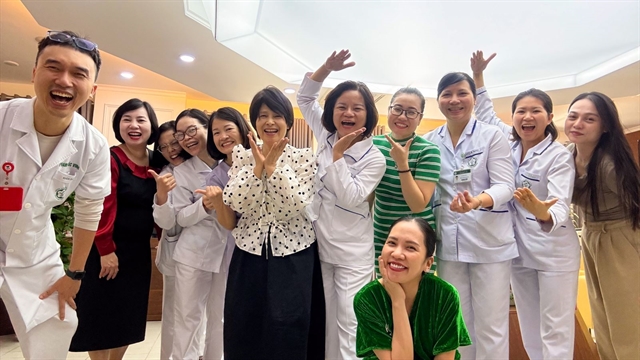 |
| Phạm Quốc Vinh (first from left) practises laughter yoga alongside other medical workers at the hospital. — VNA/VNS Photo |
While laughter yoga cannot replace medical treatment, it provides valuable emotional support, helping patients relieve stress, ease anxiety and adapt more effectively to treatment.
With backing from the hospital’s management, the programme has expanded beyond patients to include medical staff. Vinh has found that once healthcare workers are trained in the exercises, they can guide patients themselves, allowing the model to reach more people.
Looking ahead, the young pharmacist hopes to pursue doctoral studies in clinical psychology to deepen his understanding of laughter yoga.
“I want formal training and the chance to learn from experts in psychology, to build a stronger foundation and develop more concrete tools and methods to better understand laughter yoga,” he said, adding that enthusiasm is only the starting point but competence and knowledge are key to building trust and sustaining the work. — VNS
Society
 Society
 Society
 Society
 Society
 Society
 Society
 Society
 Society
 Society
 Society
 Society
 Society
 Society
 Society