 Society
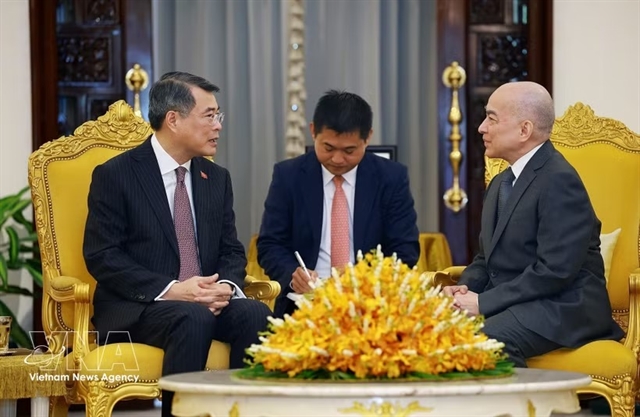
Vietnamese PM pays courtesy visits to Cambodian King, Queen Mother
1.

|
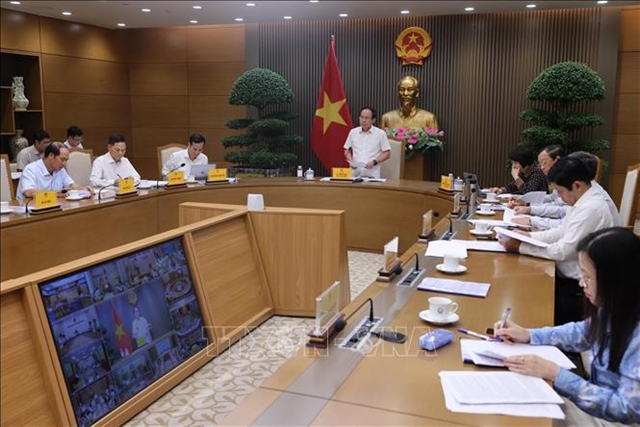
| Permanent Deputy Prime Minister Nguyễn Hòa Bình and Deputy Minister of Public Security Lê Văn Tuyến chair the conference. — VNA/VNS Photo |
HÀ NỘI — Permanent Deputy Prime Minister Nguyễn Hòa Bình has called on the Ministry of Public Security to study incentive mechanisms and policies to encourage enterprises to employ ex-prisoners, highlighting the Government’s focus on humane and practical community reintegration.
He made the order on Wednesday at a nationwide online conference reviewing five years of implementing the Government decree on the Law on Execution of Criminal Judgments regarding community reintegration.
Deputy Minister of Public Security Lê Văn Tuyến said that over the past five years, societal attitudes toward ex-prisoners have improved significantly, with stigma, social exclusion, prejudice and discrimination against those who have served their sentences declining.
Former inmates themselves have also become less self-conscious and less burdened by feelings of inferiority as they reintegrate into the community, he said.
Preparations for inmates’ reintegration have been gradually reformed, with a focus on counselling, career guidance and vocational training.
Efforts to support those who have completed their sentences upon returning to their localities have seen notable improvements, particularly through closer coordination between management, supervision, education and support measures, alongside initiatives such as counselling, career guidance, vocational training and access to loans, according to the ministry.
These reintegration efforts have contributed to a low recidivism rate, averaging 1.73 per cent from 2020 to 2025.
Affirming that the community reintegration of ex-prisoners reflects the humane and compassionate policies of the Party and the State as well as the nation’s fine traditions, Permanent Deputy Prime Minister Bình said the policies have helped a large number of ex-prisoners, those granted amnesty and those released on parole gradually stabilise their lives upon returning to their localities, reducing or preventing recidivism.
Detention facilities have provided vocational training to 54,229 inmates and organised 1,435 programmes, courses and sessions on career orientation and job-seeking skills for 54,217 inmates.
He urged the comprehensive application of technology and digital transformation in community reintegration, as well as in the management, monitoring and statistical tracking of cases eligible for exemption or reduction of civil judgment enforcement obligations.
“Organisations, individuals and businesses are encouraged to create favourable conditions and provide necessary support to employ as many amnesty beneficiaries and ex-prisoners as possible, ensuring a stable workforce for production and business activities while also contributing to social welfare and corporate social responsibility,” he said. — VNS
Society
 Society
 Society
 Society
 Society
 Society
 Society
 Society
 Society
 Society
 Society
 Society
 Society
 Society
 Society