 Society
Việt Nam–Denmark ties gain fresh momentum with comprehensive strategic partnership
1.
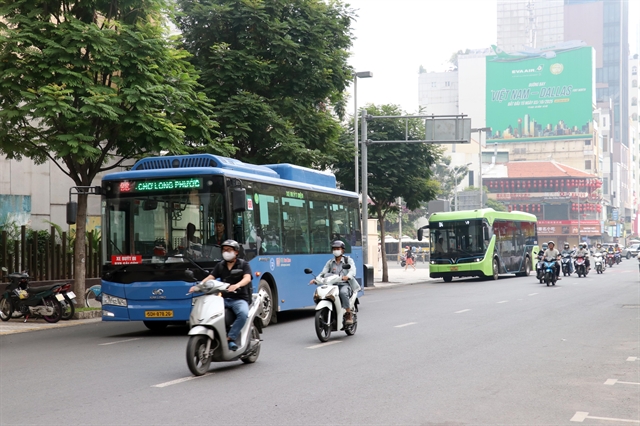 |
| Buses operating in HCM City. — VNA/VNS Photo |
HCM CITY — HCM City is considering making public bus services free for all residents as part of efforts to ease chronic traffic congestion and curb air pollution in the country’s commercial hub.
The proposal, which could cost around VNĐ7 trillion (US$266 million) annually, was outlined by Trần Lưu Quang, the city’s top Party official, at a local Party meeting on Wednesday.
Authorities have tasked the municipal Department of Construction with drafting a detailed implementation plan.
The move aims to encourage a shift away from motorbikes, which dominate daily commuting in the city of nearly 15 million people.
Public transport usage remains relatively low due to challenges in network coverage, convenience and service quality.
Officials say the policy also responds to calls from Party General Secretary Tô Lâm for the city to tackle worsening congestion and environmental pressures.
HCM City currently subsidises bus fares and offers free travel to selected groups, including older residents, young children, people with disabilities and those with recognised public service contributions, at an annual cost of about VNĐ1.7 trillion. Standard fares range from VNĐ5,000 to VNĐ7,000 per trip.
Expanding free access to all users would significantly increase fiscal outlays, but city leaders say pricing alone will not be enough to change commuter behaviour.
“To attract riders, buses must be convenient, reliable and punctual,” Quang said, adding that service improvements and network expansion would be rolled out alongside any fare policy changes.
The city plans to restructure its bus system to improve efficiency and passenger experience, while accelerating a transition to electric vehicles through financial incentives.
It currently operates around 2,300 buses, of which about 1,300 are electric.
Officials say the initiative could help reduce traffic pressure, lower emissions and improve access to mobility, particularly for lower-income residents, while discouraging the use of older, high-polluting motorbikes.
Students remain the largest group of bus users in the city.
Separately, city leaders have agreed in principle to waive certain logistics infrastructure fees to support businesses facing rising fuel costs.
In the social sector, authorities aim to provide at least one general health check-up for the entire population in 2026, while accelerating the redevelopment of ageing inner-city housing and expanding accommodation for workers.
The city is also reviewing its governance framework and considering new legislative mechanisms to support its next phase of urban development. — VNS
Society
 Society
 Society
 Society
 Society
 Society
 Society
 Society
 Society
 Society
 Society
 Society
 Society
 Society
 Society
.jpg)



