 Society

Việt Nam, China seek stronger substantive parliamentary cooperation
1.
|
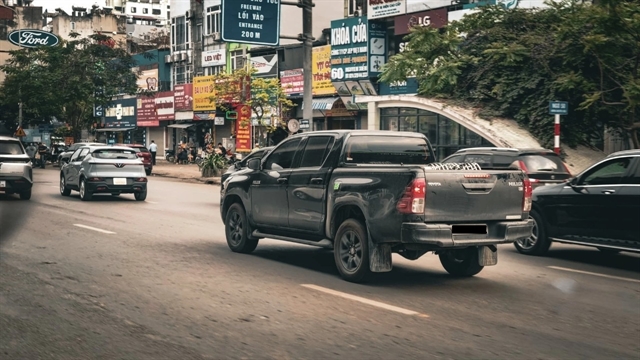
| A pick-up truck on the road, April 1. — Photo vovgiaothong.vn |
HÀ NỘI — Hà Nội's authorities are mulling plans to ease traffic rules for pick-up trucks, in response to complaints from drivers and businesses about how the vehicles are treated on the road.
The proposal, set out in a report submitted on Wednesday by Hà Nội's Department of Construction, would allow some pick-up trucks to circulate under the same conditions as passenger cars, instead of being subject to the tighter restrictions applied to cargo vehicles.
At present, pick-up trucks fall under the rules introduced earlier this year in Decision 01. They are treated much like conventional lorries, with access to parts of the city – particularly around Ring Roads 3 and 3.5 – largely limited to overnight hours, from 9pm to 6am.
The policy was designed to ease congestion during peak periods, but officials now say it has also created practical difficulties.
In its report, the department notes that pick-ups are currently split into two categories – those registered as passenger vehicles and those classified as cargo vehicles – with the latter facing stricter controls.
In reality, though, that distinction has proved impractical. Officials say the rules have affected how drivers feel about using the vehicles and have had knock-on effects for carmakers and related businesses.
City authorities have discussed the issue with police and consulted a range of stakeholders, including car manufacturers, business groups and foreign representatives.
Among those involved were Ford, VinFast, the Vietnam Automobile Manufacturers’ Association (VAMA) and the European Chamber of Commerce in Việt Nam (EuroCham).
Industry figures suggest pick-ups are a relatively small part of the traffic mix. Data from VAMA shows that about 14,700 units were sold in Hà Nội between 2021 and 2025, covering both passenger and cargo versions.
More importantly, a review by the Department of Construction found that pick-up trucks are broadly similar in size and weight to passenger cars and do not appear to contribute significantly to congestion, even during rush hour.
On that basis, the department and city police have proposed treating pick-up trucks more like passenger cars, allowing them to move more freely across the city.
The report also flags wider issues with transport rules introduced under the same decision, particularly for tourism.
Contract vehicles with 28 seats or more are currently barred from entering central areas during peak hours unless they receive special permission.
In practice, that has left many tour operators waiting outside restricted zones until off-peak times, or splitting groups into smaller vehicles – both of which add costs and complicate operations.
To ease those pressures, officials are proposing to allow contract passenger vehicles with fewer than 28 seats to operate at all hours. A similar approach is being considered for feeder services that connect passengers to public transport.
The aim, authorities say, is to make public transport more attractive and reduce reliance on private vehicles, helping to ease congestion over time.
Decision 01, introduced at the start of the year, is part of the efforts to manage traffic in central Hà Nội, particularly by limiting truck movements during peak periods.
After more than two months in place, officials say the policy has shown some positive effects – traffic volumes at busy times have fallen, vehicle speeds have improved, and logistics firms have increasingly shifted deliveries to nighttime.
Still, the Department of Construction says some adjustments are needed to iron out unintended consequences.
The department has recommended that the city move quickly to revise parts of the regulation, with changes expected to be finalised later this month. — VNS
Society
 Society
 Society
 Society
 Society
 Society
 Society
 Society
 Society
 Society
 Society
 Society
 Society
 Society
 Society