 Society
Deputy PM urges removal of legal bottlenecks hindering development
1.
|
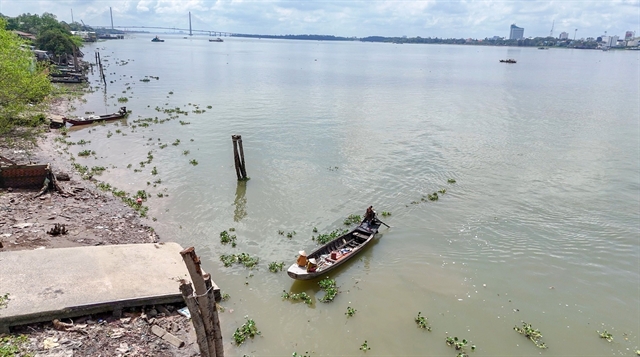
| Small boats have become the main means for residents to cross the Hậu River since the suspension of the Cồn Khương ferry service. — VNA/VNS Photo Thanh Liêm |
Thanh Liêm
CẦN THƠ — The Cồn Khương Ferry Terminal, which links Cần Thơ City and Vĩnh Long Province, has remained out of service since 2020 and has yet to resume operations, due to obstacles involving the division of authority and auction procedures.
The contractor on the Cần Thơ side of the ferry route abruptly suspended services in July 2020, making daily life and trade more difficult for residents on both sides of the Hậu River.
The nearly six-year shutdown is seen as wasteful, causing the loss of billions of đồng in State revenue each year and pushing dozens of co-operative members into debt while forcing thousands of residents to risk crossing the river on makeshift boats.
Removing legal bottlenecks and restoring operations at the terminal has become an urgent task to support local livelihoods and economic activities.
Residents, businesses in limbo
Before services were suspended, the Cồn Khương ferry route in Cần Thơ City's Cái Khế Ward, connecting with Thành Lợi Terminal in Vĩnh Long Province's Tân Quới Commune, played an important role in trade and transport between the two localities.
Residents could shorten their journey by 10-15km and save up to 40 minutes on each trip using the ferry, compared with travelling via the Cần Thơ Bridge.
On-site observations reveal that the absence of a standard ferry service has led to the emergence of makeshift passenger boats and small crafts carrying people across the river. These vessels often travel without proper, standardised terminals and even without life jackets, creating a high risk of inland waterway accidents.
Lê Thị Hây, a resident of Tân Quới Commune in Vĩnh Long, said she has to hail one of these small boats every day to cross to Cần Thơ for trading.
Hây is especially worried when she travels in rainy or windy weather, while the high cost of the service is also a burden on low-income workers.
Hồ Kim Thúy, a resident in the same commune, is in the same situation. She said that in addition to paying for boat fees, she also has to pay to leave her pushcart on the Cần Thơ side to maintain her daily business.
For local motorbike taxi driver Ngô Văn Chính, the ferry shutdown means he and his daughter, who studies at university in Cần Thơ, take more time to cross the river, directly affecting the family’s modest daily income.
|
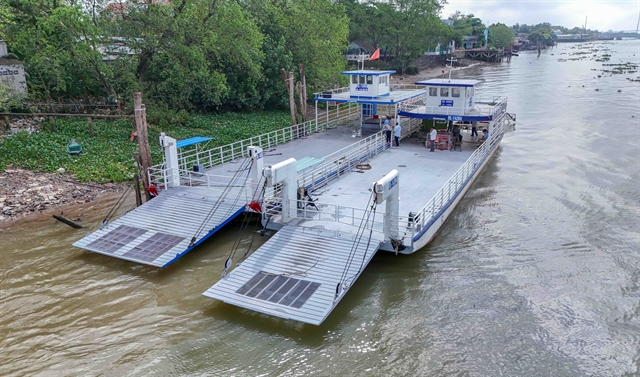
| Two ferries operated by Thành Lợi Transport Co-operative are ready for service, but it remains unclear when the ferry service will resume. — VNA/VNS Photo Thanh Liêm |
Local residents say they hope authorities will soon address the matter and allow the ferry to resume operations, making travel and trade safer and more convenient.
The prolonged shutdown has not only affected residents. It has also pushed Thành Lợi Transport Co-operative, the ferry operator on the Vĩnh Long side, to the brink of bankruptcy.
Chairman of the co-operative’s board Thái Công Danh said that its 28 members have been nearing a dead end since the Cồn Khương Terminal suddenly stopped operating, followed by the COVID-19 outbreak in 2021.
Although the ferry has not been able to operate, the co-operative still has to pay around VNĐ6 million (US$230) a month for mooring space and for personnel to watch over the terminal, in addition to maintenance costs needed to prevent the vessels from deteriorating.
The co-operative had to sell one of its three ferries to cover operating and repair costs for the remaining ferries.
Many members have fallen into mounting debt after previously borrowing from banks to invest in boats in the hope of securing stable incomes.
Co-operative member Nguyễn Thị Phương Phi said she took out a loan of more than VNĐ500 million ($19,000) from a bank to contribute capital to the ferry operations.
With no income for the past five years, she has still had to struggle to pay monthly interest and has now lost the ability to continue doing so.
The reciprocal operating agreement between the two ferry terminals remains valid and Thành Lợi Transport Co-operative vessels are still ready to operate, but they remain idle while waiting for procedures to progress on the Cần Thơ side.
Addressing procedural bottlenecks
Economically, the Cồn Khương ferry terminal was once a stable source of revenue for the State budget.
Between 2018 and 2020, the terminal contributed more than VNĐ7 billion ($266,000) to the budget, including more than VNĐ4.36 billion ($166,000) in 2019 alone.
Under the results of a 2018 auction for a three-year operating term, the winning operator was required to pay nearly VNĐ18 billion ($683,500) into the State budget, equivalent to about VNĐ494 million ($18,800) per month.
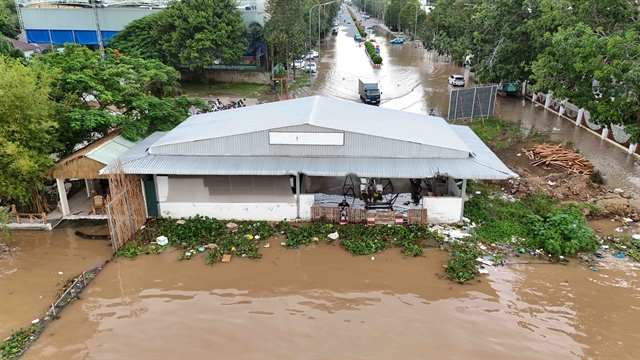
Allowing the terminal to remain inactive for nearly five years has therefore meant the city budget has lost a large source of revenue, while infrastructure like the pier and waiting area, covering more than 1,844sq.m and with a total investment value of over VNĐ1.69 billion ($64,000), has continued to deteriorate.
|
| The Cồn Khương ferry terminal was an important link between Cần Thơ City and Vĩnh Long Province before being abandoned. — VNA/VNS Photo Thanh Liêm |
Nguyễn Đăng Khoa, deputy director of the Cần Thơ Department of Construction, said restoring the ferry terminal would not only meet travel demand, but would also help reduce budget losses and make effective use of invested infrastructure.
However, the process of re-auctioning the ferry terminal has run into multiple obstacles related to procedures and the management authority.
Following a review, the Urban Affairs Committee of the Cần Thơ People’s Council determined that the Cồn Khương ferry terminal is currently an asset under the management authority of the Cái Khế Ward People’s Committee.
As a result, the city construction department’s previous role in directly preparing an operating plan was deemed inconsistent with current regulations.
Instead, the Cái Khế Ward People’s Committee is now the body responsible for preparing the dossier and submitting it to relevant authorities for approval.
Cái Khế Ward People’s Committee Chairman Bùi Văn Kiệt told the Vietnam News Agency that under new Government regulations, including Decree 12/2025/NĐ-CP and Decree 140/2025/NĐ-CP, responsibility for managing and operating the ferry terminal has been transferred to the ward level.
In 2025, the locality completed relevant documents and submitted them to the municipal People’s Committee to approve an operating plan, he said.
However, the city's People’s Committee has not yet been able to approve the plan because the Cần Thơ People’s Council has not issued a resolution on decentralising the authority to approve projects involving the lease of inland waterway infrastructure assets.
Nguyễn Kỳ Nam, deputy head of the Urban Affairs Committee under the Cần Thơ People’s Council, proposed at a working session on March 28 that the city People’s Committee direct agencies to complete a draft resolution that would delegate approval authority to provincial and commune-level management.
The draft is expected to be submitted to the city People’s Council at its next meeting in a bid to remove the longstanding bottleneck.
While waiting for the official bidding process, the Cái Khế Ward People’s Committee has proposed a temporary operating arrangement to meet immediate public needs and avoid further waste.
It has asked the city to allow a temporary contract to be signed with Thành Lợi Transport Co-operative to operate the ferry terminal on the Cần Thơ side.
The proposal is expected to provide residents with an immediate and safer means of travel, while also generating budget revenue and helping the business maintain operations during the transition period.
Although the Cồn Khương ferry terminal has already been included in the 2021-2030 inland waterway terminal system plan and classified as a Grade I terminal with an important connectivity role, confusion in handling regulatory changes has left the project suspended for far too long.
The delay in determining a starting price and completing decentralisation procedures is no longer merely an administrative issue, but a broader question of how effectively public assets are managed at the local level.
Residents said they want stronger direction and closer coordination between the city People’s Council, People’s Committee and relevant departments so that distribution documents can be issued and auction procedures completed as soon as possible.
They noted that only when the Cồn Khương ferry terminal is brought back into operation will the transport, economic and social welfare bottlenecks in the area truly be resolved, bringing practical benefits to both local residents and the State. — VNS
Society
 Society
 Society
 Society
 Society
 Society
 Society
 Society
 Society
 Society
 Society
 Society
 Society
 Society
 Society