 Society

Việt Nam, China seek stronger substantive parliamentary cooperation
1.
|
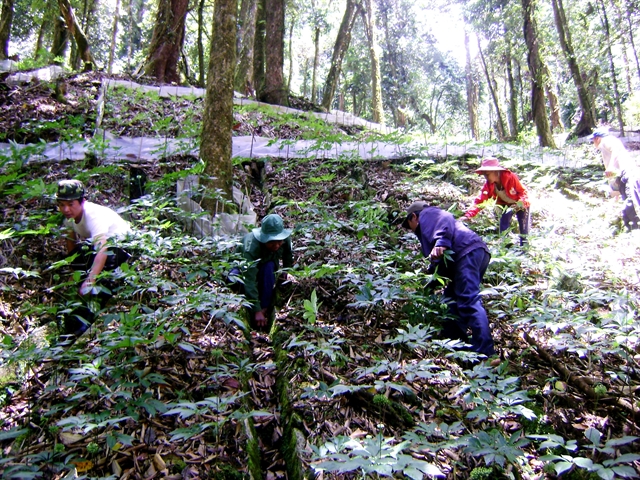
| Local farmers grow Ngọc Linh ginseng in a forest canopy area in Nam Trà My. Đà Nẵng City has approved sustainable development on the ginseng farming zone in forest. Photo courtesy of Văn Thọ |
ĐÀ NẴNG — The central city Đà Nẵng's authorities have approved the cultivation of Ngọc Linh ginseng under forest canopy across 2,000ha in Nam Trà My Commune, aiming to promote sustainable agro-forestry and protect a high-value national herb.
Đà Nẵng People’s Committee said it has tasked the management board of protected forests with implementing procedures for forest environmental service leases and enforcing strict regulations governing the sustainable cultivation of the rare medicinal plant within forest areas.
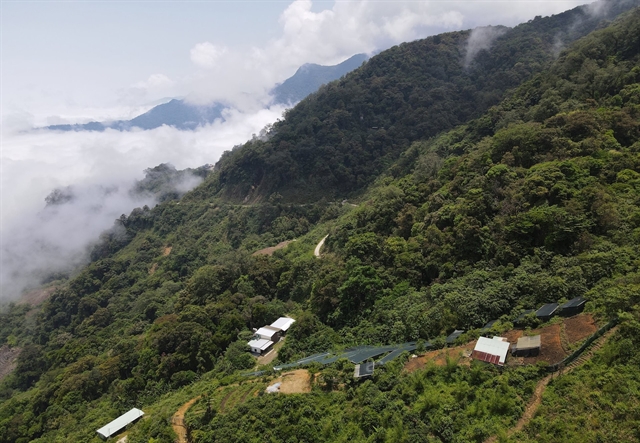
Đà Nẵng has outlined plans to develop 17,000ha of herbal farming land in Nam Trà My Commune by 2030, positioning the area as a key hub for Ngọc Linh ginseng (Panax vietnamensis), widely regarded as a national brand product.
Currently, 18 businesses and 41 household groups have leased forest canopy areas covering 825.44ha to grow Ngọc Linh ginseng in the commune.
According to the city, six enterprises and one household group have been granted the right to use the geographical indication Ngọc Linh for ginseng root products, helping to protect the origin and enhance market value.
|
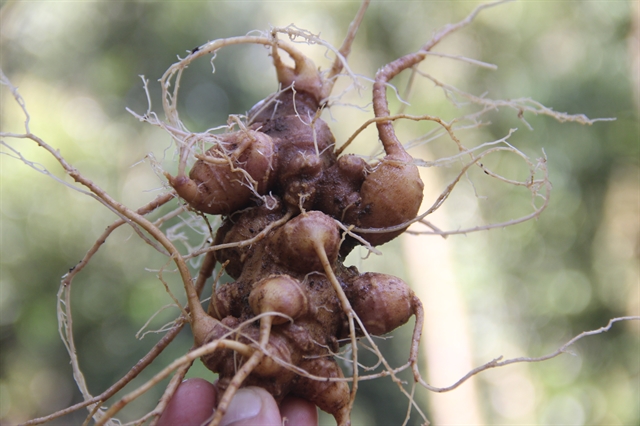
| Ngọc Linh ginseng root is seen at a forest canopy-based farm in Nam Trà My. The commune is one of the most favourite condition for growing Ngọc Linh ginseng. VNS Photo Công Thành |
Ngọc Linh ginseng is cultivated in mountainous communes at elevations of around 1,400m above sea level, with Nam Trà My Commune, about 160km from Đà Nẵng, identified as one of the most suitable areas for its growth, according to the city’s Department of Agriculture and Environment.
The department said a range of measures has been planned to protect the quality and brand of Ngọc Linh ginseng, including the application of DNA identification and testing of saponin, a key active compound in the plant.
These tools are intended to help distinguish genuine Ngọc Linh ginseng from counterfeit products on the market. Geographical indication rights and QR code-based origin certification will also be applied to products grown in approved farming areas.
The city has proposed that the National Assembly establish a legal framework for Vietnamese ginseng to safeguard the national herbal brand and support the promotion of what is often described as a national treasure.
Two years ago, an e-commerce platform dedicated to Ngọc Linh ginseng and other medicinal herbs and local produce from Nam Trà My was introduced.
Last year, the Ministry of Culture, Sports and Tourism recognised the folk knowledge associated with Ngọc Linh ginseng (Panax vietnamensis), cultivated in Nam Trà My Commune, as a National Intangible Cultural Heritage.
Ngọc Linh ginseng was first identified in the late 1960s on Ngọc Linh Mountain, spanning areas of the former Quảng Nam Province, now administratively linked with Đà Nẵng, and Kon Tum Province, now associated with Quảng Ngãi Province.
The plant is known to grow best under the canopy of primary forests at altitudes ranging from 1,400m to 2,500m above sea level, where natural conditions support its long-term sustainability.
|
| Ngọc Linh ginseng farms are found in forest area in the mountainous area of Nam Trà My. Đà Nẵng City has planned area area of 17,000ha for the sustainable development zone of Ngọc Linh ginseng farming. VNS Photo Công Thành |
In 2023, the first sustainable ginseng farm operated by Sâm Sâm Group was listed among 20 safe projects and one of eight in Asia jointly assessed and supported by the World Wide Fund for Nature (WWF) and the Dutch Fund for Climate and Development (DFCD).
According to the city’s Department of Agriculture and Environment, the project is regarded as contributing to Việt Nam’s goal of achieving net zero carbon emissions by 2050. — VNS
Society
 Society
 Society
 Society
 Society
 Society
 Society
 Society
 Society
 Society
 Society
 Society
 Society
 Society
 Society