 Society

Vietnamese creators vie for honours at TikTok’s first Southeast Asia Awards
1.
|
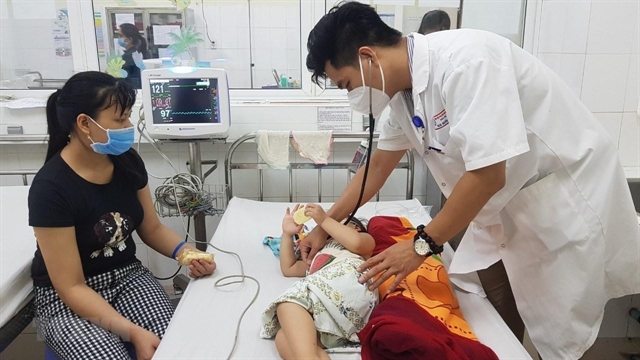
| A child with hand, foot and mouth disease receives treatment in Hà Nội. — Photo anninhthudo.vn |
HÀ NỘI — Cases of hand, foot and mouth disease are rising sharply in Việt Nam, with nearly 3,000 infections recorded at the National Children’s Hospital in the first two months of the year, doctors say.
The number of infections has climbed 56 per cent from the same period in 2025, while the number of hospital admissions has doubled, according to hospital data.
Although most children experience mild symptoms and recover without complications, clinicians caution that some cases can deteriorate rapidly.
“Hand, foot and mouth disease is common in children under five and can spread easily in the community,” said Nguyễn Văn Lâm, director of the hospital’s Centre for Tropical Diseases.
The illness is caused by a group of enteroviruses and is typically transmitted through the digestive tract. In severe cases, it can trigger complications including encephalitis, meningitis, myocarditis and acute pulmonary oedema – conditions that can prove fatal if not treated promptly.
Doctors are also seeking to dispel persistent misconceptions among parents. One is the belief that children can only contract the disease once.
In reality, multiple infections are possible because the viruses responsible for the disease belong to a broad group, including Coxsackievirus and EV71, and immunity to one strain does not guarantee protection against others.
Another common misunderstanding is that the severity of the illness depends on the number of blisters a child develops.
“The number of skin lesions does not reflect how severe the disease is. Some children may only have mild symptoms such as fever or mouth ulcers but can worsen very quickly,” Lâm said.
Health experts have identified several warning signs that require urgent medical attention.
These include a persistent high fever above 39 degrees Celsius that does not respond to medication, repeated sudden startle episodes – particularly when a child is falling asleep – and tremors or unsteady movement.
“When these symptoms appear, children should be taken to a medical facility immediately,” Lâm said.
Doctors are also urging parents not to use antibiotics without medical advice, noting that the disease is caused by viruses and does not respond to such treatment.
Basic hygiene measures remain key to care and prevention. Children should be bathed gently with clean water or antiseptic soap, and caregivers are advised not to rupture blisters or apply unverified remedies.
Keeping nails trimmed can also help prevent skin damage from scratching and reduce the risk of secondary infection. — VNS
Society
 Society
 Society
 Society
 Society
 Society
 Society
 Society
 Society
 Society
 Society
 Society
 Society
 Society
 Society