 Society
84 individuals investigated for transnational online frauds
1.
|
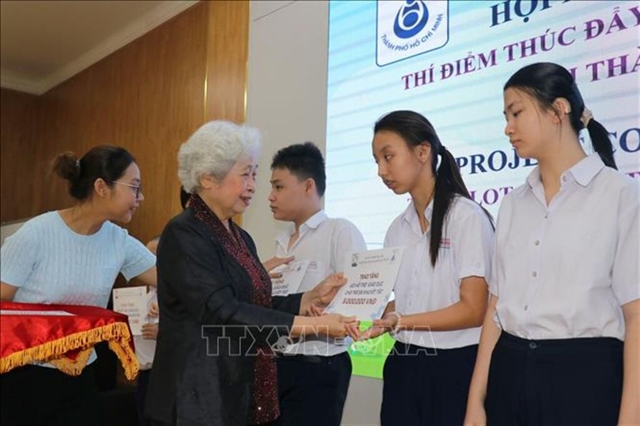
| Lương Thị Thuận, chairwoman of the HCM City Child Sponsorship Association, awards project scholarships to children with disabilities at the conference in HCM City on February 27. — VNA/VNS Photo Thanh Vũ |
HCM CITY — A pilot project in HCM City is strengthening coordination among service providers and improving access to essential support for children with disabilities, marking progress toward more sustainable implementation of child rights.
The project completion conference was co-organised by the HCM City Child Sponsorship Association and the Danish Vietnamese Association (DVA) on February 27.
Over its implementation period, the project helped raise awareness of children’s rights while establishing a network connecting key services such as inclusive and specialised education, vocational training, livelihood support, psychological and legal counselling, issuance of personal documents, social allowances, health insurance and assistive devices.

|
| Lương Thị Thuận speaks at the project completion conference held in HCM City on February 27. — VNA/VNS Photo Thanh Vũ |
Speaking at the event, Lương Thị Thuận, chairwoman of the association, said the initiative was built on grassroots needs assessments and gradually developed a coordinated system of essential services.
Support ranged from education access to medical assistance, including hearing aids, wheelchairs and health insurance coverage.
“Promoting the rights of children with disabilities must move beyond material aid, and include stronger awareness, improved coordination mechanisms and more effective child protection systems at the community level,” she said.
The project introduced services tailored to local conditions, reviewed policy gaps and enhanced the capacity of children, parents and grassroots officials.
It also shifted the approach from charity-based assistance to a rights-based model, reinforcing cooperation among health, education and local authorities.
Despite encouraging results, the initiative remains in its pilot stage and was implemented over a relatively short period, making long-term impact difficult to fully assess.
Thuận proposed extending the programme for at least three more years and called for continued support from DVA to ensure sustainable outcomes.
|
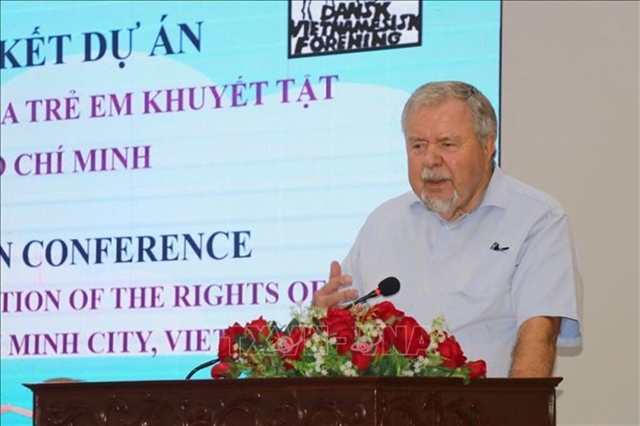
| Professor and Dr Freddy Karup Petersen, representative of the Danish Vietnamese Association, speaks at the conference in HCM City on February 27. — VNA/VNS Photo Thanh Vũ |
Professor and Dr Freddy Karup Petersen, representative of DVA, said participating families had reduced up to 60 per cent of expenses related to care, rehabilitation and educational support.
“Although still a pilot, the model demonstrated the effectiveness of a child rights-based approach and multi-sectoral coordination,” he said, noting that stigma and limited awareness remain significant barriers to inclusion.
Strengthened communication and comprehensive counselling services would be essential to overcoming these challenges, he said.
Nguyễn Tăng Minh, deputy director of the city’s Department of Health, said the project was implemented amid grassroots administrative restructuring but still achieved notable progress.
Children with disabilities were equipped with knowledge of four fundamental rights — survival, development, education and participation — helping them better understand legal protections and their responsibilities within the community.
The service network provided practical assistance, including health insurance, assistive devices and specialised medical examination packages.
Training workshops and regular forums also created opportunities for children to express their views, fostering more positive social attitudes.
Minh said the health sector would consolidate policy recommendations, expand beneficiary coverage and develop additional services for children with disabilities across the city.
The long-term goal is to build a comprehensive support network in all communes and wards, mobilising social resources to ensure sustainable community integration.
At the conference, parents and association representatives urged authorities to use survey findings as a foundation for long-term programmes, replicate effective support models and strengthen communication efforts to reduce stigma.
Participants expressed hope that continued partnership with DVA and broader social mobilisation would expand support coverage, moving closer to the goal of leaving no child with disabilities behind. — VNS
Society
 Society
 Society
 Society
 Society
 Society
 Society
 Society
 Society
 Society
 Society
 Society
 Society
 Society
 Society