 Society

Shorter Trips, Familiar Ways to Pay: How Airpaz Supports Flexible Booking with 100+ Payment Methods
1.
|
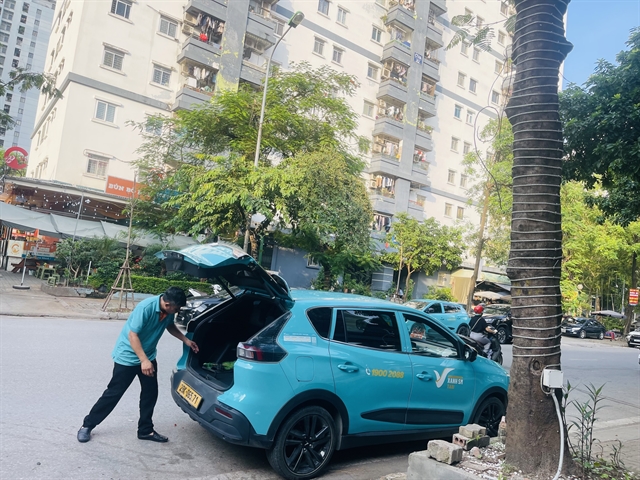
| An electric taxi picks up and drops off passengers in the Linh Đàm urban area in Hà Nội. — VNA/VNS Photo Tuyết Mai |
HÀ NỘI — Hà Nội is implementing the conversion of petrol‑ and diesel‑powered taxis to electric or green‑energy vehicles along a pre‑defined roadmap.
The task to convert 100 per cent of fossil‑fuel taxis to electric or green‑energy taxis is to be completed by 2030 at the latest.
The work is regulated under the 'Plan on the conversion of taxis using fossil fuels to electric and green‑energy vehicles within the city', issued by the Hà Nội People’s Committee on February 27.
Based on the current status of taxi operators and vehicles, and after taking into account the views of relevant departments and agencies, the committee set out a phased roadmap for the convertion.
Specifically, in the 2026–2030 phase, the city will complete mechanisms and policies to support enterprises in converting taxis from petrol and diesel to electric and green‑energy vehicles; strengthen communication so that the public understands and agrees with the plan; and proceed with the construction of charging stations at taxi parking points.
Hà Nội will also implement the conversion according to the prescribed roadmap, with the proportion of taxis using electric or green‑energy vehicles to reach 63–64 per cent this year, 68–70 per cent next year, 74–77 per cent in 2028, 88–96 per cent in 2029, and 100 per cent in 2030.
From the post‑2030 period, the city will focus on completing and sustaining stable operating conditions for electric and green‑energy taxis, prioritising enhanced access to charging infrastructure, designated stopping and parking points, and traffic organisation that is suitable for the operational characteristics of electric and green‑energy vehicles.
On the basis of technological development and practical needs, departments and agencies will review and adjust regulations on the siting of charging stations, grid connection, stopping and parking points arrangement and apply management technologies to optimise the efficiency of electric taxi operations, ensure continuous, safe and convenient service, and align with sustainable urban transport orientation.
Solutions
To ensure the plan yields desired results, the Hà Nội People’s Committee defined several core groups of tasks and solutions, including completing mechanisms and policies to support the transition of taxis in parallel with implementing low‑emission zones.
The People's Committee will draw up and submit a resolution to the Hà Nội People’s Council on policies supporting the transition of road transport vehicles to clean energy and on measures to restrict the use of road vehicles that emit pollutants into the environment in the city, including specific mechanisms and policies to encourage the conversion of taxis to electric and green‑energy vehicles.
Support policies will include subsidising part of the interest rate on commercial‑bank loan contracts used for the conversions; supporting entities developing clean‑energy infrastructure; and creating conditions for these entities to access preferential capital from the Hà Nội Development Investment Fund and other relevant funds according to regulations.
The city will provide fee and registration‑fee incentives, such as support and reductions in registration fees and initial issuance of number plates for taxis using electric or green energy, with higher support levels applied to taxis converting from petrol and diesel to electric or green energy, including those already bearing identification plates.
In addition, it will support infrastructure and operations, for example by considering preferential parking‑service charges for electric and green‑energy taxis at public car parks within the city, and by offering incentives to investors in public charging‑station infrastructure through loan‑capital support and assistance with land‑clearance costs.
Alongside this, the Hà Nội People’s Committee will develop annual city budget plans to ensure that funding sources and expenditure can be allocated to meet requirements for investment support, and policies to develop the city’s green‑transport system.
It will streamline procedures and formalities to ensure they are simple, transparent and open, thereby facilitating easy access to funding for passenger‑transport taxi operators and enterprises developing infrastructure for clean‑energy vehicles.
The support policies will be linked to the low‑emission zone project, progressively restricting and ultimately halting the circulation of non‑compliant fossil‑fuel vehicles within the low‑emission zone in accordance with regulations.
At the same time, the city will study the deployment of an intelligent traffic‑monitoring system, integrating inspection‑data and emission‑standard information for management and supervision within low‑emission zones.
The committee proposed that competent authorities consider extending preferential pre‑registration fee policy, with 100 per cent exemption, for electric and green‑energy cars, especially for vehicles used by enterprises operating passenger transport by taxi.
In addition, it will review, build and expand the system of electric charging stations serving transport vehicles in a synchronous, convenient and city‑planning‑aligned manner, such that the transition to electric and green‑energy taxis proceeds in parallel with the development of charging stations and electricity‑supply infrastructure, ensuring timely and convenient meeting of the needs of converted taxis.
|
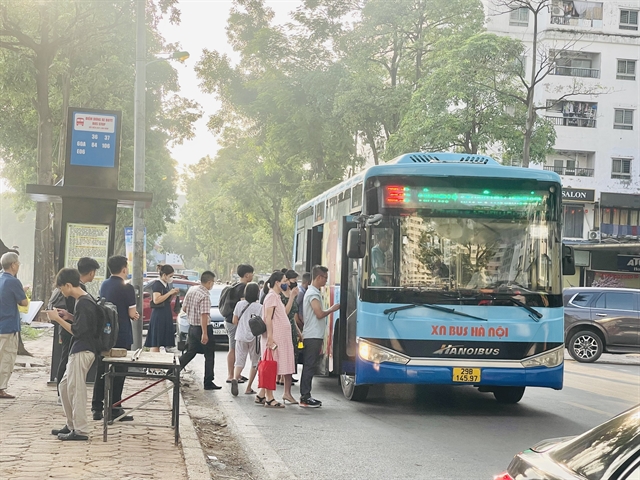
| Public buses contribute to reducing air pollution. — VNA/VNS Photo Tuyết Mai |
The city will prioritise the development of charging infrastructure in the central urban area, ring‑road corridors, airports, railway stations, bus terminals and other major transport hubs; and encourage existing public car parks and existing petrol‑station sites to install charging stations and charging posts.
It will also adjust the planning and development plans for the power‑grid system to ensure stable and safe electricity supply for electric vehicles, in line with the timetable for expanding charging infrastructure; guide and support investing entities in fulfilling construction and installation procedures for charging stations in accordance with planning and legal regulations, while coordinating to finalise related technical standards and specifications.
The city will add requirements to reserve suitable land and positions for charging stations and taxi stopping points during the formulation and adjustment of planning documents.
For new construction projects, it will apply requirements to pre‑install technical infrastructure ready for electric‑charging‑station installation; organise and manage taxi stopping and parking positions for passenger pick‑up and drop‑off, combined with charging‑station infrastructure for vehicles using clean, green and environmentally friendly energy at major transport hubs, tourist areas, commercial centres and other demand‑concentrated travel areas.
The city will simultaneously apply priority mechanisms in traffic organisation for this group of vehicles, especially in low‑emission‑zone areas.
In particular, alongside building a set of criteria for evaluating and ranking the quality of passenger‑transport taxi services and applying technology in management, the city will intensify communication and dialogue, implement coordinated publicity on the plan to convert taxis to electric and green energy through press agencies and grassroots information systems, clarifying long‑term economic benefits such as reduced fuel costs and lower maintenance expenses.
Furthermore, the city will step up communication on the conversion of taxis to electric and green energy and the rollout of low‑emission zones, on requirements regarding emission standards, and on the legal and cost consequences for non‑compliant fossil‑fuel taxis, in order to foster social consensus.
It will organise forums and dialogue conferences with passenger‑transport taxi operators to exchange information, resolve difficulties and fully disseminate support mechanisms and policies. — VNS
Society
 Society
 Society
 Society
 Society
 Society
 Society
 Society
 Society
 Society
 Society
 Society
 Society
 Society
 Society