 Society
Lotte, Phát Đạt combine strengths in Thu Thiem project
1.
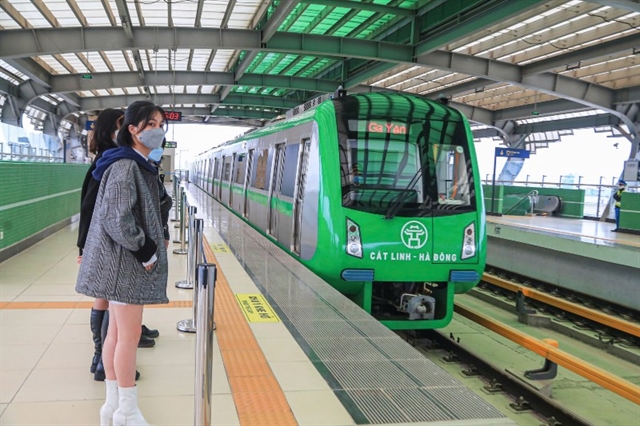 |
| Passengers at the Cát Linh-Hà Đông metro station in Hà Nội. VNA/VNS Photo |
HÀ NỘI — Two urban railway lines in Hà Nội carried more than 243,000 passengers during the nine-day Tết (Lunar New Year) holiday, an increase of over 32 per cent compared with the same period last year, underscoring the growing role of metro services in easing peak travel pressure in the capital.
Under the direction of the Hà Nội People's Committee, Hà Nội Metro implemented a special train schedule from February 14 to 22 to serve Tết passengers.
During the nine-day peak period, the system maintained stable and safe operations, meeting increased travel demand.
Statistics show that more than 3,300 train services operated during the holiday. All services ran on time and no incidents affecting passengers were reported.
Total ridership on the two lines exceeded 243,000 passengers. Of these, the Cát Linh – Hà Đông (2A) line served more than 165,000 passengers, while the Nhổn – Hà Nội Station line carried nearly 78,000.
This increase reflects a gradual shift towards public transport, particularly metro services, during peak travel periods.
When demand surges, punctuality and stable transport capacity offer clear advantages for urban rail over many other modes of transport in the city. Many residents opted for the metro to visit family, celebrate the Lunar New Year or connect with major transit hubs.
Safe and stable operations continue to strengthen passenger confidence in the Hà Nội metro system.
Maintaining 100 per cent on-time departures and arrivals during peak periods demonstrates improved operational management and reinforces the role of urban rail in the capital's public transport network, particularly during Tết and other holidays, when travel demand rises sharply.
Meanwhile, HCM City also saw a surge in passenger traffic during the Tết holiday. HCM City's Metro Line 1 (Bến Thành – Suối Tiên) served over 570,000 passengers during the seven-day peak period, exceeding the plan by 42 per cent.
This metro line continues to be a popular mode of transportation, attracting considerable attention from the city's residents.
From February 16 to 22, the metro line saw 1,801 train trips, reaching 100 per cent of the planned target and increasing by 39 per cent compared to the same period in 2025.
Passenger volume exceeded the planned target by 42 per cent and reached 94.4 per cent of the passenger volume compared to the same period in 2025.
According to Urban Railway Company 1 (HURC1), operations have been stable, fully meeting the approved train schedule.
Passenger volume is also showing a strong upward trend.
On February 16, the line served around 50,000 passengers, equivalent to 89.9 per cent of the plan. However, because it was the last day of the last lunar year, a lower volume of passengers was expected. Most residents had already returned to their hometowns or were spending time at home preparing for the holiday, taking care of their families and celebrating New Year's Eve.
From February 17 to 22, the demand for travel in the city increased rapidly and remained high.
On February 17, passenger volume reached nearly 80,000 people, equivalent to 131.5 per cent of the plan, a significant increase compared to the 29th day of the Lunar New Year. The company organised 20 train trips to serve 3,426 passengers between 12.30 and 2am, meeting the spike in travel demand at the very start of the Lunar New Year.
From February 18 to 21, the number of metro passengers continued to increase and remained high, reaching about 96,000 passengers on February 21, the highest number during the holiday. By February 22, the last day of the holiday, the number of passengers had decreased.
The majority of holiday passengers used cashless payment methods, accounting for approximately 71.8 per cent of the total. Cash payments accounted for about 23.2 per cent, while and the remaining 5 per cent used citizen identification cards. VNS
Society
 Society
 Society
 Society
 Society
 Society
 Society
 Society
 Society
 Society
 Society
 Society
 Society
 Society
.jpg) Society
Society