 Society

Top leader urges deeper, higher-value economic ties with EU, Belgium
1.
|
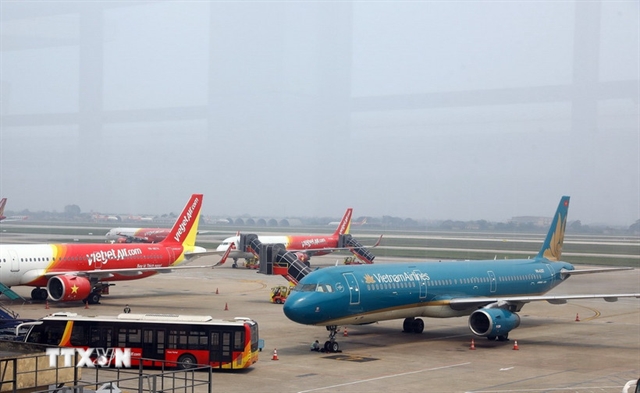
| Aircraft at Nội Bài International Airport. — VNA/VNS Photo |
HÀ NỘI — Dense fog disrupted operations at Nội Bài International Airport early on Tuesday, affecting 13 departing and arriving flights before conditions improved later in the morning.
Airport authorities said thick fog combined with low cloud ceilings sharply reduced visibility in the Nội Bài area, making it unsafe for several aircraft to take off or land.
Four outbound flights were delayed, while five inbound services were forced to circle as crews waited for better weather. Another four arriving flights were diverted to other airports.
Among the diverted services were a Vietnam Airlines flight from Manila and another from Frankfurt, both of which landed at Cát Bi Airport in Hải Phòng City. A Turkish Airlines service from Istanbul diverted to Đà Nẵng, while a Pacific Airlines flight from Tân Sơn Nhất was also redirected to Cát Bi.
Visibility began to improve at around 8.20am, allowing departing flights to resume normal operations. By 8.40am, weather conditions had stabilised sufficiently for arriving aircraft to land safely at Nội Bài.
The airport authorities said passengers were kept informed of the disruptions and advised to monitor flight information displays at the terminal and follow updates from airlines.
Fog is common across northern Việt Nam during winter nights and early mornings, including at airports in Quảng Trị, Nghệ An and Thanh Hóa. When combined with cold air, it often brings drizzle and low cloud, further reducing visibility.
Aviation authorities consider low visibility dangerous because it makes it harder for pilots to see, navigate and position aircraft accurately, raising risks during take-off and landing.
Fog affects more than travellers’ plans. It also costs airlines heavily, as delays, cancellations and diversions disrupt flight schedules, increase fuel use while aircraft circle in holding patterns, add repositioning expenses, and push up costs for supporting stranded travellers. — VNS
Society
 Society
 Society
 Society
 Society
 Society
 Society
 Society
 Society
 Society
 Society
 Society
 Society
 Society
 Society