 Society

Private conglomerates expand economic contributions through jobs, taxes and investments
1.
|
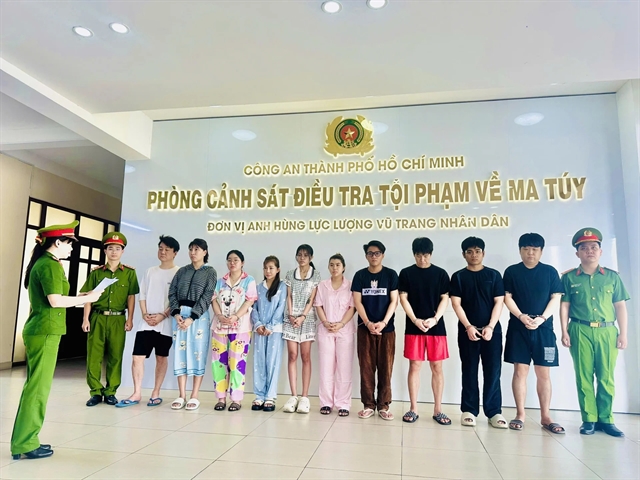
| Suspects in the ring involved in the illegal possession and organisation of drug use detained by HCM City's narcotics unit. — Photo from the police |
HCM CITY — HCM City's police said they have dismantled a criminal ring involved in the illegal possession and organisation of drug use, arresting a group that includes eight South Korean nationals.
One South Korean among the arrested is even subject to an international arrest warrant, according to the police.
The raid was carried out by the city’s drug crime investigation unit during a high-profile crackdown aimed at ensuring public order and social safety ahead of the Lunar New Year of the Year of the Horse 2026.
Investigators uncovered and dismantled a cannabis trafficking network operating via online platforms. Dozens of individuals connected to the network were detected and summoned for questioning as police sought to clarify suspected offences including illegal drug trading, organising drug use and illicit consumption of narcotics.
Initial tests showed that all members of the group tested positive for drugs. Police seized more than 3.2 kilogrammes of cannabis and 139 electronic cigarettes containing cannabis oil.
Authorities said that during the peak anti-crime campaign for the 2026 Lunar New Year, police units across the city had uncovered and dealt with a series of drug-related cases.
Between 2020 and 2025, HCM City authorities detected and handled nearly 10,000 drug cases involving more than 25,000 suspects, seizing large quantities of synthetic drugs, heroin, as well as weapons and vehicles used in criminal activities.
By mid-December 2025, the city recorded more than 25,000 people addicted to or illegally using drugs, including those under post-rehabilitation management. Of these, over 67 per cent were using synthetic drugs, while more than 12,000 addicts were still living in the community, identified by police as a significant source of demand and a potential driver of other forms of crime. — VNS
Society
 Society
 Society
 Society
 Society
 Society
 Society
 Society
 Society
 Society
 Society
 Society
 Society
 Society
 Society