 Society

Việt Nam, Denmark elevate ties to Comprehensive Strategic Partnership
1.
|
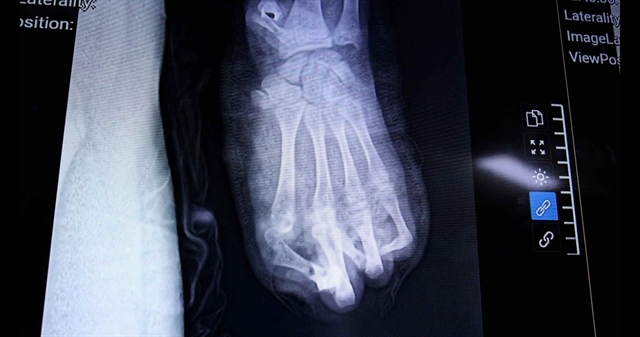
| A 15-year-old boy has suffered the near-total loss of his left hand in a severe injury caused by an improvised explosive firework. Photos courtesy of the 108 Central Military Hospital |
HÀ NỘI — The 108 Central Military Hospital has provided emergency treatment to a 15-year-old boy who suffered the near-total loss of his left hand in a severe injury caused by an improvised explosive firework.
On Friday, doctors from the Department of Upper Limb Surgery and Microsurgery under the Institute of Traumatology and Orthopaedics admitted the teenage patient in a critical condition following a firework explosion.
The boy was brought to hospital approximately three hours after the incident, with his left hand almost completely crushed, accompanied by serious soft tissue injuries to his left thigh.
|
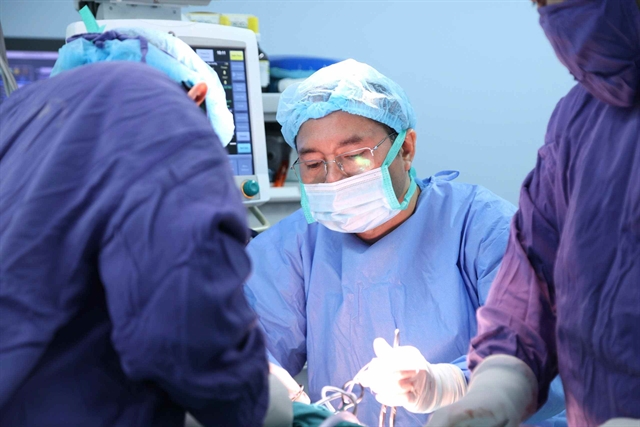
| Dr Nguyễn Quang Vịnh of the Department of Upper Limb Surgery and Microsurgery conducts surgery on the patient. |
Dr Nguyễn Quang Vịnh of the Department of Upper Limb Surgery and Microsurgery said this was one of the most severe cases of firework-related injuries he has seen. The patient’s hand was nearly destroyed.
Injuries caused by fireworks or explosive devices are often extremely complex, making the restoration of individual fingers extraordinarily difficult.
Despite prompt emergency care and urgent surgery, and after extensive efforts by the medical team, doctors were only able to preserve two of the patient’s five fingers. The entire palm and wrist area sustained devastating damage, meaning the treatment process is expected to be prolonged and will require multiple additional surgeries.
In the long term, the patient is likely to regain only very limited hand function.
Dr Vịnh said that every year, particularly in the three months leading up to the Lunar New Year, the department treats numerous firework-related accidents, most of them involving adolescents. In recent years, however, such cases have been occurring sporadically throughout the year rather than being confined to festive periods.
The patient has undergone surgical debridement to remove crushed tissue and foreign objects, including firework fragments. In the next few weeks, doctors will continue treatment by covering necrotic areas with skin flaps, and after several months, they plan to perform toe-to-thumb transfer surgery to replace the lost thumb.
Even so, the patient will have to accept the permanent loss of at least two fingers, according to his medical team.
Dr Vịnh warned the public, especially young people, never to underestimate the dangers of explosive materials. What doctors regret most is that accidents caused by fireworks are entirely preventable, yet continue to occur. Just a few moments of carelessness can lead not only to permanent loss of limb function, but in many cases can directly threaten lives.
The doctor also stressed that in the event of a fireworks-related accident, the injured person should receive basic first aid, including wound dressing and immobilisation, and be transported immediately to the nearest medical facility, as delays may result in the loss of critical time for emergency treatment.
Out of this deeply regrettable case, Dr Vịnh expressed the hope that families, schools and society will strengthen supervision, education and awareness among adolescents so that the sound of fireworks no longer comes at the cost of young people’s health, future and entire lives. — VNS
Society
 Society
 Society
 Society
 Society
 Society
 Society
 Society
 Society
 Society
 Society
 Society
 Society
 Society
 Society