 Society
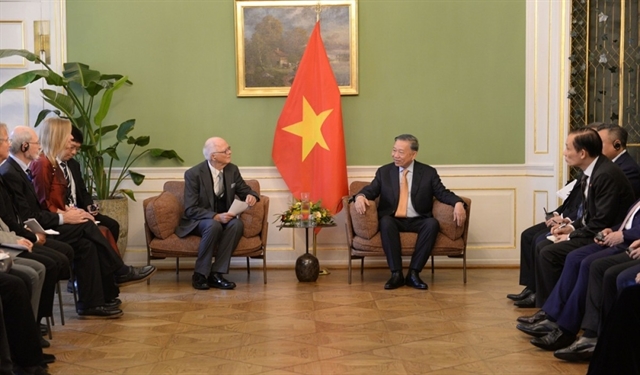
Top leader hails friendship association's role in nurturing Việt Nam–Denmark ties
1.

|
| Quảng Ngãi - Hoài Nhơn Expressway, a key project to welcome the 14th National Party Congress, put into operation on December 19, 2025. — VNA/VNS Photo |
HÀ NỘI — Among the three strategic breakthroughs identified by the Party – institutions, infrastructure and human resources, infrastructure development has played a crucial role, emerging as a key engine of the recent strong growth, making great contributions to the country’s robust GDP growth of 8.02 per cent in 2025 and about 6.3 per cent in the 2021–2025 period.
Transport infrastructure – “lifeblood” of economy
The Party has consistently affirmed that infrastructure, especially transport infrastructure, is the “lifeblood” of the economy and a bridge to new development space. In the Party's 13th tenure, this aspect was elevated into one of the three strategic breakthroughs.
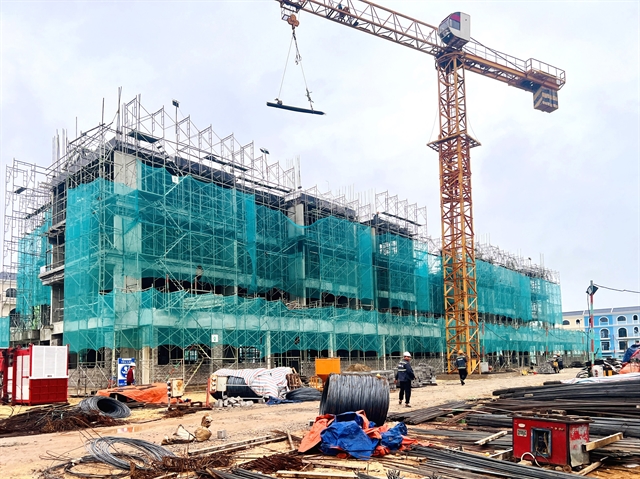
During 2021–2025, substantial resources were mobilised across all five transport areas – road, aviation, railway, maritime and inland waterways. In particular, the Government issued resolutions and action plans with the target of having 3,000km of expressways nationwide by the end of 2025.
Many key tasks have been implemented and completed, significantly reshaping the national infrastructure landscape and contributing to socio-economic development. Major projects include Long Thành International Airport, Terminal T3 at Tân Sơn Nhất International Airport, Terminal T2 at Nội Bài International Airport, and international seaports such as Lạch Huyện and Cái Mép – Thị Vải capable of accommodating the world’s largest container vessels. The Bến Thành – Suối Tiên urban railway in HCM City entered operation while 3,345km of expressways, 458km of interchanges and access roads, 1,586km of national highways and 1,701km of coastal roads have been completed or technically opened, unlocking vast development potential, particularly for the marine economy.
In 2025 alone, 564 projects with total investment exceeding VNĐ5.14 quadrillion (US$195.5 billion) were inaugurated or started construction, supporting economic growth and intra- and inter-regional connectivity. These include Cà Mau – Đất Mũi Expressway, the road to Hòn Khoai Port, the Lào Cai – Hà Nội – Hải Phòng railway, urban rail lines in Hà Nội and HCM City, and preparations for the North – South high-speed railway, targeted for groundbreaking in late 2026.
Minister of Construction Trần Hồng Minh said Việt Nam had only 1,163km of expressways by 2020, making the addition of 1,837km within five years a formidable challenge amid institutional bottlenecks, site clearance difficulties and material shortages. To address these, the National Assembly and Government adopted special mechanisms while the Prime Minister established a State steering committee for nationally important transport projects and launched the “500 days and nights of emulation to complete 3,000km of expressways” campaign.
As a result, by the end of 2025, Việt Nam had completed and put into use 3,345km of expressways, exceeding the 3,000km target and essentially completing the North – South Expressway from Cao Bằng to Cà Mau as targeted by the 13th National Party Congress, he said.
This achievement has affirmed the construction sector’s leading role in stimulating investment, contributing around 17 per cent of GDP, reducing logistics costs from 21 per cent of GDP in 2018 to 17–18 per cent, creating millions of jobs and driving industrial and service development, according to the minister.
Prioritising resources, avoiding fragmentation
Drawing lessons from 2021–2025, the minister stressed the need to prioritise resources, avoid fragmented investment, and focus on major national projects with strong spillover effects. It is also important to improve institutional frameworks, enhance power decentralisation and accountability, mobilise the entire political system, enhance the sense of responsibility, and foster a spirit of thinking big, acting bold and daring to bear responsibility.
According to the draft action plan for implementing the Resolution of the 14th National Party Congress, developing a modern and integrated infrastructure system will remain a strategic breakthrough, with priorities including expressways, gateway seaports, major airports, the North – South high-speed railway, urban railways in Hà Nội and HCM City, international rail connections, and international transshipment seaports.
The experience of recent years shows that with thorough preparation, decisive leadership, joint efforts by the entire political sytem, and broad social consensus, infrastructure will continue to serve as a powerful driver of Việt Nam’s sustainable growth. — VNA/VNS
Society
 Society
 Society
 Society
 Society
 Society
 Society
 Society
 Society
 Society
 Society
 Society
 Society
 Society
 Society