 Society

Tuyên Quang festival offers a hands-on experience of Tày culture
1.
 |
| An urban railway in Hà Nội. VNA/VNS Photo |
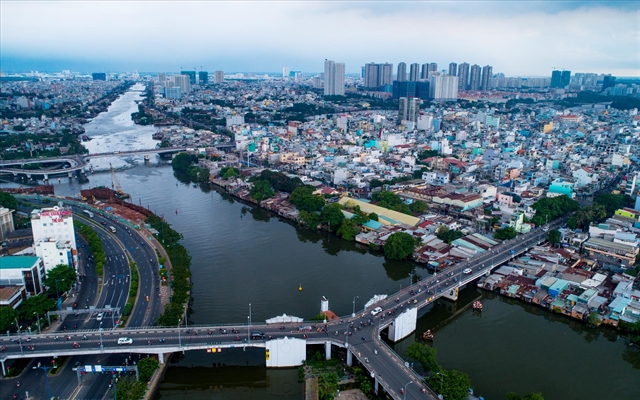
HÀ NỘI — After 40 years of Đổi mới (Renewal), Việt Nam has made breakthrough progress in industrialisation and modernisation, with urbanisation emerging not only as an inevitable outcome but also as a major driver of growth that has reshaped the country’s development trajectory.
In this process, urban planning and management have laid a solid foundation, helping propel Việt Nam into a new era of development with a markedly different standing. According to architect Đào Ngọc Nghiêm, vice president of the Việt Nam Urban Development and Planning Association, industrialisation and urbanisation over the past four decades have advanced hand in hand.
This, he said, reflects an inevitable law distilled by the Party and the State into strategic policy orientations.
A historic milestone came with the Politburo’s issuance of Resolution No.06-NQ/TW on January 24, 2020 on the planning, construction, management and sustainable development of urban areas in Việt Nam to 2030, with a vision to 2045. The resolution affirmed the particular importance of urban space within the national development structure.
In the early years of Đổi mới, Việt Nam’s urban system was modest, with fewer than 400 urban areas. Today, the number has risen to more than 900 urban centres of various types, clearly classified into four categories of special-grade cities and cities of Grade I, Grade II and Grade III.
This classification has helped align Việt Nam’s urban system with international practice while clearly defining the regional and national roles of special-grade and Grade I cities, Nghiêm said.
With an urbanisation rate of 42.7 per cent, Việt Nam is now on par with the Asian average. The urban economy contributes about 70 per cent of national GDP, reflecting not only quantitative expansion but also a qualitative transformation.
Urbanisation has created space for industrial and service development and has become a hub for high-quality human resources and scientific and technological advances.
Analysing these achievements in depth, Nghiêm identified three groups of major breakthroughs.
The first is progress in technical infrastructure. Urban infrastructure is no longer limited to basic road networks but has evolved into modern transport systems. From the dominance of motorcycles, Việt Nam has entered the era of urban railways. Key infrastructure projects have become vital arteries, unblocking economic flows and connecting growth poles across regions.
Living standards and social welfare have also improved markedly. The national average housing floor area has reached nearly 29 sq.m per person, while major cities exceed 30 sq.m per person.
HCM City and Hà Nội, the country’s two main economic centres, contribute more than 40 per cent of national GDP, underscoring their role as the primary engines of growth.
Cities have also begun to strike a balance between heritage conservation and modern development, while flexibly adapting to climate change and steadily improving their positions in global rankings.
Capital’s planning vision
Within this broader picture, the capital Hà Nội is regarded as a leading locality in urban planning.
Legally, Hà Nội is the only city governed by a dedicated Capital Law that defines its position, role, special policies and management and development mechanisms.
Following the expansion of its administrative boundaries in 2008, the city now covers 3,349 sq.km, with an urbanisation rate of over 50 per cent and a target of 60–72 per cent by 2030. Its development vision is that of a Cultured-Civilised-Modern capital.
To realise this vision, Hà Nội is concentrating significant resources on key infrastructure projects.
During the 2026–2030 period, the city aims to remove major bottlenecks by completing Ring Road No.4 before 2027 and accelerating preparations for Ring Road No 5 to create seamless regional connectivity for 10 provinces and cities in the capital region.
Hà Nội also targets the completion of more than 100km of urban railway by 2030, prioritising metro lines such as Line 2 and Line 3 to fundamentally ease traffic congestion in the urban core.
At the same time, the city is pressing ahead with themed park projects and the conservation of its lake system to improve the living environment and meet residents’ urgent needs.
In particular, the strategic Red River Landscape Axis project is envisioned not merely as a transport scheme but as a major cultural and economic spatial axis, expected to become a new symbol of the modern capital.
However, Nghiêm highlighted three urgent bottlenecks: a lack of integration between sectoral plans and different levels of management, constraints in resources and financial mechanisms for large-scale and green infrastructure projects and institutional capacity that has yet to keep pace with the demands of modern urban governance.
The capital required for transport infrastructure in the coming period is enormous, estimated at hundreds of trillions of đồng. Without strong mechanisms to mobilise social capital and close regional coordination, metro and ring road projects will struggle to meet planned schedules.
On that basis, the architect proposed several strategic recommendations.
First, Hà Nội should establish an inter-sectoral steering committee on sustainable urban development to act as a conductor, ensuring synchronised coordination across planning, cultural, technological and environmental strategies.
Second, the city should formulate and issue an overarching architectural framework for digital transformation and smart urban development, with priority given to building a shared urban data platform.
Finally, breakthrough pilot projects should be launched in a small number of selected areas, such as an inner-city ward, a new urban zone and a suburban commune, to synchronously deploy solutions for green urban development, intelligent transport, digital governance and creative cultural spaces. VNS
Society
 Society
 Society
 Society
 Society
 Society
 Society
 Society
 Society
 Society
 Society
 Society
 Society
 Society
 Society