 Society
Final section joins Saigon River pedestrian bridge
1.
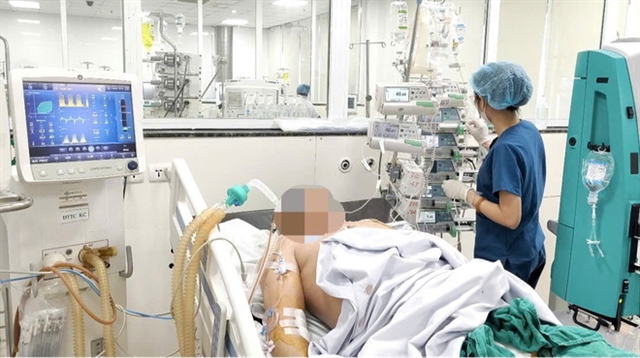 |
| A dengue patient in a critical condition receives treatment at the National Hospital for Tropical Diseases. — VNA/VNS Photo |
HÀ NỘI — With dengue fever showing complex and persistent trends, the Ministry of Health has warned of the risk of a prolonged outbreak and urged local authorities to quickly issue prevention and control plans.
Ministry statistics show that Việt Nam recorded about 181,200 dengue cases in 2025, including 36 deaths.
Nguyễn Trọng Khoa, deputy director of the Ministry of Health’s Department of Medical Service Administration, stressed that localities must remain vigilant and proactively prepare dengue prevention measures for 2026.
According to the Hà Nội Centre for Disease Control, between December 19 and 26 the capital recorded 100 dengue cases across 49 of its 126 wards and communes, with no fatalities.
For the whole of 2025, Hà Nội reported 6,516 dengue cases, a 29 per cent decline compared to 2024 and no deaths.
Meanwhile, the intensive care unit of the National Hospital for Tropical Diseases has recently admitted a critical dengue patient, a 51-year-old man from Hà Nội with multiple chronic underlying conditions.
ICU deputy head Phạm Văn Phúc said the patient arrived in a severe condition and required two types of vasopressors simultaneously to maintain blood pressure.
About five days before hospital admission, the man developed intermittent high fever of 39–40 degrees Celsius, accompanied by body aches, dry cough and poor appetite.
After five days of hospitalisation with no improvement, he began experiencing bleeding and swelling in his right wrist and was transferred to the National Hospital for Tropical Diseases in a critical state.
Despite intensive treatment, his condition remains extremely complex, with no improvement in liver or respiratory failure. As both failures are progressing rapidly, his prognosis is very poor, with a high risk of death.
“This is an example of how dengue fever can become life-threatening,” Phúc said, particularly in patients with underlying conditions such as obesity, cardiovascular disease, diabetes, liver or kidney failure or immunodeficiency.
Dengue fever typically reaches its most dangerous phase between the third and seventh day after the onset of fever. Severe plasma leakage can lead to shock, accompanied by bleeding under the skin, from mucous membranes or from internal organs, as well as ascites or pleural effusion.
In severe cases, the disease can quickly progress to multi-organ failure, including liver, kidney, and respiratory failure.
The Ministry of Health had forecast a higher dengue risk from early 2025 and issued a series of strong directives. Data show that dengue cases increased in the second half of the year.
Although case numbers declined in the final months of 2025, they remained significantly higher than in previous years.
The Department of Medical Service Administration has warned that the dengue outbreak could extend into 2026, in the context that the health care system undergoes organisational restructuring.
While acknowledging local efforts to control dengue despite administrative changes, Khoa urged authorities to promptly develop realistic dengue prevention and control plans for 2026.
He said preparedness scenarios should include appropriate resource allocation and be submitted to municipal authorities to enable proactive direction. — VNS
Society
 Society
 Society
 Society
 Society
 Society
 Society
 Society
 Society
 Society
 Society
 Society
 Society
 Society
 Society