 Society
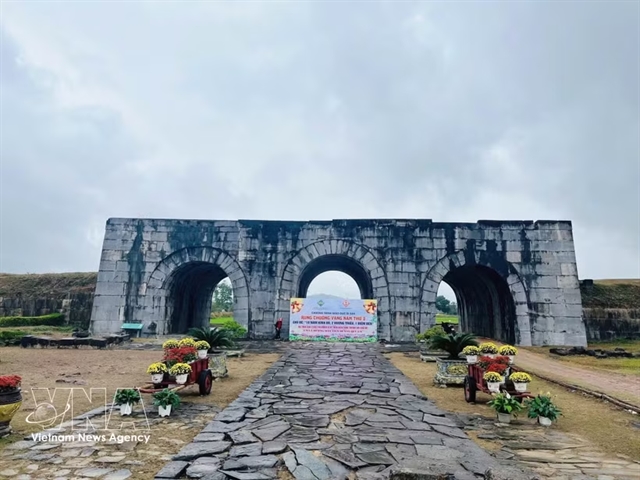
Thanh Hóa to waive entrance fees at Hồ Dynasty Citadel, Lam Kinh relic site
1.
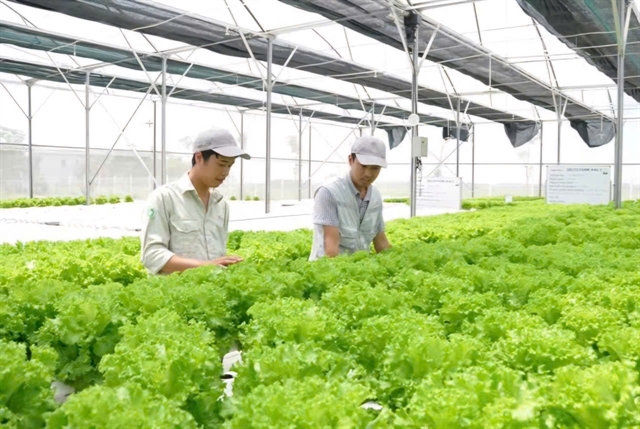 |
| Hydroponic vegetable cultivation model at the High-Tech Agricultural Park. — Photo daibieunhandan.vn |
HCM CITY — HCM City will focus on developing ecological urban agriculture in the coming period, according to the city People’s Committee Office.
Following the merger with Bình Dương and Bà Rịa–Vũng Tàu provinces, the city now has more than 453,900 hectares of agricultural land – nearly four times the area before merger – spanning 168 commune-level administrative units. This expansion creates new space, potential and comparative advantages for agricultural development.
The former HCM City retains strengths as a hub for high-quality plant varieties, livestock breeds and high-tech urban agriculture. The former Bình Dương has strong potential for concentrated industrial crops and large-scale livestock farming based on high-tech and organic models. Meanwhile, the former Bà Rịa–Vũng Tàu, in addition to agricultural production zones, holds advantages in aquaculture and fisheries, it said.
The city’s agricultural sector is undergoing a strong transformation, restructuring toward higher value-added and sustainable development. In recent years, the sector has maintained steady growth, with agricultural, forestry and fisheries output rising by an estimated 2.5 per cent annually.
High-tech agriculture now accounts for about 45 per cent of total production value, with 692 high-tech crop production facilities, 797 high-tech livestock farms with a total herd of around 14.5 million animals, 171 brackish-water shrimp farms, and modern aquatic breeding facilities.
HCM City is zoning seven high-tech agricultural zones covering more than 1,344 hectares, which are currently awaiting approval from the Prime Minister.
At the same time, areas producing green, clean and safe agricultural products continue to expand. The city is strengthening management of codes for planting areas and packing facilities to enhance the competitiveness of its agricultural products in international markets.
The “One Commune, One Product” (OCOP) programme has also been effectively implemented, with more than 1,000 products recognised, contributing to brand building, market expansion and higher incomes for farmers.
The city is increasingly integrating agriculture with eco-tourism. Community-based tourism, craft villages and agricultural experience models are creating sustainable livelihoods while preserving cultural and natural values.
Despite these achievements, the sector faces challenges such as shrinking agricultural land, fragmented production, high costs of VietGAP and organic certification, weak value-chain linkages, and growing impacts from climate change, flooding and saltwater intrusion.
By 2026, the agricultural sector aims to build a modern urban agriculture system, shifting from a production-focused approach to an agricultural economic mindset, and developing multi-functional, multi-value agriculture.
The city will accelerate digital transformation in agriculture; promote mechanisation, high technology, smart and circular agriculture; strengthen traceability and management of planting area codes; and expand organic and green production.
In addition, HCM City will review and implement the Urban Agriculture Development Programme for 2026–2030, with a vision to 2050, alongside key initiatives on the agricultural digital economy, urban agricultural services, high-quality human resource development, investment attraction, agricultural enterprise growth, and sustainable forest management linked to carbon credits from the Cần Giờ mangrove forests.
With clear strategic direction and comprehensive solutions, HCM City expects to successfully build a green, ecological and modern urban agriculture model, contributing to food security, improved quality of life and sustainable development in the digital era. — VNS
Society
 Society
 Society
 Society
 Society
 Society
 Society
 Society
 Society
 Society
 Society
 Society
 Society
 Society
 Society