 Society
Goat meat offers a feast of choice for every diner
1.
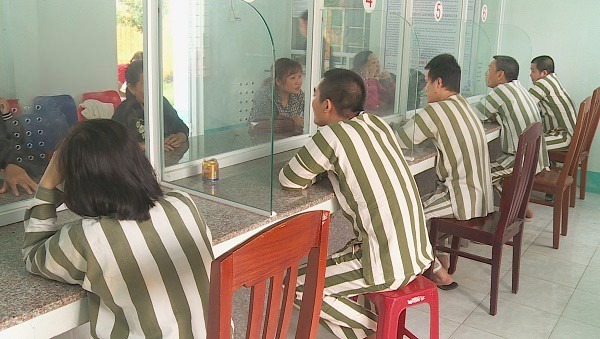 |
| Prisoners meet relatives during a family visitation session at a prison in the northern province of Gia Lai, March 2025. — Photo congan.gialai.gov.vn |
HÀ NỘI — The Ministry of Public Security is seeking feedback on a draft circular that would introduce supervised video calls between inmates and their relatives through a secure system managed by prison authorities.
If approved, the regulation would allow prisoners to make one video call per month, lasting up to 10 minutes, at no cost. The calls would be arranged and monitored by prison staff and carried out through a dedicated communications network installed in detention facilities.
The draft circular was prepared by the department responsible for prison management and is expected to be submitted to the Minister of Public Security for approval in May. It would take effect 45 days after being signed and replace the current rules issued in 2020.
Under the proposal, prisoners would not have direct access to the internet or to commercial messaging platforms. Instead, calls would take place through a controlled system operated by prison authorities, which would connect inmates with relatives using registered devices.
Family members would need to sign up in advance through the system, providing personal information and details about their relationship to the prisoner. Prison officials would verify the information before approving the call.
During the call, the relative’s image and identity would have to match the information registered in the system. Prisoners would also be required to communicate only with the approved person and follow the agreed format of the call.
Vietnamese would normally be used during the conversation. In cases where a prisoner cannot communicate in Vietnamese, another language may be allowed with staff supervision.
Prison staff supervising the calls would be required to log the calls in a monitoring register.
The draft regulation also sets out circumstances in which calls would not be permitted.
Prisoners who are under investigation, prosecution or trial for additional offences would be barred from contacting relatives by phone or video.
Inmates who repeatedly violate prison rules and are placed in separate detention could also face temporary restrictions on communication with family members, for up to three months.
At the same time, the proposal introduces incentives for good behaviour. Prisoners who receive commendations for complying with prison rules could be granted an additional call each month.
In urgent situations, inmates may also request permission to contact family members outside the regular schedule.
Current regulations already allow prisoners to make phone calls to relatives, but inmates must pay the charges themselves. The new draft would keep that system while adding a free video-call option.
Supporters of the proposal say maintaining family contact can play an important role in rehabilitation.
Nguyễn Hiếu Văn, a lecturer at Văn Lang University, said research shows that prisoners who remain in touch with their families tend to adapt better to life in prison and are less likely to reoffend after release.
Studies cited by international organisations suggest that inmates who maintain family relationships during their sentences have recidivism rates roughly between 20 and 30 per cent lower than those who lose contact with their social networks.
"Being able to see loved ones through video calls can help inmates feel supported and maintain motivation to rebuild their lives," Văn said.
Several countries have already adopted similar systems as part of modern prison management, Văn added.
Singapore has introduced video visitation in some detention facilities, while rehabilitation programmes in Japan emphasise maintaining ties between prisoners and their families.
Researchers say such programmes can reduce isolation, support mental health and improve the chances that former inmates successfully reintegrate into society after release. — VNS
Society
 Society
 Society
 Society
 Society
 Society
 Society
.jpg) Society
Society
 Society
 Society
 Society
 Society
 Society
 Society
 Society