 Society
Vietnamese Prime Minister meets Cambodian National Assembly President
1.
|
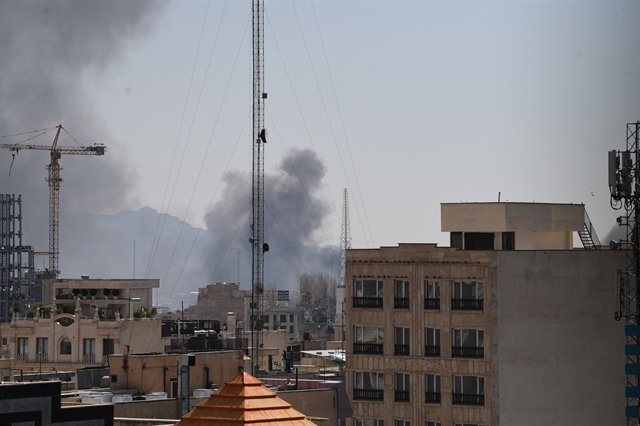
| Smoke rises after US and Israeli airstrikes on Tehran, Iran's capital, on March 1. — XINHUA/VNA Photo |
HÀ NỘI — The Việt Nam National Authority of Tourism (VNAT) has issued a directive requiring international travel services to ensure traveller safety amid an escalating conflict in the Middle East.
The conflict was sparked by military actions from Israel and the United States, particularly strikes on Iran on February 28, and has since disrupted travel in the region.
In its letter 400/CDLQGVN-LH issued on Monday, VNAT noted that certain regions around the world are currently unstable, including Iran, Israel and neighbouring parts of the Middle East, significantly affecting travellers.
Amid this context and in line with guidance from the Ministry of Foreign Affairs (MoFA), VNAT has requested international travel service companies to regularly monitor the situation in conflict areas, while strictly complying with related advisories.
The agency has asked travel agencies to stop organising tours to war zones or other dangerous areas as advised by the MoFA.
For tour groups already staying in affected areas, businesses should maintain close contact with local partners and the Vietnamese diplomatic mission in the host country to ensure traveller safety and to implement citizen protection measures promptly when needed.
VNAT Deputy Director General Hà Văn Siêu urged tourism businesses to closely follow the directive. In the event of incidents, units must promptly report to VNAT to coordinate handling.
Some Middle Eastern countries commonly visited by Vietnamese travellers include the United Arab Emirates, Türkiye and Egypt. Representatives of several Vietnamese travel companies, including Vietluxtour, Tràng An Travel, Vietravel and VietFoot Travel, stated that they had halted tours to the Middle East region.
To resolve the Middle East travel crisis, domestic tour operators have taken steps such as reviewing route launch plans and diversifying itineraries, especially routes to Europe that avoid the Middle East. They are opting for full-charter flight options or connections via East Asia to reduce reliance on a single transfer point, thus ensuring longer-term flexibility and stability.
The Middle East is a dynamic tourism market, not only as a global air transfer hub but also as a source market with high spending power, and it offers good connectivity to Europe, Africa and South Asia.
Earlier this year, the Middle East travel industry reported bookings reaching nearly US$101.2 billion, up 23 per cent from pre-COVID-19 levels.
The region’s geopolitical developments are affecting aviation and international transfers. Airspace restrictions or adjustments to operations can lead to schedule changes and higher operating costs during periods of conflict.
Industry experts note that these changes are time sensitive. International airlines with flexible coordination capabilities typically quickly develop multiple flight options to ensure passenger safety.
Fares may rise and travellers may be more cautious, but demand for international travel is unlikely to freeze.
Capital city action
Hà Nội’s Department of Tourism has requested the Hà Nội Tourism Association, the Hà Nội UNESCO Travel Club, the Hà Nội Tourism Corporation, local tourism associations and international travel service providers in the city to suspend and refrain from organising tours to dangerous areas in the Middle East in line with the MoFA’s warning.
To ensure the safety of Vietnamese tourists as well as international visitors from the Middle East to Việt Nam, the department asked tourism associations and international travel businesses in Hà Nội to regularly monitor developments in conflict-hit areas, and strictly comply with recommendations from the MoFA.
The department also asked units to review all signed, open-for-sale or upcoming tour programmes related to countries in conflict zones, as well as tours already sold to international visitors from conflict-affected areas planning to travel to Việt Nam (if any).
They were urged to negotiate postponements, cancellations or appropriate adjustments to itineraries and schedules to safeguard the legitimate rights and interests of tourists in accordance with contracts and legal regulations.
If travel firms are currently operating tours with groups present in conflict areas, they must maintain regular contact with partners and Vietnamese diplomatic representative missions in the host countries, or with the MoFA’s citizen protection channels.
The tourism department also requested that relevant units closely monitor the situation and promptly report to VNAT and the department to coordinate the handling of any incidents. — VNS
Society
 Society
 Society
 Society
 Society
 Society
 Society
 Society
 Society
 Society
 Society
 Society
 Society
 Society
 Society