 Society
84 individuals investigated for transnational online frauds
1.
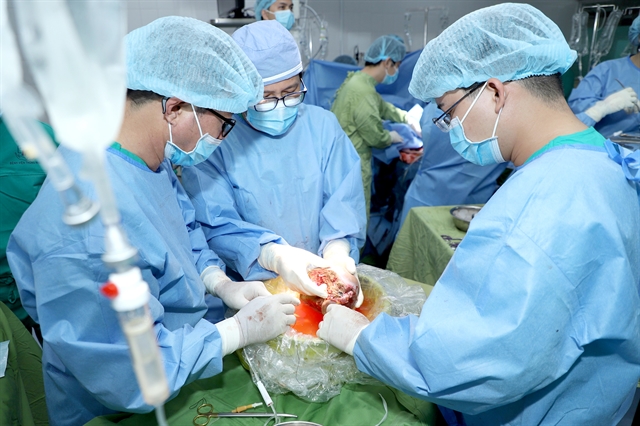 |
| An organ donation procedure from a brain-dead patient is carried out at Thống Nhất Hospital on March 21, 2025. This helped save the lives of seven transplant patients. — VNA/VNS Photo |
HÀ NỘI — At the National Organ Transplant Coordination Centre, the numbers don't paint the full picture.
Each statistic points to a private decision, a moment of grief or a life extended where death once seemed certain.
In 2025, medical staff in Việt Nam carried out 66 procedures of organ donations from brain-dead patients – the highest figure since the country began tracking such data.
From those cases, doctors performed 1,291 individual transplants, offering renewed hope to thousands of patients with end-stage organ failure.
Behind the figures is a system under growing strain and quiet resilience. Every successful transplant requires not only medical precision, but the consent of grieving families, rapid coordination across hospitals and a race against time measured in hours.
Under Vietnamese law, tissue and organ donation is strictly voluntary and open only to adults aged 18 and above. Living donors may give limited organs, such as a kidney or part of the liver, and only under tight legal safeguards designed to prevent commercial exploitation.
Most transplants, however, rely on organs donated after death or brain death – a process that requires confirmation by a professional medical council and the agreement of the donor’s family. These cases now form the backbone of Việt Nam’s transplant programme.
Earlier this year, a 30-year-old man in Hà Nội registered as an organ donor after discussing the decision with his family in advance.
“Through social media and public campaigns, I realised how many patients are waiting, sometimes for years, while donor organs remain scarce,” he said.
“Registering felt like a small way to help.”
But not all donations come from people who plan ahead.
Nguyễn Thị Tâm, also from Hà Nội, had to make a decision at the most devastating moment of her life. When her husband’s condition declined and recovery was no longer possible, doctors raised the possibility of organ donation.
Faced with the finality of the diagnosis, she agreed to donate his organs.
“The hardest part was thinking about our children. They were still so young,” she said.
In the days that followed, she found meaning in the idea that parts of her husband would continue to live on in others – their hearts beating, their bodies healing.
“His heart is still beating somewhere. For me, that is what remains,” she said.
The grief did not fade, but knowing that other patients survived because of her decision offered a form of solace.
Once a potential donation is confirmed, the system moves fast.
Coordination teams work around the clock, linking donor hospitals with transplant centres nationwide. For brain-dead donors, organs must be retrieved and transplanted within narrow time windows. Any delay can render them unusable.
According to Nguyễn Mạnh Hùng, a coordinator at the national centre, the work is relentless.
“We operate 24 hours a day, including holidays,” he said.
“Every case carries enormous pressure. But when you hear a patient has survived and recovered, it makes the stress worthwhile.”
Việt Nam currently has 109 hospitals participating in the national organ donation network.
But still, demand far outweighs supply.
“Without donors, there are no transplants. The relationship is absolute,” said Đồng Văn Hệ, director of the national coordination centre.
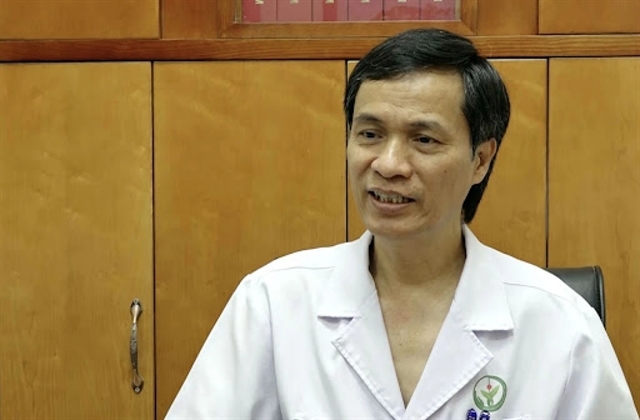 |
| Đồng Văn Hệ, director of the national coordination centre. — Photo vov.vn |
Officials attribute the rise in donations partly to sustained public communication campaigns and the growing visibility of organ donation among senior public figures.
Yet persuading families during moments of acute grief remains the most sensitive part of the process.
Đồng Văn Hệ described donors as 'silent heroes'. A single donor, he said, could save five to seven lives and improve the quality of life for many more.
In 2025, the centre formally honoured 266 brain-dead donors who had given organs since 2010. For Đồng Văn Hệ, a specialist in cerebrovascular medicine, the work is personal.
“Brain death is something we understand very clearly. Donation allows those patients to continue living – in another way – by giving others a chance,” he said.
Under regulations issued by the Ministry of Health, organ donation is now considered a routine responsibility within hospitals, rather than an optional activity.
Early 2026 has already seen seven confirmed cases of brain-death donation – a sign that the system is continuing to expand.
Proposed amendments to the Law on Human Tissue and Organ Donation are expected to clarify donor eligibility and improve coordination mechanisms, potentially easing long-standing bottlenecks.
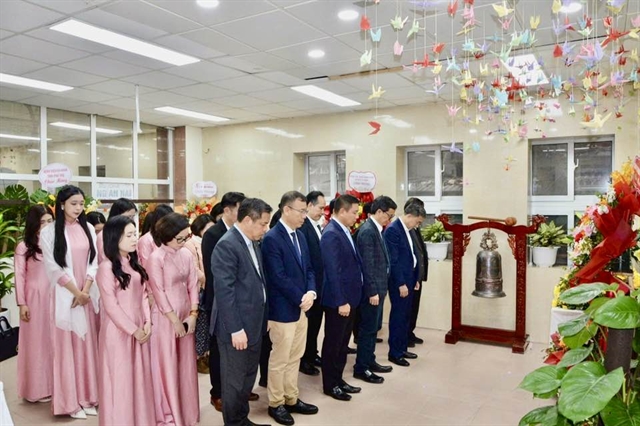 |
| A delegation from the Ministry of Health, led by Deputy Minister Trần Văn Thuấn, pays tribute to organ donors at the centre, February 5. — Photo vnhot.vn |
Deputy Health Minister Trần Văn Thuấn has credited effective public communication and leadership participation with helping shift social attitudes.
“Life does not always end with a stopped heartbeat. Sometimes it continues in another body,” he said.
In Việt Nam, that continuation increasingly depends on decisions made quietly – by individuals who choose to give, and by families who choose compassion in moments of profound loss. — VNS
Society
 Society
 Society
 Society
 Society
 Society
 Society
 Society
 Society
 Society
 Society
 Society
 Society
 Society
 Society