 Society

Shorter Trips, Familiar Ways to Pay: How Airpaz Supports Flexible Booking with 100+ Payment Methods
1.
|
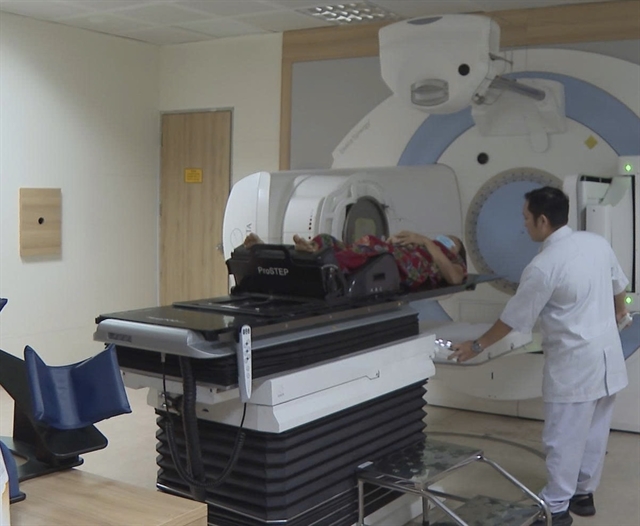
| A patient is treated at Chợ Rẫy Hospital in HCM City. —VNS Photo Thu Hằng |
HCM CITY — The national medical examination and treatment system will focus on improving quality and efficiency to reduce overcrowding at tertiary hospitals and enhance the role of primary healthcare, Minister of Health Đào Hồng Lan said at a conference in HCM City on Monday.
The healthcare system nationwide met the healthcare needs of around 200 million people last year, including about 180 million covered by health insurance, Lan said.
The Ministry of Health has significantly reduced the number of administrative procedures in medical examination and treatment from 106 to just 19, a reduction of more than 80 per cent.
Around 30 million people now have electronic health records and more than 1,200 public and private hospitals nationwide have implemented electronic medical records, according to Lan.
This year, the healthcare sector will continue to improve the legal framework for medical examinations and treatment.
The Ministry of Health is focusing on institutionalising major resolutions, especially the resolution adopted at the Party's 14th National Congress and Resolution No. 72 of the Politburo.
In addition, many strategic projects are being implemented, such as the pre-hospital emergency care project, the medical tourism development project, and the National Strategy on protecting, caring for, and improving the health of the people until 2030, with a vision to 2045.
“The focus is on serving the people, placing patients at the centre of all activities. This is considered the direction in medical examination and treatment in 2026 and the coming years,” she said.
Dr Hà Anh Đức, director general of the ministry’s Medical Services Administration, said as the country enters a new development phase with the goal of high growth in 2026, the pressure on the healthcare system would be immense.
The country’s GDP in 2025 was estimated at US$514 billion, with healthcare spending at around US$27 billion, accounting for 5.2 per cent.
If the current healthcare spending ratio is maintained, and GDP increases by 10 per cent in 2026, the healthcare budget will need to increase by approximately US$3 billion, according to Đức.
In 2026, with the perspective of “Putting the patient at the centre, quality as the foundation, and efficiency as the goal,” the medical examination and treatment system will continue to strengthen the protection of the legitimate rights and interests of patients.
In addition, medical facilities will accelerate the digital transformation of medical examination and treatment.
Major tasks include completion of the database for the medical examination and treatment sector, development of electronic health records on VNeID, improvement of the efficiency of hospital management and quality control, development of advanced medical techniques and expansion of telemedicine.
At the conference, the “Hospital Fee Payment Guarantee Portal” was launched, bringing practical benefits to medical examination and treatment, and contributing to the national digital transformation strategy.
The implementation of the portal automates the recording and settlement process, thereby significantly reducing the workload for cashiers, accountants, and finance departments at hospitals and saving time for patients during medical examinations and treatment. —VNS
Society
 Society
 Society
 Society
 Society
 Society
 Society
 Society
 Society
 Society
 Society
 Society
 Society
 Society
 Society