 Society
SBV to curb property price inflation, enforce lending rate rules
1.
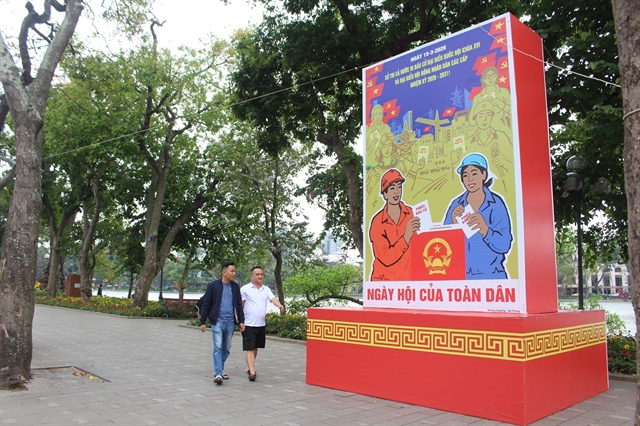 |
| A large election billboard is displayed in the area surrounding Hoàn Kiếm Lake in Hà Nội. — VNA/VNS Photo Nguyễn Thắng |
HÀ NỘI — Hà Nội is accelerating the use of technology and digital transformation in preparations for the election of deputies to the 16th National Assembly and people’s councils at all levels for the 2026–31 tenure, aiming to improve accuracy, transparency and administrative efficiency.
From voter data management and the receipt of candidate dossiers to public communication and information disclosure, digital platforms are being integrated across key stages of the process.
Voter data has been developed on the foundation of the National Population Database, helping to reduce errors, duplication and omissions. Candidate applications are handled through a hybrid model combining established procedures with digital processing, ensuring compliance with legal requirements while improving convenience in management and archiving.
Officials say the strengthened digital infrastructure enables the election process to operate in a more systematic, accurate and synchronised manner, while enhancing transparency, promoting voter engagement and ensuring each ballot is prepared on the basis of complete and reliable information.
Accurate, sufficient, clean and live data
At Giảng Võ Ward, Chairman of the ward’s People’s Committee and Permanent Vice Chairman of the ward’s Election Committee Cồ Như Dũng described population data as the backbone of the election.
The review and updating of voter information through the electronic identification system ensures voter lists are compiled accurately for each polling area. Voter cards are printed directly from the system, helping to ensure uniformity and security. All candidate dossiers in the ward have also been digitised, shortening processing times and improving consistency in management.
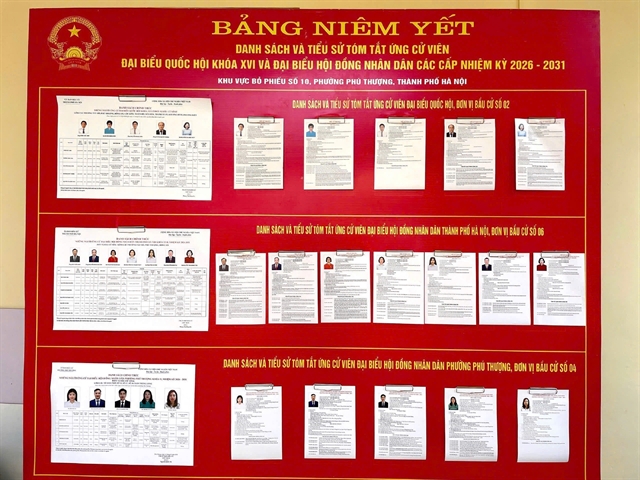 |
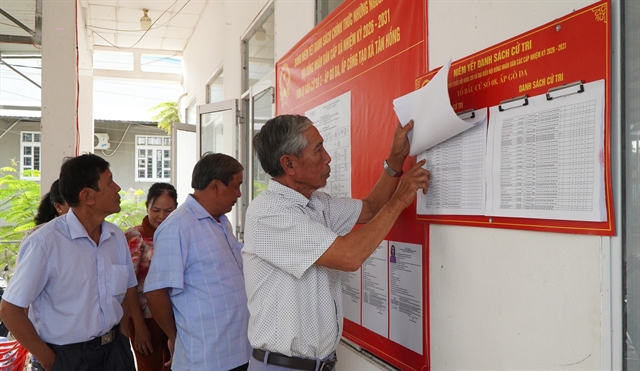
| The list of candidates is publicly posted at Polling Station No 10 in Phú Thượng Ward, Hà Nội. — VNA/VNS Photo Nguyễn Thắng |
According to Dũng, the ultimate objective is to organise a democratic, lawful, safe and cost-effective election, in which technology plays a supportive yet important role in saving manpower while fully complying with legal regulations.
Meanwhile, in Cửa Nam Ward, the use of QR codes in election communications has opened a flexible new channel for residents to access information. Nguyễn Hoàng Trường, secretary of the ward’s Party Committee, chairman of the ward’s People’s Council and chairman of the ward’s Election Committee, emphasised that election work is a particularly important political task requiring precision and transparency at every stage.
Voter lists are compiled using the Ministry of Public Security’s voter management system and updated promptly before official posting. QR codes displayed at public listing sites enable voters to look up polling locations, access relevant information and submit feedback or recommendations.
This approach represents not merely a technical solution but a shift from one-way communication to two-way interaction, strengthening openness and accountability.
Digital election information map launched
At city level, the Hà Nội Chapter of Việt Nam Fatherland Front has launched a digital election information map.
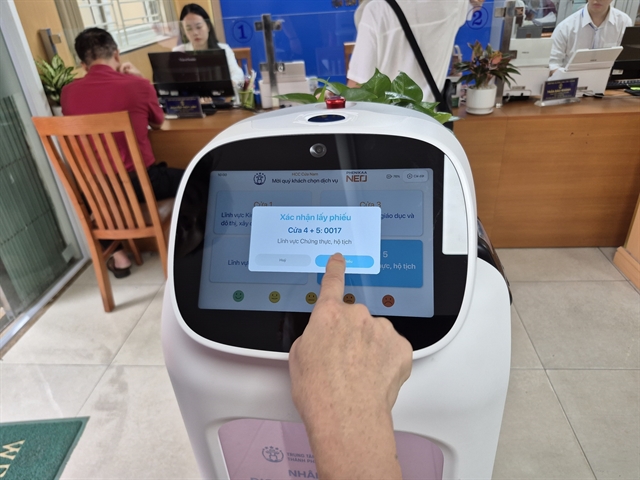 |
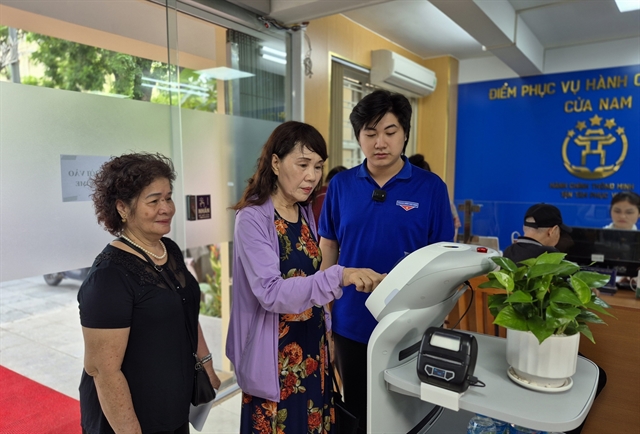
| An AI-powered robot assists residents with administrative procedures at Cửa Nam Ward in Hà Nội. — VNA/VNS Photo Nguyễn Thắng |
The platform integrates data on electoral units, candidate lists and biographies, action programmes and links to official press agencies. It helps systematise information, enabling voters to access data visually, consistently and in real time.
Through the digital map, voters can look up electoral units based on the capital’s administrative boundaries, track candidate lists, background information and summary biographies in each constituency and follow updates on voter meetings and candidates’ action programmes.
The map also integrates online links to the official portal of the municipal Việt Nam Fatherland Front and to media outlets reporting on election activities. This allows residents to access authoritative, updated and comprehensive sources of information, thereby contributing to greater transparency in the election process.
Designed as a modern, user-friendly visual communication product, the digital map is optimised for both smartphones and computers. With just a few simple steps, voters can retrieve information anytime and anywhere, unconstrained by time or location. Its intuitive interface transforms what could be dry data into accessible and engaging content, particularly appealing to younger voters.
The initiative is regarded as a significant step forward in modernising the delivery of official information to voters in the capital.
Youth take the lead in applying technology
Notably, digital transformation in the election process is not limited to specialised agencies. Young people have also played an active and creative role.
In Hà Đông Ward, local youth have developed and deployed a chatbot to support election work, a flexible and practical model designed to respond quickly to citizens’ enquiries.
Originating from the need to provide prompt answers to voters’ questions, the ward’s Youth Union proactively researched and built the chatbot, focusing on issues of greatest public interest, including polling areas, electoral units, voting procedures and relevant guiding documents. With simple commands, residents can receive concise and accurate responses within seconds.
Nguyễn Tiến Phúc, deputy chairman of the Việt Nam Fatherland Front of Hà Đông Ward and Secretary of the Hà Đông Youth Union, said the chatbot not only reduces pressure on direct communication efforts but also makes information more accessible and convenient for residents.
More importantly, it demonstrates the proactive role of local youth in applying digital transformation to practical, community-oriented activities.
Phúc said that behind the chatbot is the regular involvement of ward officials and youth members, who continuously review, update and adjust content to ensure consistency and accuracy. Although not operating on a round-the-clock automated basis, the model remains effective thanks to the initiative and sense of responsibility of the young volunteers.
Following initial positive results, the election support chatbot has been introduced to residential Youth Union branches, gradually expanding its reach among young members and residents across the locality. While the technology itself is not new, the innovative mindset and civic responsibility behind its application contribute meaningfully to organising a lawful, democratic and transparent election.
From population data integration and digitised candidate dossiers to QR codes, a digital information map and chatbot support, digital infrastructure is forming a comprehensive technological ecosystem serving election work in Hà Nội.
As data layers are interconnected, information is made public and interaction is strengthened, the election process becomes not only more accurate but also more transparent and citizen-centred.
In the digital era, each ballot is safeguarded not only by the legal framework but also by a synchronised and scientifically designed technological foundation. This provides a firm basis for election day to become a nationwide civic occasion, where citizens exercise their democratic rights on the foundation of full, transparent and reliable information. — VNS
Society
 Society
 Society
 Society
 Society
 Society
 Society
 Society
 Society
 Society
 Society
 Society
 Society
 Society
 Society