 Society

Ministry proposes fund to boost energy efficiency
1.
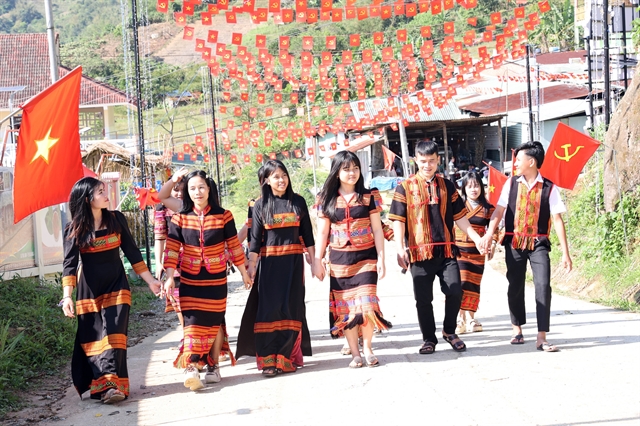 |
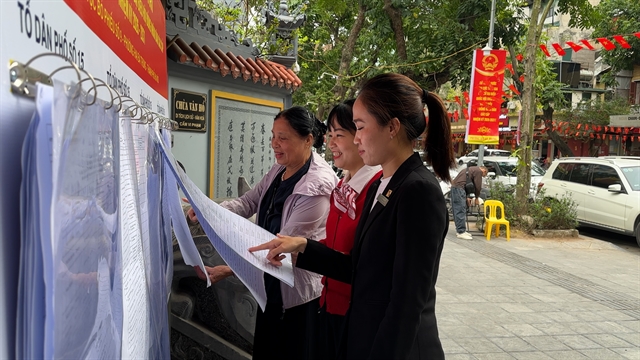
| Xơ Đăng voters in Trà Linh Commune head to a polling site to review the biographies of candidates for the National Assembly and local People’s Councils. — VNA/VNS Photo |
ĐÀ NẴNG — In the remote mountain commune of Trà Linh, more than 200km from the centre of Đà Nẵng City, preparations are underway for a national vote that residents here say they are eager to take part in.
Across the commune, red national flags line the roads and election banners hang outside community buildings.
At village cultural houses that will serve as polling stations, voter lists have been posted and residents stop by to read about the candidates standing in the upcoming election.
On March 15, voters across Việt Nam will go to the polls to elect deputies to the 16th National Assembly and members of local People’s Councils for the 2026–2031 term.
For people in Trà Linh, the occasion carries particular meaning. The commune lies deep in the mountains to the city’s southwest, and travel to and from the area can be difficult, especially during the rainy season.
Still, residents say they are looking forward to voting.
Hồ Văn Khoang, an 80-year-old resident of Hamlet 3 and a member of the Xơ Đăng ethnic group, said he had spent several days reading through the brief biographies of the candidates.
“I hope those elected will speak for people here and propose policies that support remote areas,” he said.
For younger residents, the run-up to election day has also brought a sense of activity and community involvement.
Hồ Thị Giới, a Youth Union secretary in the commune, has been helping decorate polling sites and organise local information campaigns ahead of the vote.
She said many residents hope their future representatives will pay closer attention to local economic needs – particularly the development of Ngọc Linh ginseng, a valuable medicinal plant grown in the area.
“We want policies that help farmers improve cultivation techniques, grow seedlings and protect the crops from pests,” she said.
Ngọc Linh ginseng has become one of the commune’s most important sources of income. But residents say the area still faces practical challenges that make development difficult.
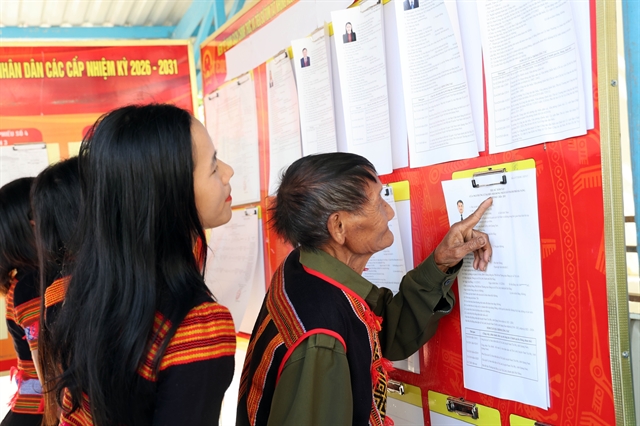 |
| An elderly voter reads the candidates' biographies. — VNA/VNS Photo |
Roads connecting villages are often damaged by flooding or landslides during the rainy season, sometimes cutting off access entirely.
Giới said improved transport infrastructure would make daily life easier for residents and help farmers bring their products to market.
Local officials say preparations for the election began early this year.
Hồ Thị Minh Thuận, secretary of the commune's Party Committee and chair of the local People’s Council, said election work had been identified as a priority for 2026.
After receiving guidance from higher authorities, the commune established election committees and began organising polling sites and voter outreach.
Voter lists and candidate information have now been posted at commune offices, villages and polling locations.
Trà Linh has more than 1,000 households and over 7,000 residents, many of whom belong to ethnic minority communities and live in scattered hamlets across mountainous terrain.
That geography presents logistical challenges for election organisers. Many residents spend days at a time working in forest fields or tending medicinal plants, meaning they are not always at home.
Local authorities have therefore carried out door-to-door outreach to ensure residents know when and where to vote.
Despite the challenges, Thuận said residents have responded positively to mobilisation campaigns and have shown strong interest in participating.
As election day approaches, Trà Linh’s villages are gradually taking on the colours of the campaign – red flags along mountain roads, banners across village entrances and polling stations prepared to receive voters.
For many residents here, the vote is not just a national event, but a chance to have their voices heard from one of the most distant corners of the city. — VNS
Society
 Society
 Society
 Society
 Society
 Society
 Society
 Society
 Society
 Society
 Society
 Society
 Society
 Society
 Society