 Politics & Law
84 individuals investigated for transnational online frauds
1.
|
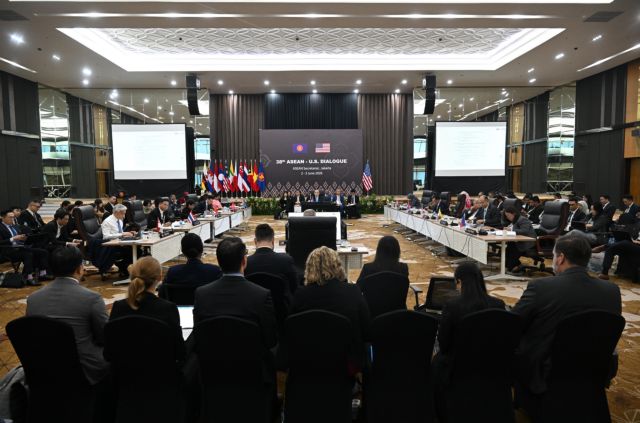
| The 38th ASEAN–US Dialogue (AUSD 38) was held in Jakarta, Indonesia, from June 2-3. — VNA/VNS Photo |
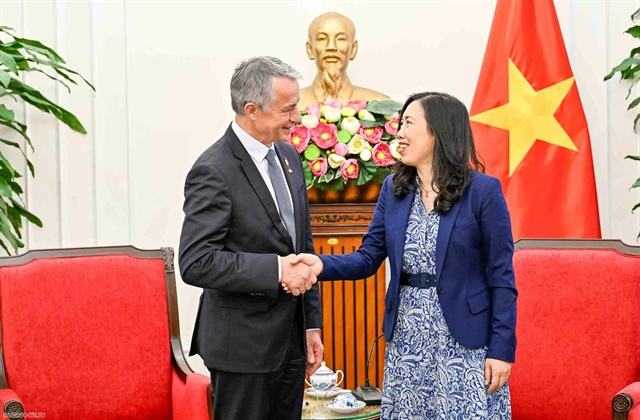
JAKARTA — Deputy Minister of Foreign Affairs Đặng Hoàng Giang, who is also Head of the Vietnamese ASEAN Senior Officials’ Meeting (SOM) delegation, co-chaired the 2026 Senior Officials’ Meeting of the Mekong–US Partnership (MUSP) and attended the 38th ASEAN–US Dialogue (AUSD 38) in Jakarta, Indonesia, from June 2-3.
At the MUSP Senior Officials’ Meeting, participants reaffirmed their commitments to a more dynamic, effective, and substantive MUSP, and discussed cooperation priorities for 2026 alongside a new Action Plan for the 2027–29 period.
They stressed the importance of maintaining key cooperation areas, particularly water, environment, and workforce, while agreeing on the urgent need to expand MUSP cooperation into new fields.
US Assistant Secretary of State Michael DeSombre reaffirmed the Mekong region as an important component of the Indo-Pacific strategy, announced US$14 million for the 2026 cooperation agenda, and pledged to help build a “safer, stronger, and more prosperous” sub-region.
To further improve the MUSP’s effectiveness, Giang proposed four priorities, starting with stronger bilateral ties between the US and each Mekong nation to forge a more strategic partnership built on trust and the ability to overcome differences. He also urged production linkages and resilient supply chains; tackling non-traditional security challenges, particularly cybercrime and online fraud, and keeping water management at the core while accelerating the adoption of new technologies.
To deepen ties, he advocated a high-level policy dialogue paired with concrete projects, where US support complements an assertive role of Mekong countries, all in service of an independent, self-reliant and prosperous sub-region anchored in an open, inclusive and ASEAN-centred architecture.
Officials also explored reviving the MUSP Ministerial Meeting to inject fresh momentum.
At the 38th ASEAN–US Dialogue, both sides reaffirmed the importance of their Comprehensive Strategic Partnership and welcomed the completion of the 2021–25 Plan of Action, with every action line now underway.
The US is now ASEAN’s second largest trade partner, with two-way trade of $552.8 billion in 2025, and the top foreign investor, with $42.3 billion in 2024.
With the 50th anniversary of ASEAN–US ties approaching next year, both sides promised to swiftly finalise and follow a new Plan of Action and lift the relationship to a higher level. The US reaffirmed its long-term commitment, support for ASEAN centrality, and continued engagement in initiatives bringing peace, stability, security, safety, and prosperity to more than one billion people across both regions.
ASEAN welcomed that commitment, stressed the need to maintain peace, stability and a rules-based order, and encouraged the US to stay engaged in ASEAN-led platforms.
Both sides vowed to deepen cooperation in digital economy and digital transformation, high tech, energy, semiconductors, critical minerals, education, healthcare, maritime security, cybersecurity and transnational crime.
The US highlighted its focus on online scams, cybercrime, human and drug trafficking, and money laundering. It also pledged support for the ASEAN Digital Economy Framework Agreement, the ASEAN Power Grid, the ASEAN Single Window, as well as in liquefied natural gas, civil nuclear energy, AI, smart agriculture and workforce development. The US announced an expansion of the Young Southeast Asian Leaders Initiative from 500 to 1,000 participants a year.
Deputy Minister Giang welcomed the US's reaffirmation, saying that the partnership should be reinforced on the basis of political trust, mutual respect and mutual benefit to deliver more concrete results. He pushed for stronger collaboration in trade, investment, AI, digital economy, energy, critical minerals, sustainable supply chains and crime prevention, along with sustained support for ASEAN integration and Mekong sub-regional cooperation.
On global and regional issues, the Vietnamese Deputy Minister welcomed enhanced US–China dialogue, expressed concern over turmoil in the Middle East and its impact on energy security and global supply chains, and called for safe passage in the Strait of Hormuz.
On the East Sea (internationally known as the South China Sea) issue, he reaffirmed Việt Nam's and ASEAN’s consistent stance on maintaining peace, stability, security, safety, and freedom of navigation and overflight, settling disputes by peaceful means in accordance with international law, particularly the 1982 United Nations Convention on the Law of the Sea (UNCLOS), and stressed the need for the early finalisation of an effective, substantive, and legally binding Code of Conduct (COC) in the East Sea.
On this occasion, Giang also had a meeting with DeSombre to advance high-level exchanges, trade talks, and potential cooperation in aviation and strategic minerals. He reiterated that the Vietnamese Government is creating supportive conditions for US companies to do business in the country. Both sides pledged to back each other in global and regional multilateral forums. — VNA/VNS
Politics & Law
 Politics & Law
 Politics & Law
 Politics & Law
 Politics & Law
 Politics & Law
 Politics & Law
 Politics & Law
 Politics & Law
 Politics & Law
 Politics & Law
 Politics & Law
 Politics & Law
 Politics & Law
 Politics & Law