 Society
Việt Nam fosters comprehensive cooperation with Uruguay
1.

|
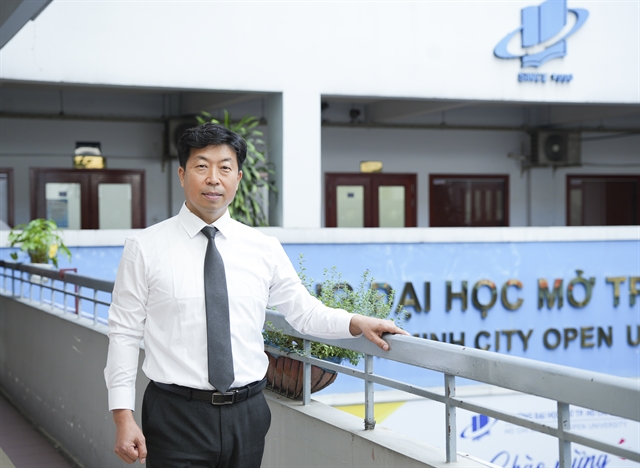
| Professor and Academician Trần Đình Long, chairman of the Việt Nam Plant Breeding Association. VNA/VNS Photo |
HÀ NỘI — Behind every seed, a source of life and a cornerstone of national food security, lies the intellect, dedication and responsibility of scientists who have devoted their lives to the fields. Among them stands Professor and Academician Trần Đình Long, whose quiet and persistent work has helped shape Việt Nam’s agricultural future.
As chairman of the Việt Nam Plant Breeding Association, Trần Đình Long is widely regarded as a leading figure in scientific research, known for his lifelong commitment to farmers and to the country’s sustainable development. His contributions have rarely sought the spotlight, yet their impact has been felt across fields and farms nationwide.
Over more than five decades devoted to plant breeding research, he has produced not only valuable scientific studies and commercially viable crop varieties but also what colleagues describe as enduring 'seeds of knowledge' for Việt Nam’s agricultural sector.
For generations of farmers who have benefited from his work, that legacy has earned him an affectionate title: 'the academician of the farmers.'
Rice fields as a foundation

|
| Prof. Long introduces a new rice variety to farmers. VNA/VNS Photo |
Born and raised in a rural area of Phú Thọ Province, his childhood was closely tied to agricultural production, shaping a deep understanding of farmers’ hardships and the vital role seeds play in rural livelihoods.
Drawing on that lived experience, he chose a career in agricultural science, guided by a consistent belief that science is only meaningful when it directly serves production and improves people’s lives.
Throughout his studies and research at home and abroad, Professor Long persistently focused on crops suited to Việt Nam’s farming conditions, particularly food crops, legumes and varieties capable of improving soil quality and boosting production efficiency.
He has always regarded the fields as the “largest laboratory,” the most honest proving ground for the true value of scientific work.
From State-level research programmes to on-the-ground production models, Long devoted significant time to working at the grassroots level, engaging directly with farmers and monitoring how new crop varieties performed under real conditions.
For him, scientific results could not remain confined to reports or conferences but had to be present in every field, contributing directly to farmers’ incomes and livelihoods.
Across different stages of the country’s agricultural development, he consistently adjusted his research priorities to meet practical needs.
When Việt Nam faced food shortages, his focus was on high-yield varieties. As production stabilised, he shifted towards improving product quality.
When markets began demanding higher standards of safety and value, he pursued crop varieties that combined high yields with quality, environmental sustainability and resilience to climate change.
Over his career, Long has authored and co-authored dozens of officially recognised crop varieties, many of which have been widely adopted in production, helping farmers raise yields, reduce costs and improve incomes.
From research laboratories to cultivated fields, his scientific imprint has appeared across successive growing seasons in agricultural regions nationwide.
A particularly notable milestone in his career is his research, breeding and development of stevia in Việt Nam. In 1988, General Võ Nguyên Giáp brought stevia varieties from Cuba to the country and tasked the scientific community with studying them, hoping to open up a new crop direction to support public health.
From this initial genetic material, Long and his colleagues carried out sustained research and by 1995 developed the ST88 stevia variety, the first to be introduced into domestic production. Building on that foundation, he continued breeding subsequent generations with improved quality and productivity.
Spirit of patriotic emulation
Beyond his research achievements, Long has exerted a profound influence in education, scientific organisation and social engagement. He has trained generations of agricultural scientists, directly supervising dozens of doctoral candidates and educating many masters and engineers in plant breeding.
Alongside his teaching work, he has authored numerous scientific books, some of which are used as official teaching materials at undergraduate and postgraduate levels.
In a scientific organisation, he held several key leadership roles, most notably serving for many years as president of the Việt Nam Seed Association.
Under his leadership, the association became a hub for leading experts and an effective bridge linking scientists, businesses and farmers, helping technical advances reach production more quickly.
Professor Dr Lã Tuấn Nghĩa, former director of the Plant Resources Centre, said Professor Long was among the key scientists involved in establishing the National Plant Gene Bank more than half a century ago.
This work carries strategic significance, providing a foundation for the long-term conservation, utilisation and development of plant genetic resources to support breeding and national food security.
In 2025, Professor and Academician Trần Đình Long’s sustained contributions continued to be recognised when he was honoured as an Outstanding Citizen of the Capital. He was also among six Vietnamese scientists recognised by the Russian Academy of Sciences.
For Professor and Academician Trần Đình Long, his greatest legacy lies in the knowledge he sowed, which has taken root in the fields, endured in farmers’ livelihoods and been passed on to future generations. VNS
Society
 Society
 Society
 Society
 Society
 Society
 Society
 Society
 Society
 Society
 Society
 Society
 Society
 Society
 Society