 Society

NA President calls for high-quality legislation to drive national development
1.
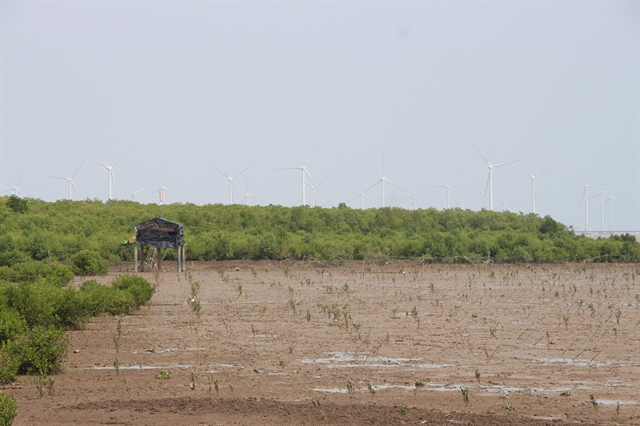 |
| Mangrove forests in Cà Mau Province play a vital role in preventing coastal erosion and protecting the livelihoods and production of local communities. — VNA/VNS Photo Chanh Đa |
CÀ MAU — Cà Mau Province is strengthening forest protection while developing a forestry-based economy, aiming to improve livelihoods for communities living under the forest canopy.
The southernmost province, bordered by the sea on three sides with a 310-kilometre coastline, faces severe impacts from climate change.
Each year, about 300ha of Cà Mau's protective forests are lost to erosion, threatening mangrove forests and local livelihoods along the vulnerable coast.
In response, the province has identified a forestry economy linked with protection as a long-term path. It is shifting from “traditional forest protection” to sustainable forest-based economic development, placing people at the centre of safeguarding forests for future generations.
A 2026–30 plan announced by the provincial People’s Committee aims to annually plant 900ha of forests, produce 680,000 cubic metres of timber and increase forest cover to 12.4 per cent by 2030 at a cost of more than VNĐ1.57 trillion (US$59.7 million).
In recent years, the province has implemented various measures for forest conservation and restoration.
Measures such as sediment creation, wave breakers and coastal forest cultivation have strengthened mangroves against climate change and sea-level rise.
More than 1,879ha were newly planted and 550ha regenerated during 2021–25.
The province has also promoted livelihoods under the forest canopy: It currently has about 39,500ha of shrimp farms in forests, with tens of thousands of hectares certified to international standards such as Naturland and the Aquaculture Stewardship Council (ASC).
The forest–shrimp model demonstrates “living in harmony with nature,” protecting forests while supporting incomes.
Trần Minh Trí, who has worked on mangrove forests in Phan Ngọc Hiển Commune for more than 30 years, said: “Forest–shrimp farming follows nature, allowing shrimp to find their own food under mangrove roots. Although productivity is not as high as industrial farming, every year the ‘pure and clean’ shrimp, crab and fish products fetch my family VNĐ400–700 million ($15,200–26,650).”
Phan Minh Chí, deputy director of the provincial Department of Agriculture and Environment, said a mindset of protecting forests to build prosperity is spreading strongly within the community.
“People understand that forests provide shelter and food for shrimp. Losing forests means losing shrimp and the livelihoods of future generations. That is why local residents actively plant and protect forests.”
The province’s ecological shrimp farmed under the forest canopy is now exported to more than 90 countries and territories, helping shrimp exports exceed $2 billion annually.
Buyers pay 10–15 per cent more for products linked to forest protection responsibilities.
Cà Mau’s forests also play a crucial role in absorbing and storing carbon, an important source of “blue carbon.”
According to the Research Institute for Forest Ecology and Environment under the Vietnamese Academy of Forest Science, the province’s mangrove ecosystems absorb and “clean” more than 30 million tonnes of carbon dioxide each year, accounting for a large share of the national total of over 80 million tonnes.
In Viên An and Đất Mũi communes, the first “carbon maps” have been developed with support from WWF Việt Nam, using digital technology to identify and monitor mangrove trees.
Nguyễn Chí Thiện, director of the provincial Department of Industry and Trade, said this provides a passport for Cà Mau to enter the stringent international carbon credit market.
With the global trading price at $5–10 per verified carbon credit – at one tonne of carbon dioxide per credit – the carbon absorption capacity of Cà Mau’s forests could fetch at least $150 million annually, he said.
This would allow the province to reinvest, nurture forests, build nature-based wave-breaking structures, and improve community livelihoods, and farmers living in forested areas could earn an income from “selling clean air” beneath the canopy, he added.
Lê Văn Sử, deputy chairman of the provincial People’s Committee, said that to unlock the full economic potential of carbon credits, it is necessary to complete the legal framework for the carbon credit market, accelerate digitalisation in forest management, and support local livelihoods.
Policies to support new forest planting, especially production forests, need to be promoted.
Models such as shrimp–forest farming linked with international certification should be encouraged to ensure locals can earn a decent living under the forest canopy.
Alongside the forestry economy and green carbon, Cà Mau has also prioritised the development of ecotourism and community-based tourism linked to forest conservation.
Forest areas such as the U Minh Hạ National Park, Mũi Cà Mau National Park and Đất Mũi protective forest are being invested in as distinctive destinations, creating additional livelihoods, spreading the benefits of forests, and raising public awareness about the need to protect natural resources. — VNS
Society
 Society
 Society
 Society
 Society
 Society
 Society
 Society
 Society
 Society
 Society
 Society
 Society
 Society
 Society