 Brandinfo
Coast Guard steps up anti-IUU fishing efforts, legal education for fishermen
1.
 |
| Đồng Nai Province is witnessing a significant shift in investment capital flows |
Rising demand, higher standards
The year 2025 marks an important turning point for Đồng Nai. Following the country’s administrative reform, the province has officially become home to the largest industrial park area in Việt Nam. This expanded scale not only strengthens the southern province’s long-term development capacity but also enhances its attractiveness to multinational corporations and large-scale investment projects.
Investment figures for 2025 reflect this momentum. The province attracted more than VND 173 trillion in domestic investment and over USD 3.3 billion in foreign direct investment (FDI), significantly exceeding annual targets. Notably, industrial parks alone accounted for more than USD 2.7 billion in FDI, exceeding the planned figure by over 144 per cent.
Beyond investment volume, a notable shift in investment quality has also emerged. According to representatives of the Đồng Nai Economic and Industrial Zones Authority, recent FDI inflows have increasingly focused on high-tech manufacturing, supporting industries, smart logistics, and low-environmental-risk projects, reflecting a gradual transition towards higher-value and more sustainable industrial development.
This direction aligns with Đồng Nai’s long-standing development strategy, which prioritises green growth, modern infrastructure, and higher value creation. As a result, new demands are emerging for the industrial real estate market.
To meet the expectations of increasingly selective investors, industrial facilities must be planned in a more systematic manner, with greater attention to operational efficiency, environmental performance, and long-term compliance with international standards from the initial design and development stages.
New standard for industrial projects
To maintain its competitive edge and capture ongoing supply chain shifts, Việt Nam’s industrial real estate market has seen a growing number of modern, high-specification infrastructure projects.
In this context, ready-built warehouse and factory models have attracted strong interest from foreign investors. By offering pre-designed, operationally ready facilities, these models enable manufacturers to shorten deployment timelines and enter the market more efficiently, while reducing the risks and uncertainties typically associated with traditional construction.
Importantly, the market is no longer driven solely by foreign developers. Domestic developers are also playing an increasingly active role, delivering well-invested projects that meet international operational and environmental benchmarks.
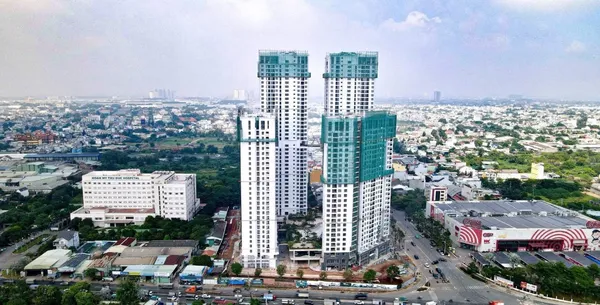
One such example is the KCN Nhơn Trạch 6D ready-built warehouse project, developed by KCN Việt Nam . Covering approximately 14.5 hectares, the project is located in Đồng Nai’s established industrial cluster and benefits from strong regional connectivity. Its proximity to Long Thành International Airport, along with key southern seaports including Cát Lái Port, Hiệp Phước Port, and Phước An Port, supports efficient access to major logistics corridors.
These location advantages contribute to improved supply chain efficiency and help tenants manage transportation costs more effectively, particularly as manufacturers continue to optimise regional distribution networks.
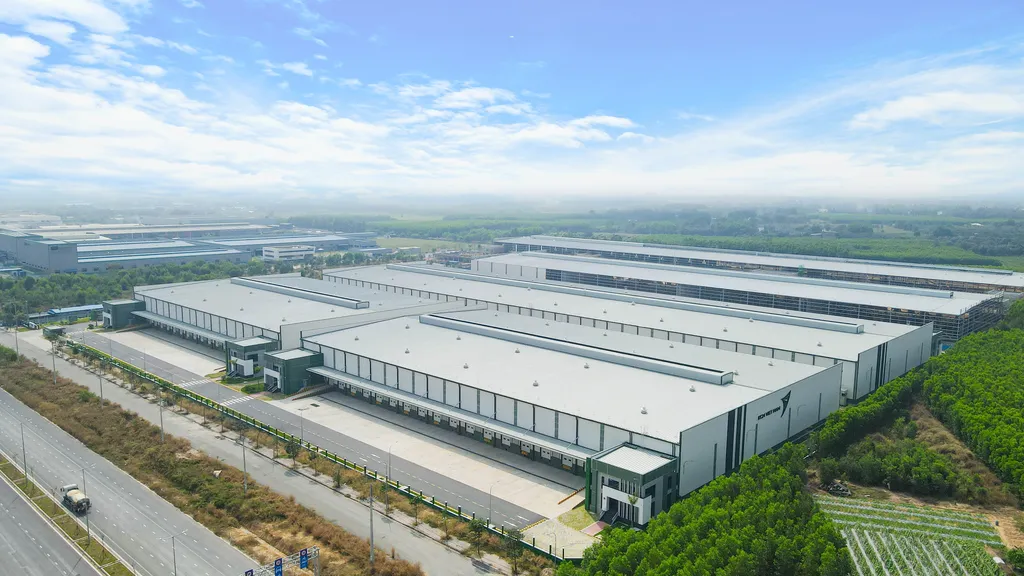 |
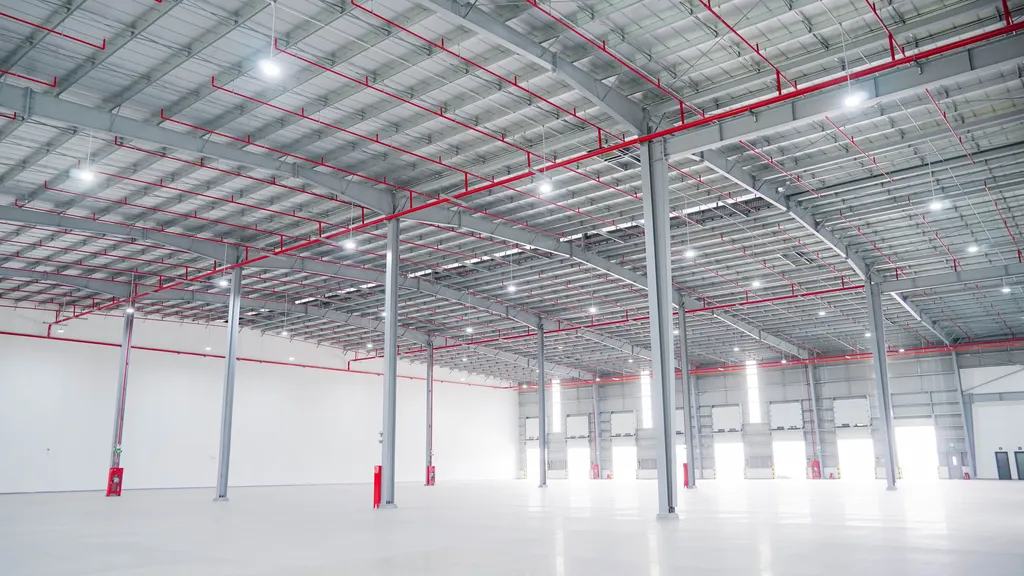
| LEED Gold–certified warehouse developments, such as KCN Nhơn Trạch 6D , are increasingly viewed as strategic choices by international investors entering the Vietnamese market, particularly in industrial hubs like Đồng Nai. |
Specifically, KCN Nhơn Trạch 6D has achieved LEED Gold certification, ensuring high energy efficiency and compliance with internationally recognised green building criteria. For multinational corporations, locating production facilities within a LEED-certified development can help optimise operating costs while aligning with increasingly stringent sustainability requirements in export markets such as Europe and the United States.
Alongside the project in Nhơn Trạch VI Industrial Park, KCN Việt Nam is also developing the KCN Hố Nai ready-built warehouse and factory project in Đồng Nai, with a total planned scale of 53.7 hectares. A new phase of the project is nearing completion and is expected to deliver more than 50,000 square metres of ready-built factory space to the market in the first quarter of 2026, contributing to the expansion of high-quality industrial supply in the province.
“Đồng Nai remains a key industrial hub in southern Việt Nam, with strong long-term potential,” said Hardy Diec, Chief Operating Officer of KCN Việt Nam . “Our projects are designed to support the province’s direction of attracting higher-quality foreign direct investment through sustainable, internationally aligned industrial facilities.”
From a longer-term perspective, the upgrading of industrial infrastructure in Đồng Nai reflects a broader shift towards higher standards as global capital increasingly prioritises sustainability and operational efficiency. The alignment between transparent local investment policies and developers' capacity to deliver internationally compliant infrastructure is expected to remain a key factor shaping the province’s industrial development trajectory.
Brandinfo
 Brandinfo
 Brandinfo
 Brandinfo
 Brandinfo
 Brandinfo
 Brandinfo
 Brandinfo
 Brandinfo
 Brandinfo
 Brandinfo
 Brandinfo
 Brandinfo
 Brandinfo
 Brandinfo
.jpg)