 Society
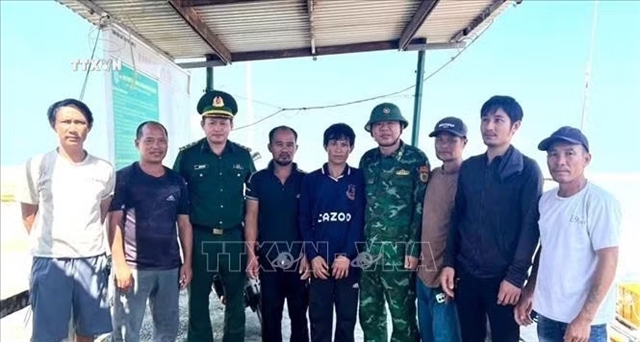
Five fishermen rescued after boat catches fire in Quảng Trị
1.
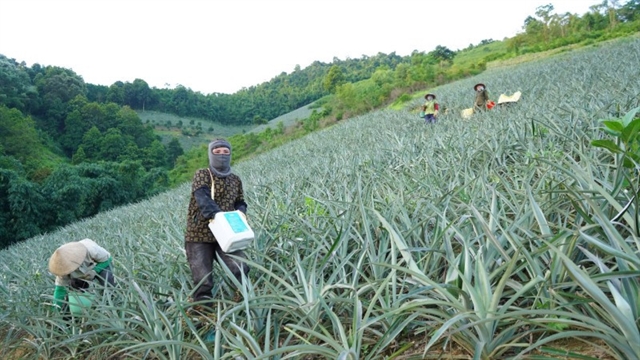 |
| The vast pineapple hills in Mường Khương Commune. Local residents focus on tending and harvesting key crops to boost their income. — Photo nhandan.vn |
LÀO CAI — Mường Khương Commune in Lào Cai Province has seen largely stable socio-economic development over the past few years, achieving many positive results.
The local Party Committee, People's Council and People's Committee have focused on resolute leadership and direction for key tasks, promoting production, ensuring social welfare and upholding national defence and security.
Mường Khương People's Committee Chairman Nguyễn Hồng Hưng said that the local economy has seen a stable growth trajectory. Agricultural, forestry and aquaculture production is proceeding according to plan, with crop and livestock diseases well controlled.
“Concentrated commodity production models for key crops such as bananas and tea have developed steadily, helping to boost residents' incomes. Efforts in forest protection, afforestation, disaster prevention and mitigation have received due attention, with proactive responses and timely remediation of typhoon damage, swiftly stabilising people's livelihoods,” he said.
Residents are focused on tending and harvesting key crops. Disease prevention for livestock, poultry and aquaculture has been effectively managed, preventing any major outbreaks.
In addition, forest management, protection and development have received close attention. Stable commodity production areas have been maintained and expanded to enhance productivity, quality and efficiency for each sector.
Taking advantage of favourable weather, localities have prepared land for tea planting and afforestation.
Total grain crop output last year, including maize, rice, peanuts and soybeans, reached 9,976 tonnes, achieving 100 per cent of the plan.
Key crops included bananas planted on more than 1,000ha, with harvested output of more than 22,700 tonnes valued at VNĐ142 billion (US$5.5 million).
Tea planted on 1,800ha yielded above 12,000 tonnes, valued at VNĐ76 billion ($2.9 million), while mandarins planted on 822ha yielded 8,900 tonnes, valued at VNĐ178 billion ($6.8 million).
Forest management, protection and development were prioritised. By the end of last year, the proportion of rural households with access to hygienic water reached 99.5 per cent.
Poverty reduction efforts were prioritised, focusing on sub-projects under national target programmes for sustainable poverty reduction, new rural development and socio-economic development in ethnic communities and mountainous areas.
This ensured that poor and near-poor households largely have access to basic social services in education, health care, housing, environmental sanitation and information and communications.
The poverty reduction rate last year was 7.85 per cent, achieving 100 per cent of the plan.
Policies for prestigious individuals among ethnic groups were duly implemented. Social welfare policies were fully rolled out, gradually enabling people to escape poverty and build new rural areas.
Hưng added that education on State policies was vigorously implemented by local authorities. This included intensive efforts to encourage ethnic groups to abandon outdated customs, led actively by all levels and sectors, resulting in clear shifts in awareness and behaviour across society.
Many traditional but outdated practices, especially for weddings, funerals and festivals, have been gradually eliminated or adapted to current conditions.
Coordination between agencies, organisations, border guard stations and others monitored ideological trends among ethnic groups. Organisations also instructed people to follow Party guidelines and State laws, ensuring targeted implementation of programmes, projects and ethnic policies.
Regulations were effectively upheld with timely information exchanges.
Law education encouraged border commune residents to safeguard territorial sovereignty and national border security, and participate in managing the land border.
Hưng confirmed that the commune harnessed national unity, building a solid national defence and security foundation.
Territorial sovereignty and national border security were firmly maintained and border lines, markers and checkpoints tightly controlled, with exits and entries by foreign nationals strictly enforced, per regulations. — VNS
Society
 Society
 Society
 Society
 Society
 Society
 Society
 Society
 Society
 Society
 Society
 Society
 Society
 Society
 Society