 Brandinfo

ECO Expo Asia opens at Hong Kong AsiaWorld-Expo in late October
1.
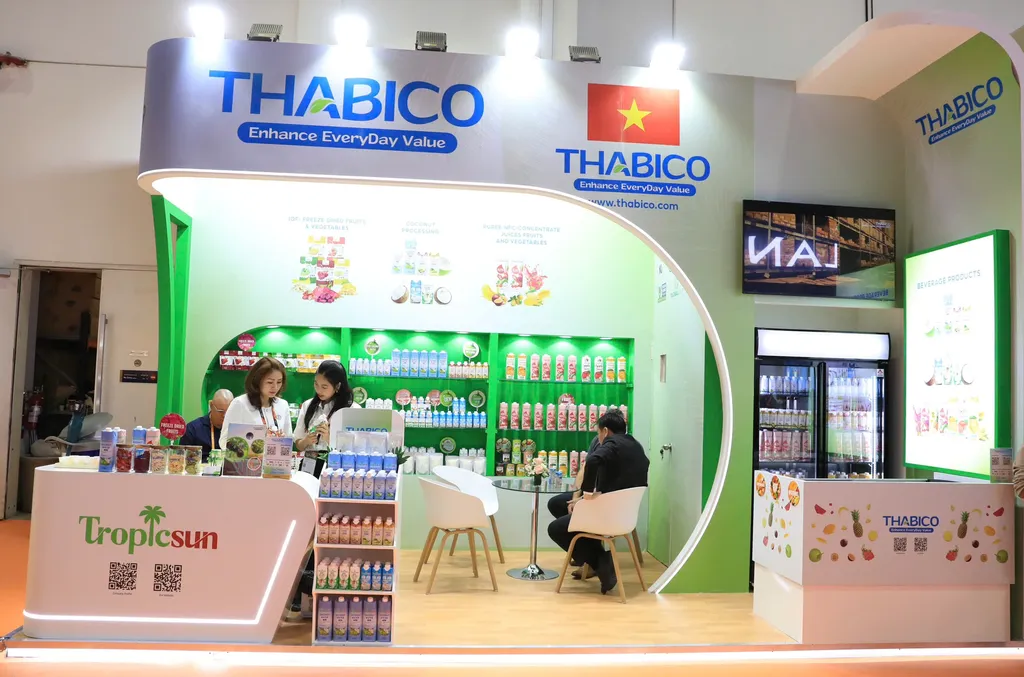 |
| THABICO Tien Giang Food Industry JSC’s venue at the Gulfood Dubai 2026. — Photo courtesy of Thabico |
DUBAI — THABICO Tien Giang Food Industry JSC, a factory under Thabico Group, is taking part in the food and beverage trade event Gulfood Dubai 2026, promoting high quality agricultural products and ingredient solutions for industrial production and meeting international standards.
Positioning itself as a supplier of deep-processed ingredients for the global F&B industry, the company showcases products that focus on practical application and standardisation, including fruit puree, not-from-concentrate (NFC) juice, individually quick frozen (IQF) fruits and vegetables, and freeze-dried fruits, as well as and coconut-based ingredients such as coconut water and coconut milk.
Its technology application confers a wide range of benefits for its products. IQF helps “lock in” texture and original taste, strengthening competitiveness in long-distance exports to markets such as the US and Europe.
Meanwhile, freeze-drying preserves nutrients at very high levels, aligned with the global boom in healthy snacking. Modern puree/NFC/concentrate lines enable batch-to-batch consistency and diversify ingredient options for beverage brands, F&B chains, and food manufacturers.
Gulfood Dubai 2026 is organised from January 26 to 30 at the Dubai World Trade Centre. Thabico Group’s booth is located at the Za’abeel Beverage Area – Za’abeel Hall 4 (Booth No.: Z4 – 59).
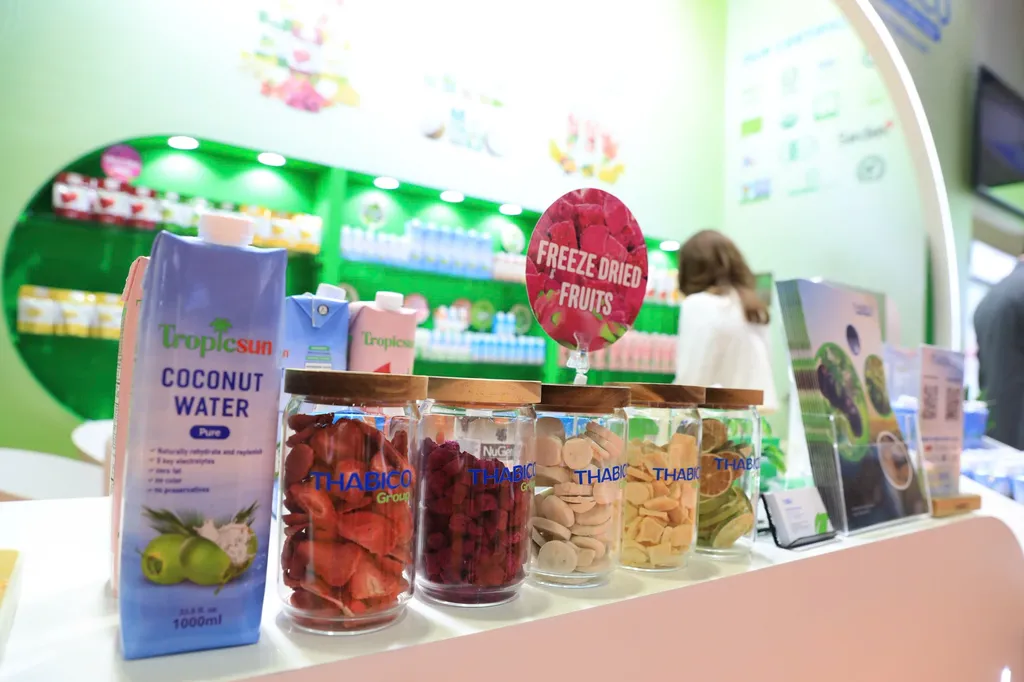 |
| Thabico is showcasing a wide range of deep-processed agricultural products made with modern technologies. — Photo courtesy of Thabico |
Commitment to deep processing and sustainability
From a country primarily known for exporting raw materials, Việt Nam is increasingly positioning itself as a regional food-processing hub – powered by rising investment in hi-tech and stronger ESG (Environmental – Social – Governance) commitments.
Specifically, deep-processing technology is becoming a core driver of Việt Nam’s agricultural development, with trade flow shifting from raw exports to deep processing to increase export value.
Exports of coffee, fruits and vegetable saw high growth in 2025 thanks to investment in processing technologies from Europe and Japan, even helping businesses reduce their dependency on harvest seasons.
In this context, Thabico Group stands out as a representative example of Việt Nam’s agricultural upgrade: using deep-processing technology as a growth lever.
Importers in demanding markets such as the EU and the Middle East are also increasingly focusing on strict food safety, transparency and traceability.
In response, Thabico has pursued structured standardisation, aligning with stringent systems such as BRC and FSSC 22000, while meeting market-specific requirements, particularly Halal for Muslim markets.
Traceability through planting-area codes and digital data systems, where blockchain is used in parts of certain chains, is increasingly becoming a default expectation. This allows partners to access key data from cultivation and input usage through harvesting and processing, strengthening trust in Vietnamese brands and supply reliability.
Thabico Group has developed a comprehensive processing ecosystem with six factories across major raw-material regions in southern Việt Nam, all utilising hi-tech production methods for a wide range of agricultural products.
ESG implementation is integrated into Thabico’s long-term strategy, highlighted by a 1,800-hectare organic coconut project in Tiền Giang (output up to 16,000 coconuts/ha/year), direct linkages with 1,540 farming households, and 1,246 certified hectares under management with ongoing expansion.
The group also commits to Net Zero by 2050, with a near-term target to reduce greenhouse gas emissions by 10 percent by 2030 through investment in biomass energy and solar power, turning agricultural by-products into renewable resources.
Brandinfo
 Brandinfo
 Brandinfo
 Brandinfo
 Brandinfo
 Brandinfo
 Brandinfo
 Brandinfo
 Brandinfo
 Brandinfo
 Brandinfo
 Brandinfo
 Brandinfo
 Brandinfo
 Brandinfo