 Society
84 individuals investigated for transnational online frauds
1.
|
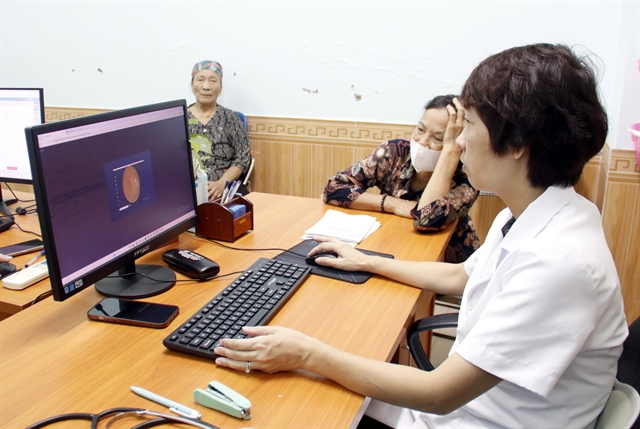
| Doctor from the Outpatient Ward at the Tiên Du Health Centre, Bắc Ninh Province, reviews patient imaging results and diagnoses via electronic medical record software. — Photo courtesy of Bắc Ninh Province |
BẮC NINH — Digital transformation is reshaping public health care in the northern province of Bắc Ninh , paving the way for a more modern, transparent and patient-centred medical system.
The provincial Health Department is actively applying information technology across management, medical examination and treatment, helping to improve efficiency and service quality throughout the healthcare network.
As a result, residents are benefiting from practical conveniences including online appointment booking, cashless payments and access to test results via mobile phones, tangible steps towards achieving the goal of digital transformation for community health.

|
| Residents use their citizen identity cards to obtain appointment numbers at Tiên Du Health Centre, Bắc Ninh Province. — Photo courtesy of Bắc Ninh Province |
According to the Bắc Ninh Provincial Health Department, dozens of medical examination and treatment facilities across the province have successfully implemented electronic medical records, exceeding their initial targets.
Notably, all public hospitals and health centres have adopted hospital information systems, laboratory information systems, radiology information systems and picture archiving and communication systems, along with electronic medical records at a basic level.
Bắc Ninh General Hospital No.2 has emerged as a pioneer in digital transformation. From July 1, 2024, the hospital officially rolled out electronic medical records, fully replacing paper files. The shift has shortened examination and treatment times, reduced professional errors and lowered operating costs, making it the province’s first paperless hospital.
Deputy Director of Bắc Ninh General Hospital No.2 Nguyễn Xuân Thủy said the introduction of electronic medical records has delivered clear benefits for both doctors and patients.
“All patient data is stored centrally, enabling doctors to easily access treatment histories and make more accurate diagnoses. Patients simply need to bring their citizen identity card or medical record code to access services swiftly, without the paperwork required previously. This forms a crucial foundation for the hospital to advance towards a smart hospital model,” Thủy emphasised.
At the hospital’s outpatient ward, Nguyễn Văn Tuân from Lương Tài Commune said the examination process is now far more convenient and efficient.
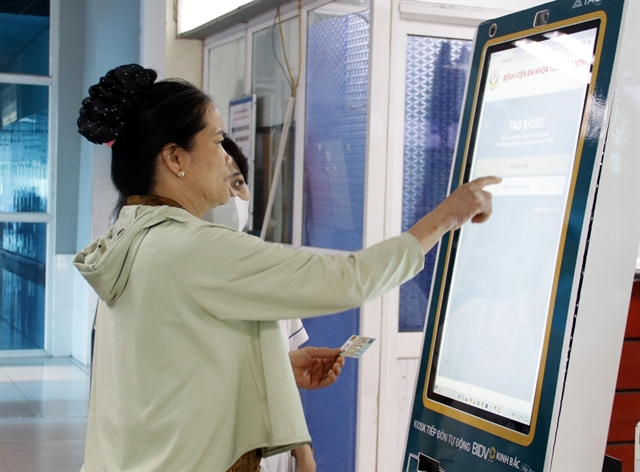
“When I arrive for an appointment, I just scan my citizen identity card at the modern self-service kiosk – no long waits. Test and imaging results are sent directly to the initial consultation room, without needing to collect paper copies. I feel very reassured and satisfied visiting such a modern, professional healthcare environment,” Tuân said.
|
| Residents scan their citizen identity cards at the kiosk to register for examination and treatment at the Bắc Ninh General Hospital No. 2. — Photo courtesy of Bắc Ninh Province |
At Bắc Ninh General Hospital No.1, electronic medical records were introduced in June 2025, marking a major step forward in modernising healthcare management.
During the initial phase, some medical staff were unfamiliar with the transition from paper files to digital software. However, with comprehensive training and continuous technical support, the system quickly stabilised and became part of daily operations.
All stages of examination, treatment and data storage are now digitised, enabling hospital leaders to better oversee professional activities, ensure service quality and manage medicines and medical supplies more effectively and transparently.
The hospital is continuing to upgrade its technological infrastructure to connect and share medical data with facilities both within and beyond the province. This is expected to contribute to a more synchronised digital health system that offers greater convenience for patients.
At a conference reviewing the implementation of electronic medical records in Bắc Ninh Province for the 2020–2025 period, representatives from medical facilities reported that the system has streamlined registration, examination and treatment procedures, reduced patient waiting times, and enabled doctors to quickly access information for accurate and timely clinical decisions.
They also noted that eliminating the printing of films, test papers and paper records has cut costs, while insurance claim management has become more efficient thanks to tighter electronic controls over prescriptions and test orders.
However, numerous challenges still remain. At some facilities, electronic medical record software has yet to be fully optimised, data integration is still inconsistent and a province-wide central database linking patient records between hospitals has not been established, complicating the management of treatment histories.
There is also a shortage of specialised information technology personnel, and some insurance payment procedures continue to require paper documentation.
To ensure the effective and sustained rollout of electronic medical records, the Bắc Ninh Provincial Health Department said it will focus in the coming period on guiding medical facilities to refine and implement the paperless hospital model, moving towards smart hospitals.
At the same time, the department plans to strengthen regular training on electronic medical record systems for doctors, nurses and support staff, and to issue internal regulations and procedures governing the management and use of electronic medical records at each facility.
|
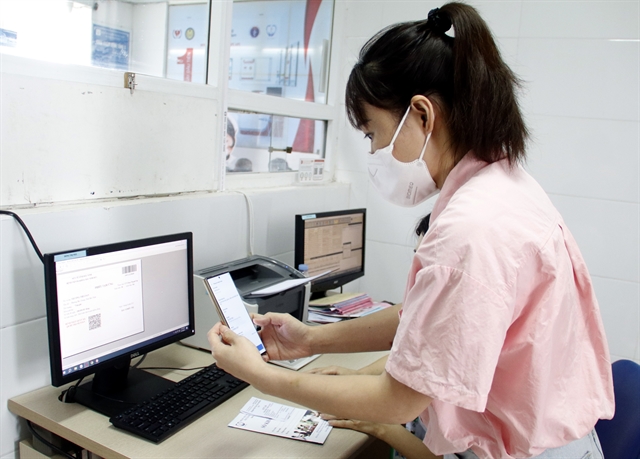
| Patients make cashless payments for hospital fees. — Photo courtesy of Bắc Ninh Province |
According to Vice Chairman of the Bắc Ninh Provincial People’s Committee Lê Xuân Lợi, the province will continue to promote the application of information technology and digital transformation across the health sector.
The goal is for all medical facilities, both public and private, to complete the rollout of electronic medical records by the end of this year.
Facilities that have already met this milestone will move towards the paperless hospital model and advance the Smart Healthcare Development Project through 2030. — VNS
Society
 Society
 Society
 Society
 Society
 Society
 Society
 Society
 Society
 Society
 Society
 Society
 Society
 Society
 Society